Weighted blankets: separate comfort ratings from measured sleep changes
By Mr.Apps · Oct 19, 2026
Category:Sleep
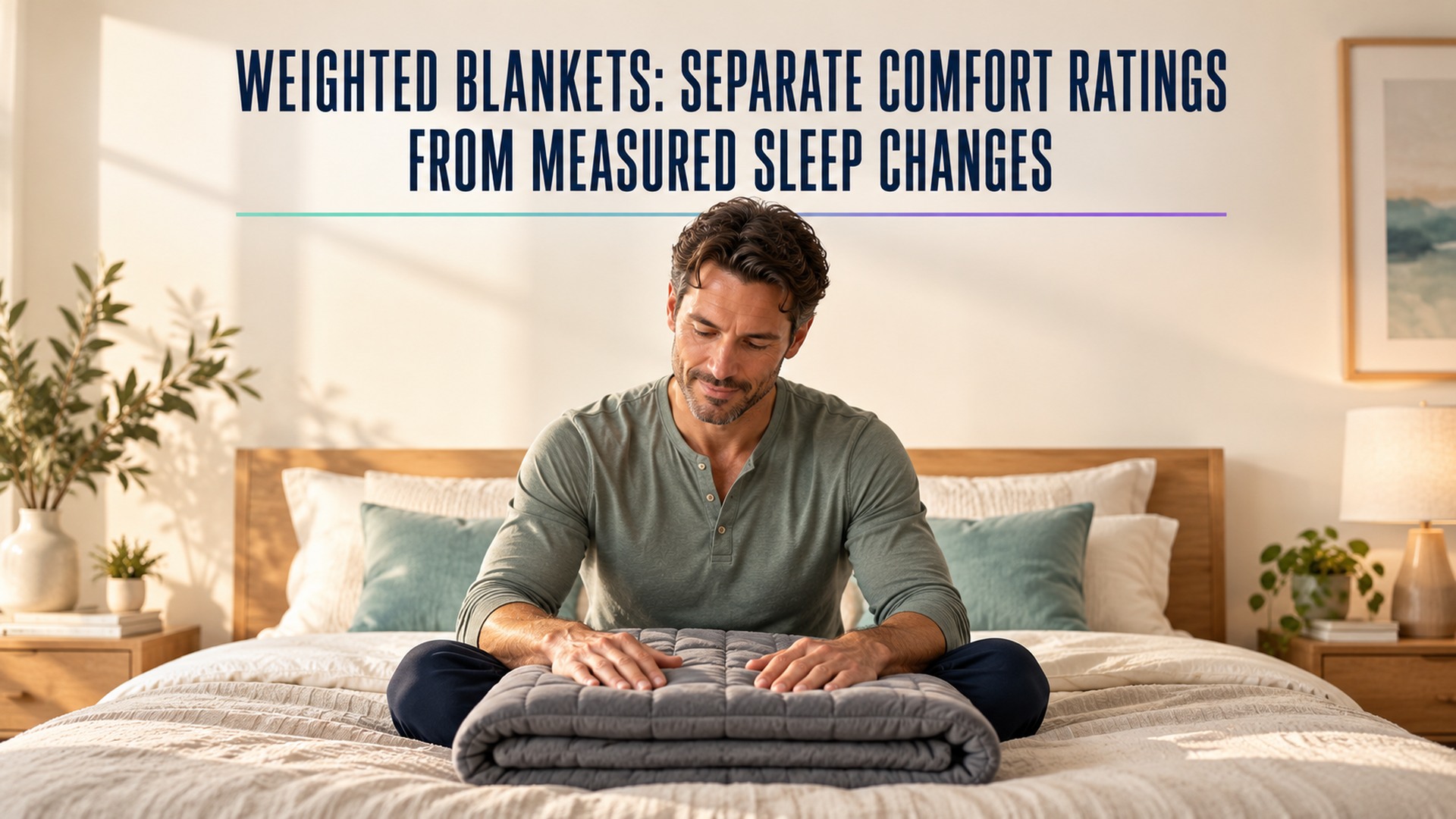
A weighted blanket can feel comforting, but comfort and measured sleep change are different outcomes. Someone may prefer the pressure or warmth while a sleep tracker shows little change. A study may report a difference in a questionnaire without finding a clear difference in actigraphy. Those results answer different questions, so it helps to keep them separate when reviewing an intervention.
I would keep a comfort rating and a measured sleep outcome in separate fields. Research on weighted blankets has included small and varied groups, different blanket designs, and different measures. A positive result in one study does not promise the same effect for every adult. If you are tracking comfort or sleep, note what you experienced and what the device estimated rather than combining them into a single “recovery benefit.”
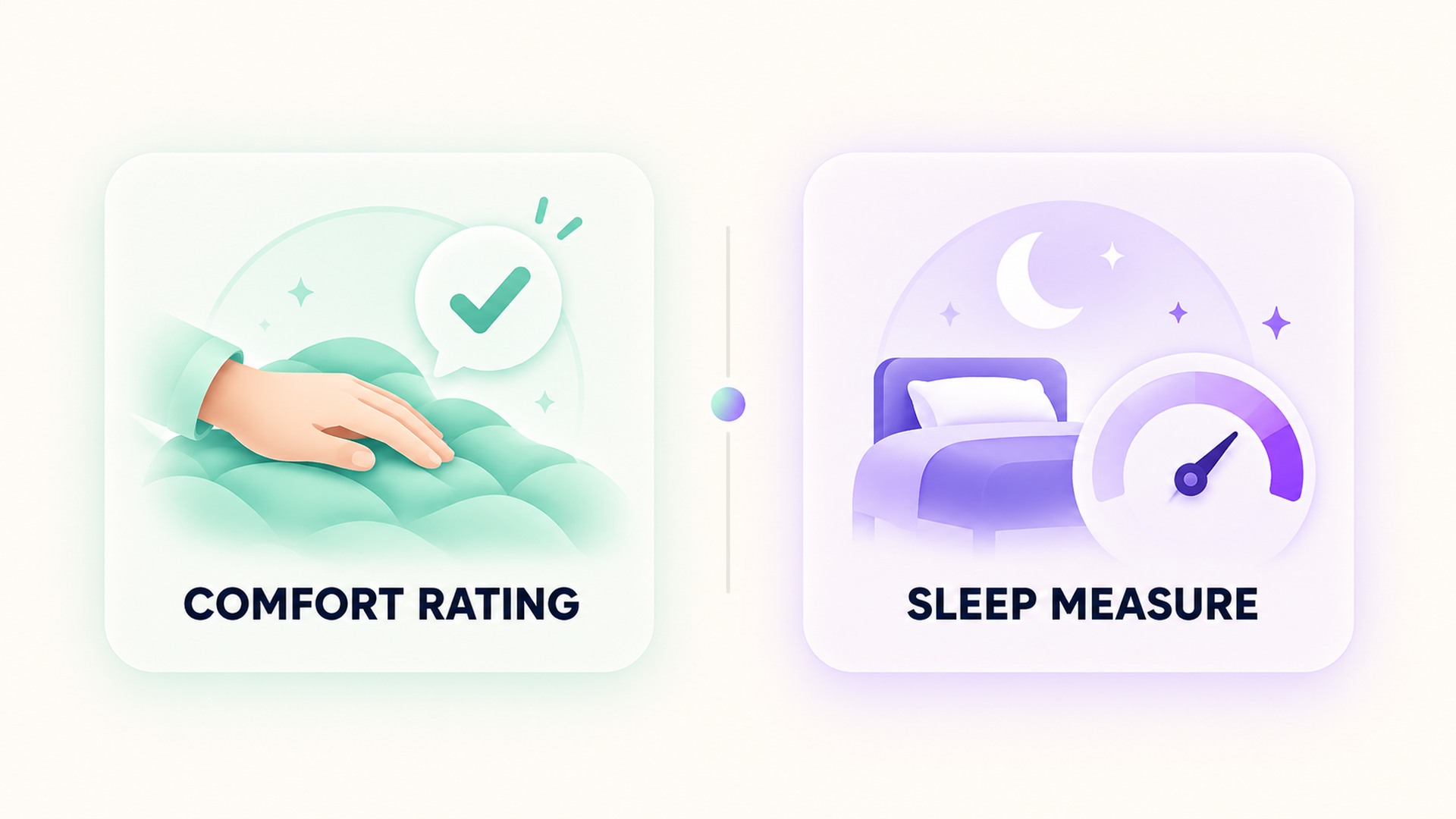
Comfort is a valid report, but it is subjective
Comfort can matter to a person’s bedtime routine. A blanket may feel warm, secure, or heavy in a way someone prefers. That personal response is worth recording as a preference. It does not establish that the blanket increased total sleep time, changed sleep stages, or improved next-day functioning.
A simple comfort note can use the same question each time: Was the blanket comfortable enough to use? Did it feel too warm or restrictive? Did the person keep it on for the intended period? These are reports about experience and use. They should not be presented as laboratory measurements. If a person stops using the blanket because it feels uncomfortable, that is also a useful finding even if a score looks favorable.
The pilot randomized trial of weighted blankets in adults with insomnia compared a weighted blanket with a normal blanket over a month. It measured subjective sleep-related outcomes and also monitored sleep with actigraphy. The authors reported improvements in some questionnaire outcomes while the actigraphy finding about awakenings was not statistically significant. Because this was a pilot study in a particular clinical group, it should not be treated as proof that every adult will sleep better or gain more REM sleep.
A second randomized trial of weighted chain blankets in people with psychiatric disorders studied a different population and design. Its findings contribute to the research base, but they cannot be assumed to apply to every adult who buys a weighted blanket for general sleep. People in a clinical study may differ from those using a blanket at home, and one blanket construction is not automatically equivalent to another.
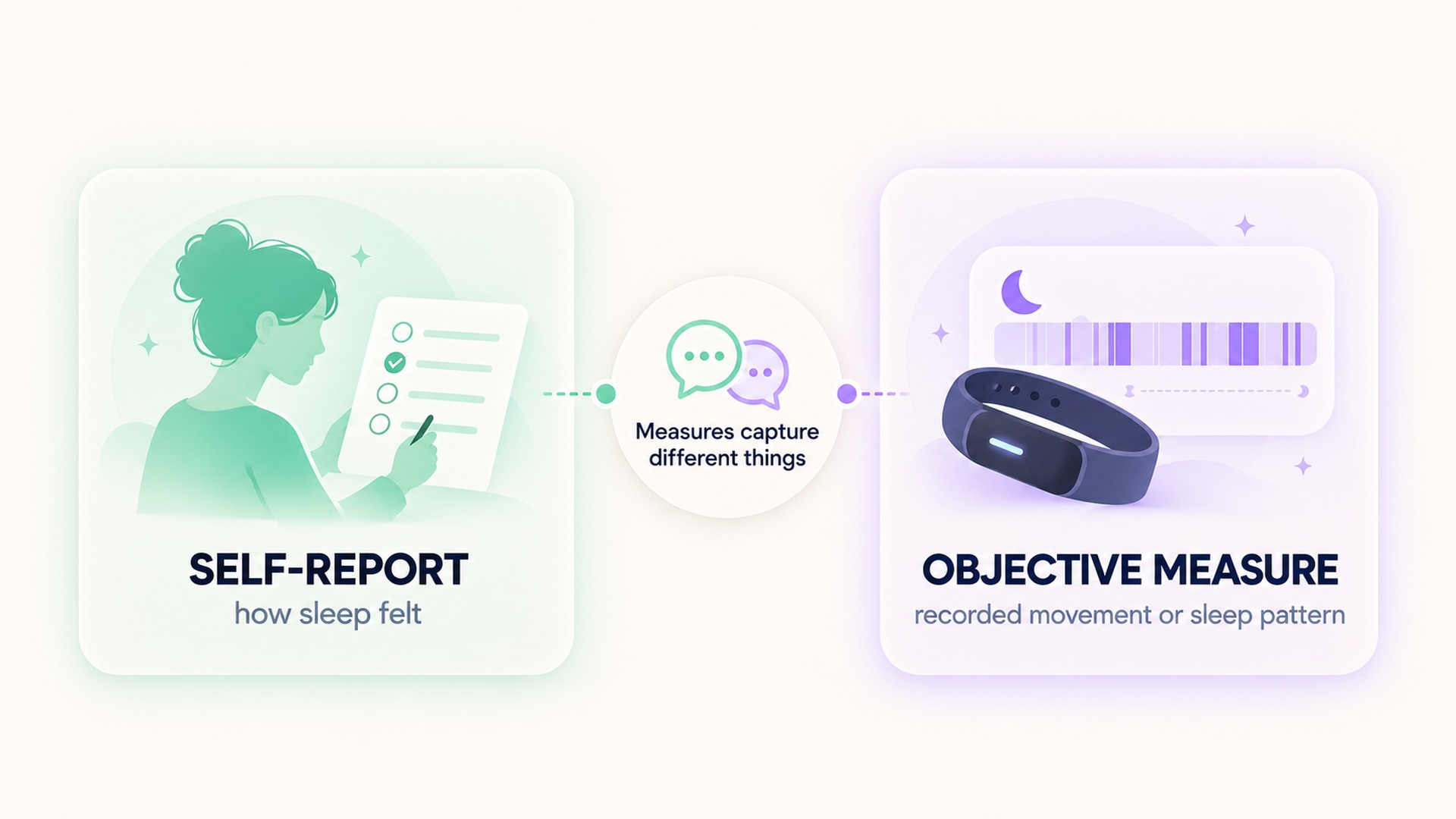
Questionnaires and sensors measure different things
Sleep questionnaires ask people to report how sleep felt or how symptoms changed. Actigraphy estimates rest and activity from movement over time. Polysomnography measures additional physiological signals in a laboratory. A perceived improvement may be important to the person, but it is not interchangeable with a change in measured sleep continuity or stage estimates.
The systematic review and meta-analysis of weighted blankets in psychiatric settings included studies with different populations, outcomes, and intervention periods. The review describes limits in study quality and heterogeneity. A pooled result across selected trials may be useful for research, but it does not predict an individual outcome or establish a universal dose of blanket weight.
Another review of randomized trials on weighted blankets and symptom management discusses evidence limitations across mental-health populations. The outcomes and sample sizes vary. This matters because a blanket might affect perceived anxiety or comfort without producing a clear objective change in sleep. A careful article or app should name the measure instead of calling every positive result “better sleep.”
How to read a study result
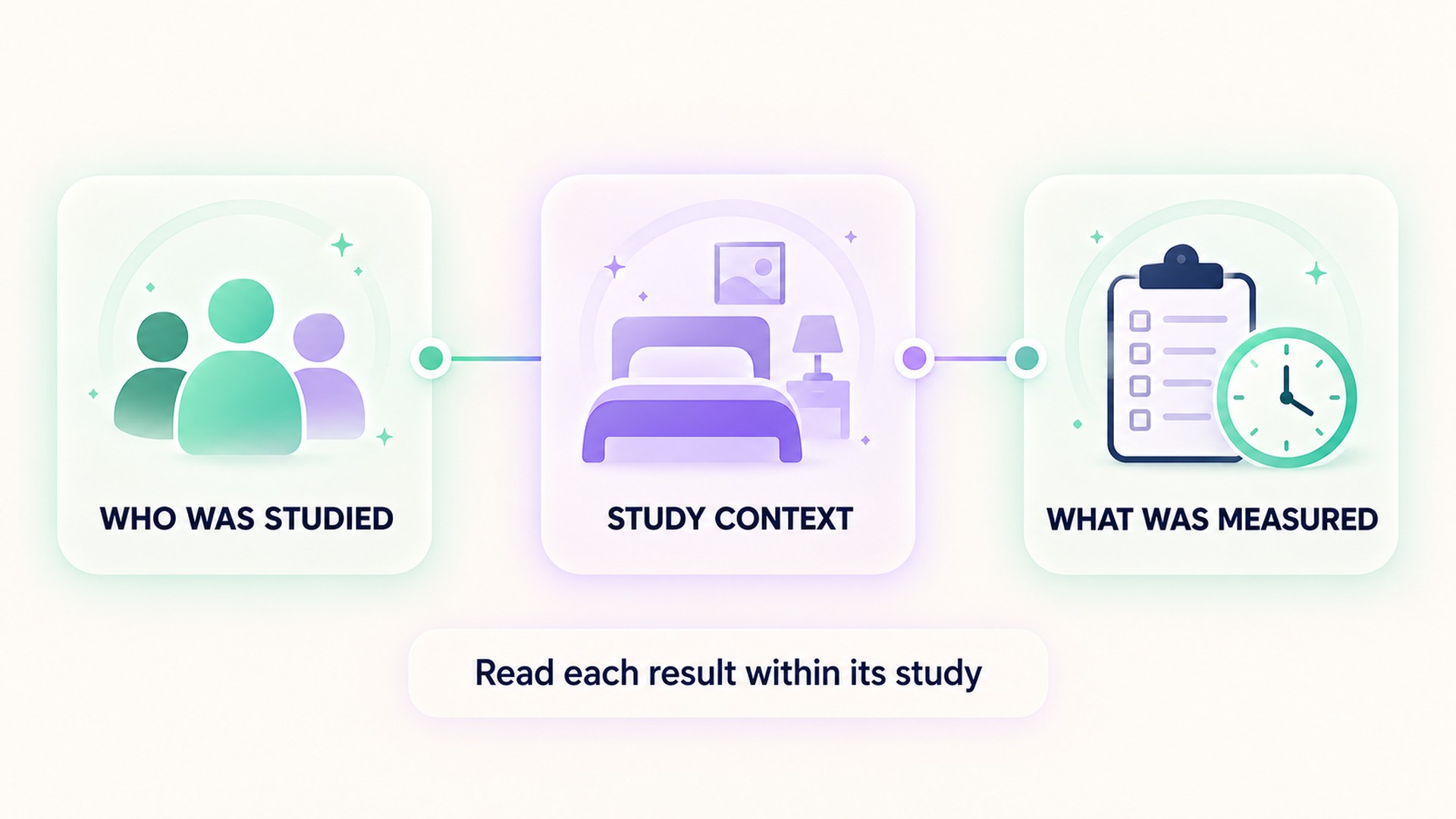
A randomized trial can compare groups and reduce some forms of bias, but it still answers a question about the participants, blanket, duration, and measures used in that study. The adult pilot trial enrolled people with clinical insomnia and compared blanket conditions for a limited period. Its questionnaire results and actigraphy outcomes did not all move in the same way. That distinction is more informative than a headline that says the blanket “worked.”
Studies may also differ in whether participants know which blanket they are using. A heavier blanket is difficult to mask completely, so expectations may affect self-reported comfort and sleep quality. Objective measures can add another perspective, but actigraphy estimates rest and activity rather than scoring every sleep stage with laboratory channels. A study can therefore report a subjective improvement without demonstrating a corresponding change in measured sleep architecture.
The psychiatric-population trials and reviews provide evidence about those study groups, not a guarantee for people without the same conditions. A result involving insomnia symptoms, anxiety, or a particular diagnosis should not be generalized to all adults. Likewise, a short study cannot establish long-term safety or usefulness for every person. The population and outcome belong beside any summary of the finding.
What to track if you try one
If you choose to use a weighted blanket, keep the record modest and specific. Note comfort, warmth, whether you used it for the planned part of the night, awakenings you remember, and how you felt the next day. If you also look at a sleep score, preserve it as a separate device estimate. Avoid changing several sleep habits at once if your goal is to understand what changed.
The scoping review of weighted blankets as a sleep intervention describes the range of available research and outcomes. A scoping review maps a field; it does not show that one intervention is proven for every person or condition. Distinguish the type of evidence and population each study examined before applying the result to your own situation.
A small laboratory study of healthy adults examined salivary melatonin before sleep while participants used different blankets. The study of pre-sleep melatonin concentrations investigated a biological marker in a short, controlled setting. A change in that marker is not itself proof of improved sleep quality or daytime function. It should not be turned into a claim that a weighted blanket treats insomnia or increases a particular sleep stage.
If an app summarizes a night into one score, look at what it actually measures. A comfortable night with no score change can still feel worthwhile. A higher score without a comfort improvement does not mean the blanket suited the person. A related guide on showing confidence next to sleep-stage percentages explains why estimated sleep stages should not be treated as direct evidence of how well an intervention worked.
Consider fit and personal circumstances
Weighted blankets are not necessary for good sleep, and there is no universal weight or use pattern that suits every adult. The studies use particular products and protocols. The label “weighted blanket” also covers products with different materials, construction, and weight distribution. A result from one design does not establish that another feels or performs the same way. If you compare product types, keep each trial period and blanket description clear. Avoid copying a study’s blanket-to-body-weight ratio as a personal prescription; researchers choose a protocol for a study, while an individual’s comfort and health situation may differ.
It is reasonable to stop using a blanket that causes discomfort or restricts movement. If you are unsure whether added weight is suitable because of a health or mobility concern, ask a healthcare professional before trying it. The studies summarized here do not establish suitability for every condition, age, or sleeping arrangement. Comfort and safe movement are relevant outcomes, even when they are not the main endpoint in a sleep trial. If the blanket feels too warm, makes movement difficult, or causes discomfort, that matters. People with mobility, breathing, or other health concerns should ask a qualified professional whether added weight is appropriate for them.
If you are comparing how you feel, decide ahead of time which observation matters to you: comfort, remembered awakenings, morning function, or the wearable estimate. Use the same question from one week to the next and note when the blanket was not used. Otherwise, a change in the record may simply reflect different nights or different ways of rating the experience. This kind of note can help you decide whether the blanket is comfortable enough to keep using, without presenting it as a medical test. Do not use the blanket as a substitute for evaluation of persistent insomnia, breathing symptoms, or another health concern. If sleep problems continue, a clinician can help identify whether the issue needs a different approach. A weighted blanket may be a comfort preference for one person, but the evidence does not make it a treatment plan for everyone.
A comfort rating and a measured sleep outcome should stay separate. Weighted-blanket studies offer some evidence in specific groups, but the designs and measurements vary, and results do not guarantee an individual benefit. Track the experience you actually had, label device estimates clearly, and seek professional advice when persistent symptoms or health concerns need attention.
FAQ
Does feeling more comfortable prove a weighted blanket improved my sleep?
No. Comfort is a meaningful personal report, but it does not establish a change in sleep duration, stages, or next-day function.
Can a sleep tracker show whether a weighted blanket works?
A tracker may show estimates over time, but it cannot isolate the blanket’s effect or guarantee that a score change came from it. Keep the estimate separate from your comfort notes.
Do weighted blankets work for everyone with insomnia?
No. Studies have involved specific groups and designs, and results vary. Discuss persistent sleep problems with a qualified professional rather than relying on a blanket or app score alone.
*This article is for informational purposes only and is not a substitute for professional medical advice, diagnosis or treatment.*
Sources:
BMC Psychiatry·Journal of Clinical Sleep Medicine·Journal of Psychiatric Research·Complementary Therapies in Medicine·American Journal of Occupational Therapy·Journal of Sleep Research
Related articles
A longer night after a sleep aid does not establish better alertness
A longer night after a sleep aid does not guarantee better next-day alertness. Learn why duration estimates and medication effects should be reviewed separately.
Melatonin timing and melatonin dose are separate questions
Melatonin timing and dose are separate questions with different clinical contexts. Learn why a sleep score cannot select a dose or establish that the supplement is appropriate.
How a daytime sleepiness test differs from an energy score
A daytime sleepiness test measures sleep propensity under controlled conditions, while an energy score summarizes device estimates. Learn why one cannot replace the other.

Acting out dreams needs a different review from restless sleep
Dream enactment and restless sleep are different observations. Learn what details to record, why movement counts cannot diagnose a sleep disorder, and when behavior merits clinical review.
Adding nighttime reflux symptoms to a sleep review
Nighttime reflux symptoms can add useful context to a sleep review, but a wearable cannot diagnose reflux. Learn what to record and when to ask a clinician about recurring symptoms.
Remembering a dream does not measure how much REM sleep occurred
Dream recall is not a measure of REM sleep duration. Learn how to keep a dream journal and a device estimate separate.
Recording sleep paralysis without assigning it a sleep stage
Sleep paralysis happens around falling asleep or waking, and a wearable stage graph cannot diagnose it. Learn what details to record and when to discuss recurring episodes with a clinician.

Keeping prescribed breathing treatment separate from a sleep score
Sleep score and prescribed breathing treatment answer different questions. Learn how to keep the records separate and what to bring to a clinical follow-up.
Why a laboratory sleep study can differ from a usual night at home
A laboratory sleep study records sleep under conditions that can differ from home. Learn how to discuss an unusual test night without dismissing the clinical findings.

How to Read a Sleep Graph When Deep Sleep Appears in Short Bursts
Short deep-sleep blocks on a wearable graph can reflect stage estimates, chart resolution, or missing sensor intervals. Read the time scale and coverage notes alongside the total sleep window before interpreting the pattern.