A detected fall cannot explain why someone fell
By Mr.Apps · Oct 23, 2026
Category:Wearable
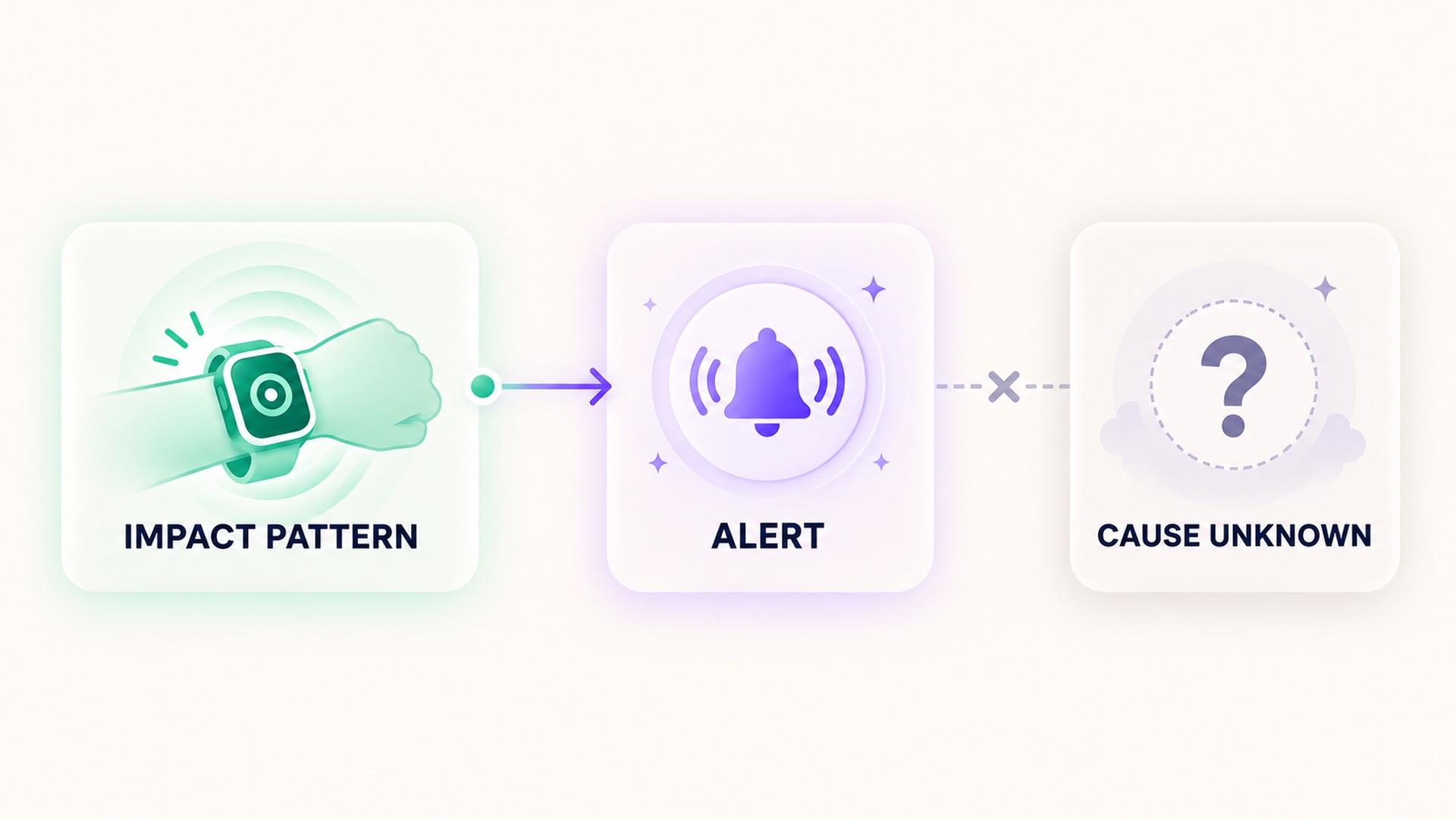
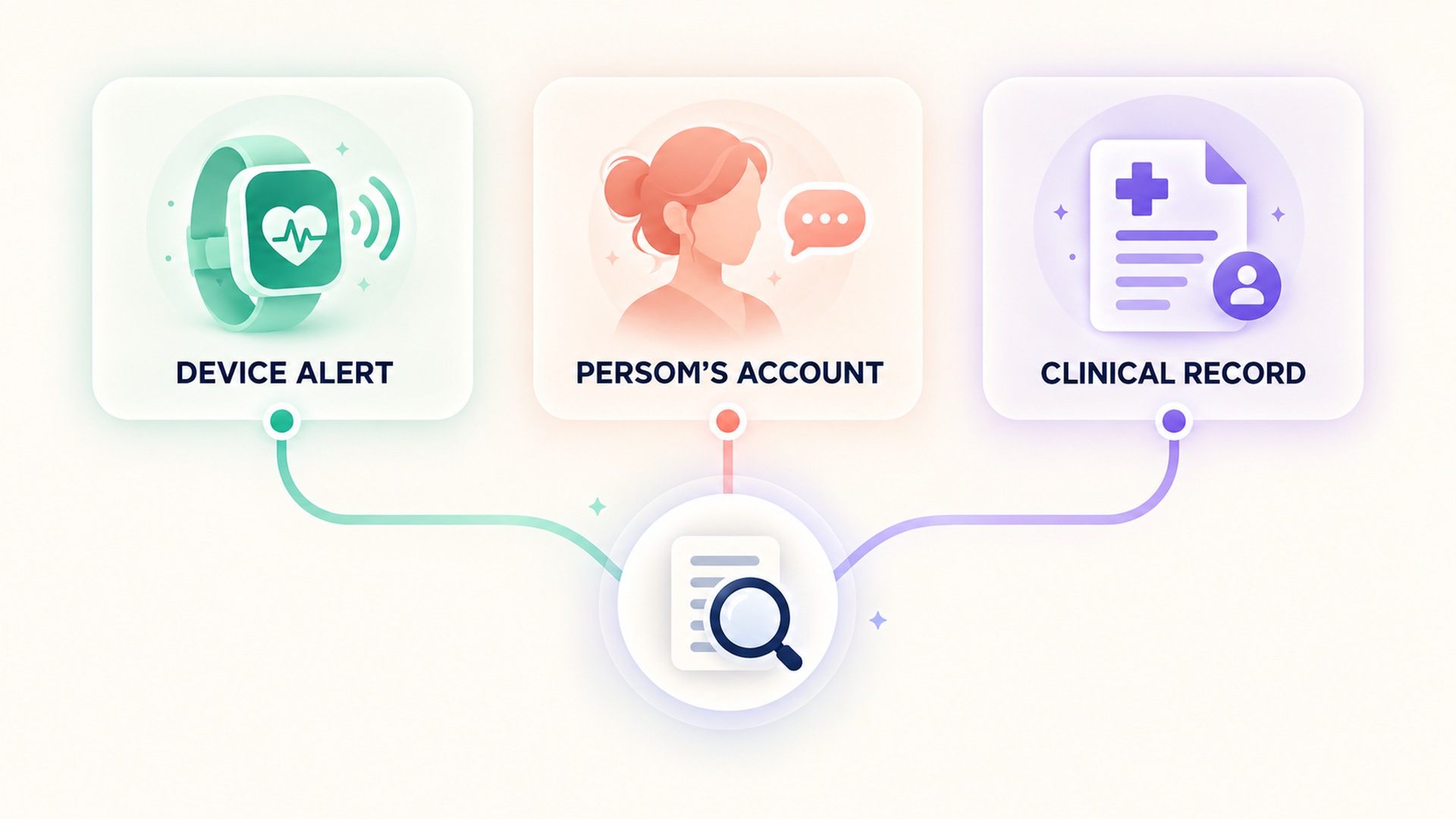
A fall-detection alert can identify a movement pattern that a device is designed to recognize. It cannot, by itself, explain why someone fell. An impact pattern does not show whether the cause was a trip, a fainting episode, a medication effect, a balance problem, or another event. When reviewing a detected fall, I keep the device alert separate from the account of what happened and any clinical assessment.
That distinction matters in both directions. A device may raise an alert when the person is not injured, or it may fail to recognize a fall. A detected event is not a diagnosis, and the absence of an alert is not proof that no fall occurred. The device records what its sensors and detection rules classified; a person’s symptoms and circumstances require separate information.
What a fall detector can observe
Wearables may use motion sensors and software to look for a pattern associated with a hard fall. The product may show an alert and offer an emergency calling flow, depending on the model, settings, connectivity, and what happens after the alert. The fall-detection support guide describes one such workflow and explicitly notes that not all falls can be detected. That product description is not evidence that every device behaves the same way.
The signal is a pattern, not a complete explanation. A device may measure abrupt movement or a change in position, but it does not necessarily capture the surface, the sequence of events, a person’s level of consciousness, or the presence of an underlying illness. Even if the alert is accurate that an impact-like movement occurred, it cannot determine the cause from that movement alone.
Several causes can lead to a fall
Falls can involve multiple factors at once. Balance, strength, vision, medication effects, health conditions, footwear, and the surrounding environment may all be relevant. A device alert cannot separate those contributors without additional information. The public health overview of falls discusses the range of risk factors and the complexity of fall events. Its broader prevention information should not be confused with an explanation of one individual incident.
Clinical and public health sources describe interactions among risk factors rather than a single universal cause. The older-adult fall facts resource notes that multiple risk factors can contribute. A fall-risk fact sheet describes factors that can interact, such as balance, medication, vision, and environmental hazards. A single alert contains far less context than a clinical review, and it may not have access to the person’s medication list, symptoms, recent changes, or surroundings. Treat it as one piece of information, not as a causal analysis.
This is also why the same impact pattern can mean different things in different circumstances. A stumble during movement, a loss of balance on an uneven surface, and a sudden collapse can create overlapping sensor signatures. The alert can help someone check in, but it does not tell a clinician whether the person fainted, slipped, experienced dizziness, or sustained an injury. The person’s account and other records remain important.
Read the event log as a timeline, not a diagnosis
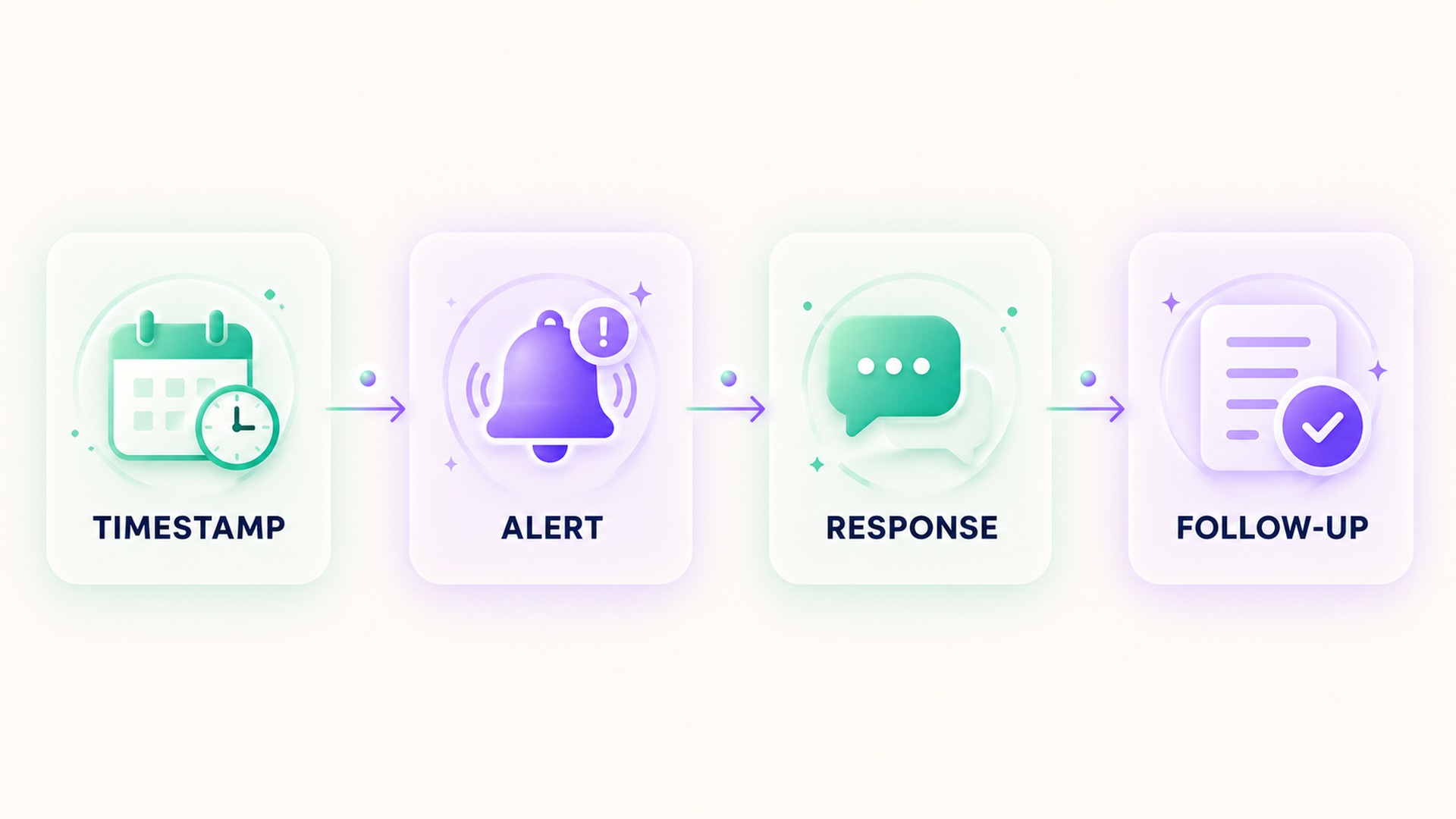
A fall log can help establish when an alert appeared, what response was offered, and whether the person dismissed it or requested help. It may also record a user’s later correction. Those details describe the device interaction. They do not necessarily capture the full event before or after the alert. A person may have been moving when the device checked for a response, or may have been unable to use the screen even though no automatic call was triggered.
Compare the log with other information only when it is available and relevant. A witness account, a symptom note, a route timeline, or a clinical record may add context, but each source has its own limits. The timing of an alert can be later than the initial movement, and a phone may receive a notification after a delay. Record what each source says rather than forcing them into one continuous story when timestamps or descriptions differ.
If a person reports that a fall occurred but the device shows no event, preserve both facts. Do not alter the user’s report to match the sensor. If the device shows an alert but the person says the movement was not a fall, keep the alert and correction visible. This makes the record useful for checking device behavior without turning a disagreement into a diagnosis.
Detection is not the same as prevention
An alert can support a response after a possible event, but it does not prevent the conditions that contribute to falls. Risk review may involve strength and balance, vision, medications, footwear, lighting, or other environmental factors. The device can describe one detected movement; it cannot complete that broader review on its own. Prevention guidance is individual and should be discussed with an appropriate health professional.
Do not use the presence or absence of fall alerts as a substitute for looking at a person’s concerns. Repeated alerts may reflect settings or detection behavior, while a person may experience unrecorded events. A clear log can help organize questions, but it should not be used to rank someone's health or independence without adequate evidence and context.
Separate detection from emergency response
The alert and any emergency response are also separate functions. A device might ask the wearer to respond, call emergency services after a countdown, or notify an emergency contact under specific settings. The behavior can depend on whether the person moves, whether wrist detection or an equivalent setting is enabled, and whether a compatible connection is available. The emergency alert instructions describe conditions for one device family; read the documentation for the exact device in use.
A device can fail to detect a fall or may detect a movement that is not a fall. An alert may also fail to reach a contact if the device lacks connectivity or the emergency workflow has not been configured. Do not assume that the person was contacted simply because an alert appeared, or that an event did not happen because no notification arrived. Verify what the device recorded and what the response flow actually did.
Record what happened in plain language
If you are reviewing a fall record, start with the timestamp and the device’s label. Then check whether the person described an event, whether anyone observed it, and whether an assessment or medical record exists. Keep those sources distinct. A “fall detected” label describes the system’s classification. A person’s note describes what they remember or experienced. A clinical record may contain an assessment of symptoms or injury.
Use neutral wording when details are uncertain. “Device generated a fall alert” is more precise than “the device confirmed a fall caused by dizziness.” If the person reports a loss of balance but no cause is known, preserve that uncertainty. Do not transform a notification into an explanation simply because the app uses a confident label or adds a suggested next step.
If symptoms, injury, or a possible medical event are present, a wearable alert is not a substitute for appropriate professional care. Public health fall-prevention materials recommend assessment of risk factors and tailored interventions rather than relying on one signal. The fall-prevention guidance encourages discussion with a health care provider about individual risk and prevention options. Those decisions depend on the person’s circumstances, not only on the device’s movement classification.
Interpret a missing alert carefully
No alert does not establish that a fall did not occur. The movement may not match the algorithm’s threshold, the device may not have been worn, or the feature may have been off. A connection may also be unavailable. The device’s help page can explain known conditions and setup requirements, but a lack of notification should not be used to dismiss a person’s account.
Likewise, a positive alert does not establish injury severity. The event may involve no injury, or a person may need evaluation for symptoms that the wearable cannot observe. Detection performance and clinical assessment answer different questions. A useful record should preserve the alert, the person’s description, and any follow-up as separate pieces of evidence.
For broader context on keeping an app’s inference distinct from a confirmed health record, see this guide to separating injury inference from diagnosis. A device can raise a useful question about an event. It cannot answer every question about the cause or consequences.
Keep the source and date attached to each part of the record.
Frequently asked questions
Can a wearable tell why someone fell?
No. A wearable may detect a pattern associated with a fall, but it does not establish the cause. The reason can involve physical, medical, behavioral, or environmental factors that require additional information.
Does a missing alert mean no fall happened?
No. A device may not detect every fall, and the feature may be unavailable or not worn. Review the person’s account and other records separately from the device log.
Does a fall alert confirm an injury?
No. An alert is a device classification, not an injury assessment. Symptoms and clinical findings require separate evaluation.
*This article is for informational purposes only and is not a substitute for professional medical advice, diagnosis or treatment.*
Sources:
Apple Support·World Health Organization·Centers for Disease Control and Prevention·Centers for Disease Control and Prevention·Apple Support·Centers for Disease Control and Prevention
Related articles
Health charts need labels and shapes as well as color
A health chart should remain understandable when a reader cannot distinguish its colors. Color can make a graph easier to scan, but it should not be the only cue that tells someone which line is a metric, whether a result changed, or what action a symbol represents.
An inferred injury should not become a confirmed health record
A health app may infer an injury from a pattern, but that is different from a user report or clinical diagnosis. Check the source, date, and supporting record before treating the statement as confirmed.
Adding a workout photo requires a separate privacy review
A workout photo can reveal details beyond the activity numbers, including background clues and file metadata. Review the image, its audience, and the final share preview before posting.
Review who can see each health metric before enabling social sharing
A social-sharing control can reveal a specific health metric to a chosen audience or a wider group. Check the metric, audience, preview, and ongoing data permissions before enabling it.
Health notification previews can expose information on a locked screen
A health alert can be useful while its full text stays hidden from bystanders. Check notification previews on the phone and paired devices before relying on lock-screen privacy.
Confirm a workout has stopped before trusting its final totals
A workout can keep recording after the exercise itself has ended. Check the stop action, saved summary, and time boundaries before interpreting the totals.

Automatic workout merging can hide the break between sessions
Workout history can combine nearby sessions into one entry, even when you intended to record a meaningful break. Review the timestamps, segments, and source before interpreting the total as one continuous effort.
A supplement quality seal does not prove a recovery benefit
A quality seal may indicate that a product passed specific checks, but it does not show that the supplement improves recovery. Keep manufacturing evidence, ingredient evidence, and human outcome evidence separate.
Lower energy after cutting caffeine may need withdrawal context
Fatigue after reducing caffeine can be part of withdrawal, but it is not the only possible explanation. Keep the timing of the change, symptoms, sleep, and other context together before interpreting an energy score.
Total fat does not describe the saturated fat in a food log
Total fat and saturated fat are related label fields, but they are not interchangeable. Keep the total and its saturated-fat component visible when recording food or comparing packages.