An inferred injury should not become a confirmed health record
By Mr.Apps · Oct 23, 2026
Category:Wearable
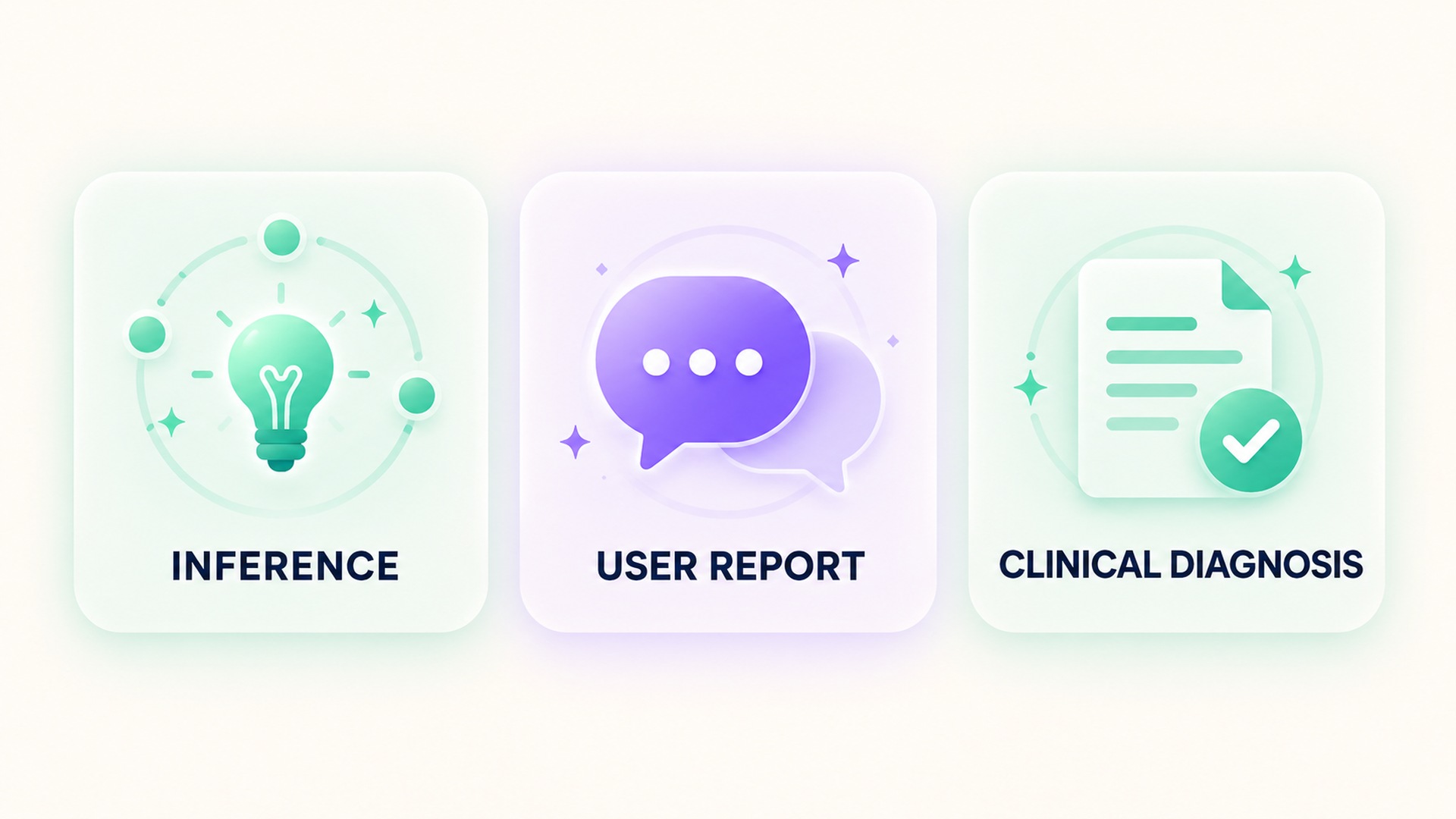
An app may infer an injury from changes in activity, a journal entry, or a pattern in health data. That inference can be useful as a question to check, but it is not the same as a user report or a clinical diagnosis. When a coach or health summary presents an injury as confirmed, I look for the record that supports the statement and ask how the system knows what it claims to know.
The difference matters because the three statements carry different evidence. “The pattern may be consistent with an injury” is an inference. “The user reported knee pain” is a reported symptom. “A clinician diagnosed a specific condition” describes a clinical conclusion documented by a professional. An app should preserve those distinctions rather than turning a possibility into a fact through confident wording.
Ask what evidence supports the statement
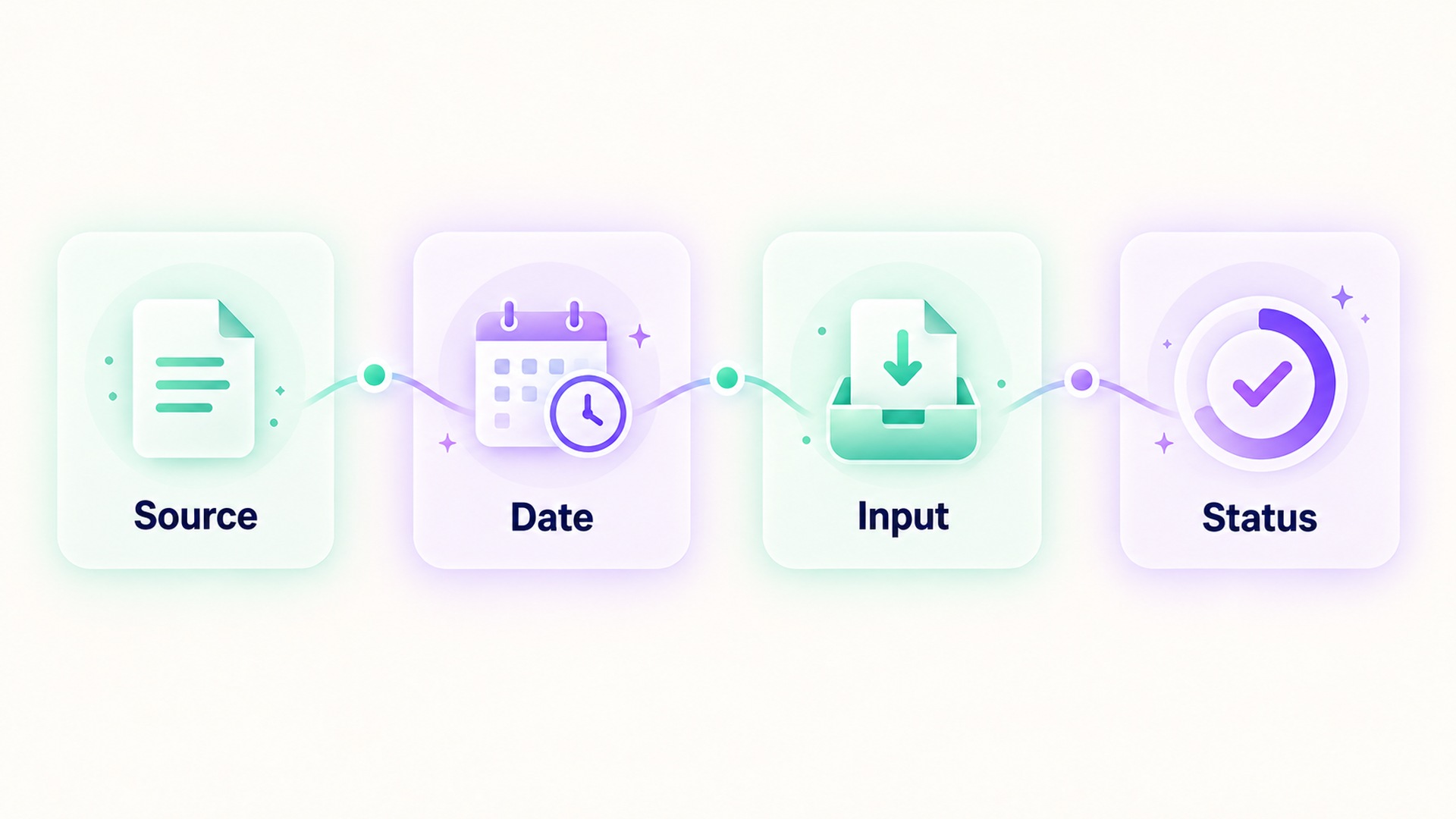
Start by checking the source, date, and type of information. Was the claim drawn from a journal note, a sensor trend, an imported medical record, or a conversation? Did the person explicitly report an injury, or did the system infer it from a change in training? Is there a clinical document, and does it name the condition the app now displays? A useful summary identifies its evidence instead of leaving the user to guess.
Clinical decision-support guidance recognizes that software can organize patient-specific information to support a care decision. It also distinguishes this from a program that produces a specific diagnostic or treatment directive. The clinical decision-support overview explains how the agency considers different kinds of software functions. It does not establish the accuracy of any particular consumer coach, so a user still needs to inspect the underlying information.
Keep inference, report, and diagnosis separate
An inference describes what a system thinks may be true based on available inputs. It should be presented as uncertain, with enough context to show which inputs led to it. A report records what a person said or selected. It should preserve the person’s wording and the time they entered it when those details are available. A diagnosis is a clinical conclusion made in an appropriate care context. It should not be attributed to a clinician unless the source actually contains that conclusion.
These categories can relate to one another without being interchangeable. A person may report soreness, and a coach may infer that the training plan should be reviewed. Neither statement alone proves a tissue injury. A diagnosis may later be documented, but it should be linked to that record and its date rather than silently substituted for an earlier guess. Keeping the categories visible lets a later reader understand what was observed and what remains uncertain.
Health information tools can support a care team by organizing timely and person-specific information. The clinical decision-support resource describes the role of digital tools in presenting information for better care decisions. That role does not mean that every generated coaching sentence is a verified medical conclusion. The source and intended use still matter.
A useful explanation shows the route from input to output
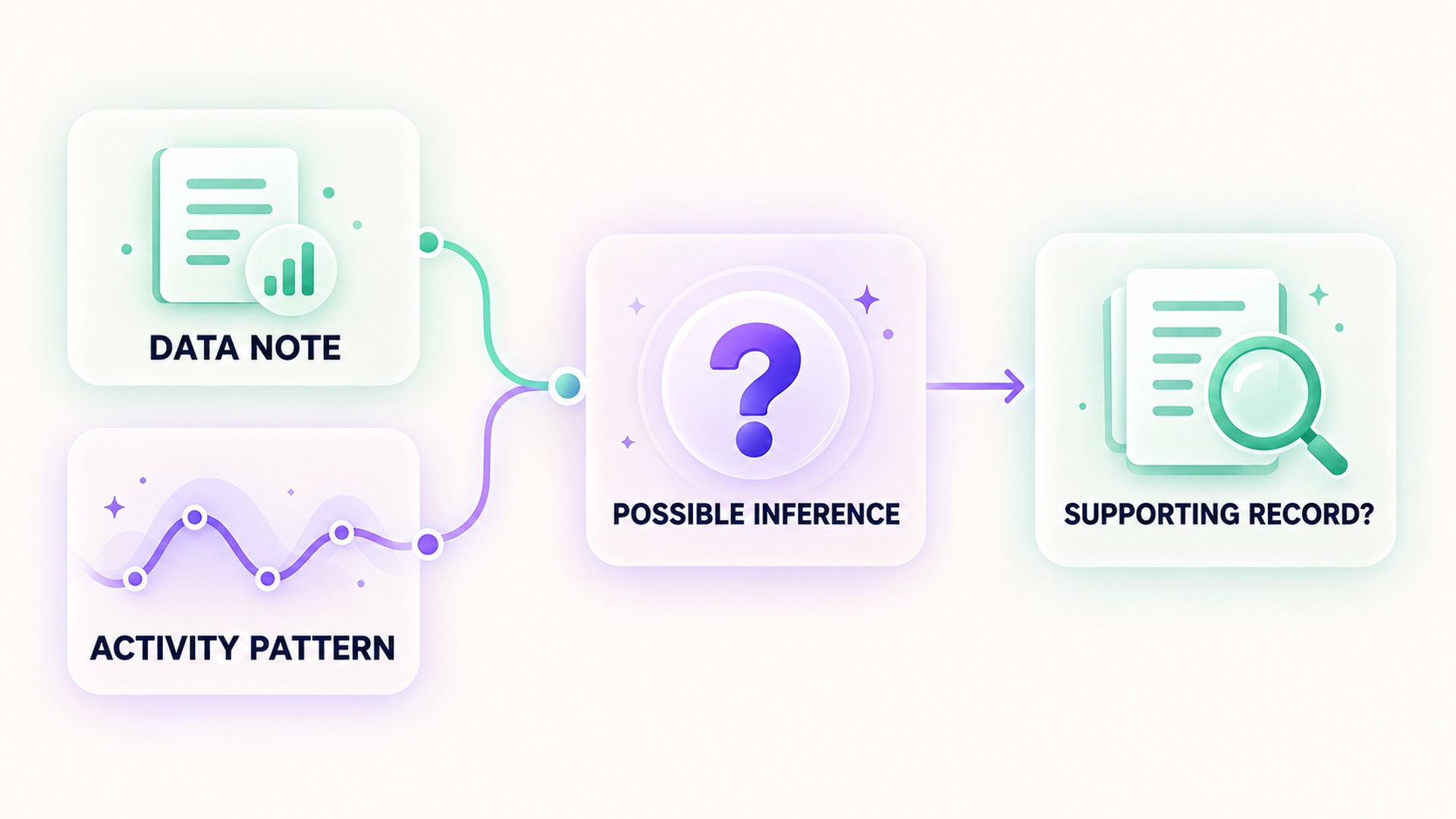
If an app claims an injury is present, ask what data it used and when those data were recorded. A weekly reduction in workouts, a change in a metric, or a single sentence in a journal may be relevant context, but each has limits. The system may have incomplete records, lack information about treatment, or miss an activity recorded elsewhere. An explanation should help the user see those limits instead of presenting a label without provenance.
Risk-management guidance for AI emphasizes that systems should be evaluated in the context where they are used and that limitations beyond the conditions of development should be documented. The AI risk framework overview describes a voluntary approach to managing risks across the design and use of AI systems. In practical terms, a coach should not imply that its inference applies to every person or situation when the system has not established that.
The wording should also allow correction. A user needs a way to say “this is not an injury,” “this is a symptom I reported,” or “the diagnosis came from a record.” A correction should update the status of the claim, not erase the original note without explanation. If the platform keeps a history, it can show that an earlier inference was later revised. This preserves a clear record of what the system said and what the person clarified.
Do not assume an app accessed a hidden record
If a coach mentions an injury that the user did not enter, the first step is to inspect the data sources and permissions available to the app. The appearance of a specific statement does not prove that the system read a private medical record. It might have inferred a possibility from activity patterns, misunderstood a journal entry, or reused information from a prior conversation. Ask the service to identify the supporting record and the source it used.
Health apps can access information through permissions and integrations, and the scope may vary by data category. The health-app developer guidance for software teams discusses limiting data access and communicating how sensitive information is used. Review the operating system’s permission list and the app’s own privacy explanation when you need to understand access. A single generated sentence is not enough evidence to conclude that a service obtained an undisclosed record.
Model explanations can be helpful, but they do not automatically prove that an output is correct. The AI risk characteristics resource discusses validity, reliability, explainability, and human intervention as considerations that depend on context. A separate transparency project for AI-enabled health software examines what patients and providers need to understand about the way these tools are used. A plausible explanation can still be incomplete or mistaken. Ask for the input, time period, and uncertainty level instead of accepting a fluent paragraph as proof.
Correct the health record with the right level of certainty
If an app offers labels such as “possible,” “reported,” and “confirmed,” choose the one that matches the available evidence. If the record does not offer a clear status, use a note to distinguish what was observed from what was inferred. Do not add a diagnosis simply because the app has placed an injury in a summary, and do not delete a reported symptom to make the data look cleaner.
When a clinical record is available, use the exact information it contains and keep its date and source. A document may record a symptom, assessment, suspected condition, or confirmed diagnosis; those are not all the same. If the record is unclear, ask the clinician who wrote it rather than guessing from a shorthand code or app-generated label. A consumer tool can help organize questions, but it should not replace professional interpretation of a clinical record.
For a broader look at how health information can be shared between apps and services, see this guide to metric and app permissions. Data access and the truth of a generated claim are separate questions; checking both helps prevent an unsupported inference from becoming part of a health history.
The correction should be specific enough that another reader can understand it later. If a note describes soreness after an activity, retain that description as a report rather than converting it into a named injury. If a clinician’s record documents a diagnosis, preserve the wording and the date instead of using a broader label from an app. If a sensor trend prompted the coach, note that the system raised a possibility from a pattern. These distinctions improve the usefulness of summaries because the source of each statement remains visible.
If the system cannot explain which record it used, treat that as a limit in the available information. You can ask the service for its input history, review connected data sources, or remove a statement that the platform allows you to correct. Avoid making a new medical conclusion simply to replace the uncertain one. A missing source is a reason to seek clarification, not a reason to fill in the gap with another guess.
Keep the original report and the correction separate when possible, so later readers can see what changed and why.
This preserves context without overstating what the evidence can support when the record permits.
Frequently asked questions
Is an app’s injury inference a diagnosis?
No. An inference is a system-generated possibility based on available inputs. A diagnosis is a clinical conclusion and should be attributed to a qualified professional only when the record supports that.
What should I ask if a coach names an injury I did not report?
Ask which record or input supports the statement, when it was collected, and whether the system inferred it or imported it. Review the app’s data permissions separately rather than assuming access to a hidden record.
Can I correct an injury label in a health app?
Use the app’s correction or feedback control and state whether the information was inferred, self-reported, or documented by a clinician. Keep the original context if the app maintains a history.
*This article is for informational purposes only and is not a substitute for professional medical advice, diagnosis or treatment.*
Sources:
U.S. Food and Drug Administration·HealthIT.gov·National Institute of Standards and Technology·Federal Trade Commission·National Institute of Standards and Technology·U.S. Food and Drug Administration
Related articles
Adding a workout photo requires a separate privacy review
A workout photo can reveal details beyond the activity numbers, including background clues and file metadata. Review the image, its audience, and the final share preview before posting.
Review who can see each health metric before enabling social sharing
A social-sharing control can reveal a specific health metric to a chosen audience or a wider group. Check the metric, audience, preview, and ongoing data permissions before enabling it.
Health notification previews can expose information on a locked screen
A health alert can be useful while its full text stays hidden from bystanders. Check notification previews on the phone and paired devices before relying on lock-screen privacy.
Confirm a workout has stopped before trusting its final totals
A workout can keep recording after the exercise itself has ended. Check the stop action, saved summary, and time boundaries before interpreting the totals.

Automatic workout merging can hide the break between sessions
Workout history can combine nearby sessions into one entry, even when you intended to record a meaningful break. Review the timestamps, segments, and source before interpreting the total as one continuous effort.
A supplement quality seal does not prove a recovery benefit
A quality seal may indicate that a product passed specific checks, but it does not show that the supplement improves recovery. Keep manufacturing evidence, ingredient evidence, and human outcome evidence separate.

Lower energy after cutting caffeine may need withdrawal context
Fatigue after reducing caffeine can be part of withdrawal, but it is not the only possible explanation. Keep the timing of the change, symptoms, sleep, and other context together before interpreting an energy score.
Total fat does not describe the saturated fat in a food log
Total fat and saturated fat are related label fields, but they are not interchangeable. Keep the total and its saturated-fat component visible when recording food or comparing packages.
Net carbohydrate claims need the total carbohydrate record beside them
A “net carb” number can hide how it was calculated. Keep total carbohydrate, fiber, sugar alcohols, serving size, and the subtraction method together so a food record remains interpretable.

Check servings per container before logging a whole package
Nutrition values are often listed per serving even when a package contains several servings. Check the serving count and the amount eaten before entering the whole package into a food log.