Lower energy after cutting caffeine may need withdrawal context
By Mr.Apps · Oct 22, 2026
Category:Wearable

Someone who cuts back on caffeine may feel less energetic for a period, especially if the change is abrupt after regular use. Fatigue, drowsiness, headache, irritability, and difficulty concentrating are among the symptoms described in caffeine withdrawal research. But a lower energy score after reducing caffeine does not prove withdrawal caused it. Sleep, illness, stress, schedule, medication, and the wearable’s own method can also change how a person feels or what the device reports.
I begin a useful review with the timing: what changed, when the symptoms began, and how the person had been using caffeine before the change. The record should also keep the person’s own experience separate from an app estimate. This helps identify a question to discuss without turning an association into a diagnosis or an online taper plan.
Why a caffeine change can affect how someone feels
Caffeine is a stimulant that can temporarily influence alertness. With regular use, some people experience symptoms when they reduce or stop it. A critical review of caffeine withdrawal identified symptoms such as headache, fatigue, reduced energy, drowsiness, lower alertness, mood change, and difficulty concentrating. The review describes a possible symptom pattern; it does not mean every person will have withdrawal or that every episode of fatigue has that cause.
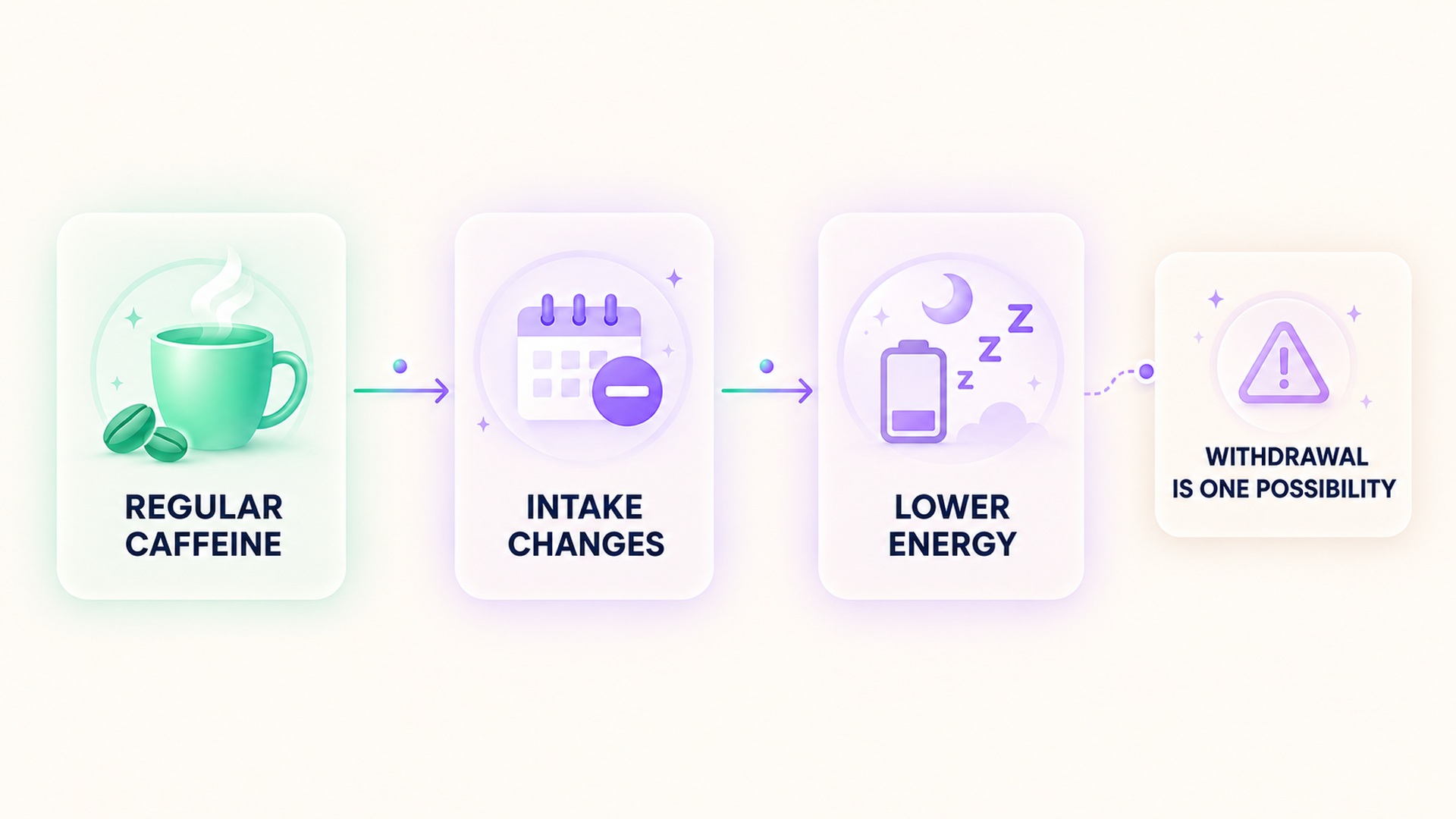
The amount and timing of prior caffeine use matter. Someone who consumes caffeine daily may have a different response from someone who uses it occasionally. Product sizes and caffeine amounts also vary, so “one cup” is not a consistent exposure measure. If the log does not include amounts, it may be difficult to know whether the change was small or substantial. A consumer reference to caffeine and cutting back notes that people who consume caffeine daily may prefer to reduce gradually because withdrawal can be unpleasant.
Withdrawal is not a complete explanation for every change in alertness. A person may also be sleeping less, waking at a different time, recovering from an illness, changing work hours, or taking a medication that affects energy. Some people cut caffeine because they are already feeling unwell, which can make it hard to determine which came first. Those facts belong in the review rather than being folded into a single “recovery” number.
Keep symptoms and scores separate
A wearable energy or readiness score is an estimate generated from particular signals and an algorithm. It does not measure caffeine withdrawal, diagnose a cause of fatigue, or confirm that caffeine reduction is the problem. A lower score can be consistent with many different circumstances. Some devices use a baseline that changes over time, so compare the same metric and check for a software or settings change. Keep the model’s output as an observation, not as a measure of caffeine exposure or a diagnosis. A normal-looking score also does not mean that the person feels well or that a symptom should be ignored.
A medical information page on caffeine describes symptoms that may follow abrupt cessation after regular use. A validated questionnaire study also grouped reported experiences such as fatigue, low alertness, difficulty concentrating, and headache; those findings describe study participants rather than predicting every individual’s course. That information can help someone recognize a possible pattern, but it does not tell an individual what is causing their current symptoms. If fatigue is severe, persistent, unusual, or accompanied by concerning symptoms, a qualified clinician can assess the broader context.
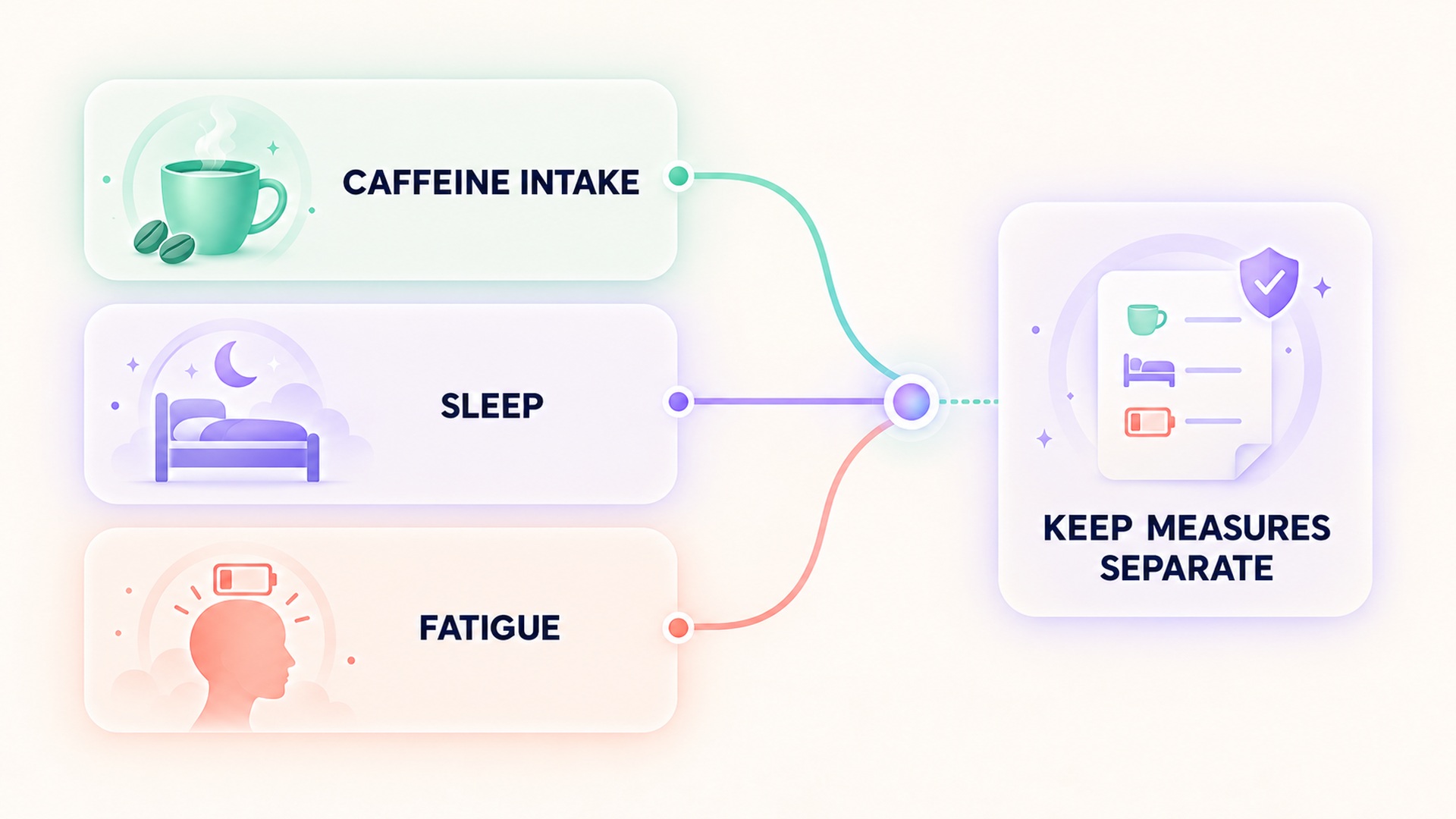
For a personal record, note the approximate caffeine amount and timing before and after the change, the date the change began, and symptoms such as fatigue or headache. Record sleep timing, illness, unusually demanding activity, and missing wearable data when relevant. If the exact caffeine amount is unknown, write that rather than guessing. Preserve the label or product details when available. A clinical review of caffeine withdrawal also emphasizes that symptom histories matter when clinicians consider possible withdrawal.
A useful comparison requires a clear baseline. If someone usually consumes caffeine at several times of day, one entry for “daily coffee” may not describe the timing or total amount. Write down the drinks and other sources the person actually knows about, along with serving sizes. If a source is uncertain, label it. A day with missing amounts should not be compared as though its total were complete. This keeps a later chart from creating a false impression of precision.
The onset and duration of symptoms may vary. Research describes group patterns, but it cannot give a personal deadline for when a person should feel normal. A log can mark when fatigue began and whether it changed over time. Avoid setting a success criterion such as “the score must rise by Friday.” If the person continues to feel unwell, that deserves attention regardless of the app trend. The absence of a withdrawal pattern does not rule out other health concerns, and the presence of possible withdrawal symptoms does not explain every symptom.
Do not infer causation from one day. A comparison across several observations can show whether the timing is consistent, but it still cannot isolate caffeine from other changes. A person may reduce caffeine while also changing bedtime, food intake, hydration, exercise, or medication. Keep those factors visible and make the conclusion proportionate to the evidence.
Make the record useful without prescribing a plan
If someone chooses to track the change, use the same definition for a serving each day and record beverages, foods, supplements, and medicines that may contain caffeine. Caffeine can be present in products beyond coffee or tea. A reference on caffeine sources and use describes common sources and notes that stopping suddenly can bring symptoms.
This does not justify telling every reader to taper in a particular way or on a fixed schedule. Individual intake and health circumstances vary. People with relevant medical conditions, medication questions, pregnancy, or persistent symptoms should ask a healthcare professional for advice. Do not change a prescribed medicine based on a wearable score or a generic guide.
Sleep debt can also be part of the picture. Caffeine may have been masking sleepiness rather than removing the underlying need for sleep. A reduction can make that tiredness more noticeable even if sleep itself has not suddenly worsened. Conversely, the person may sleep better after reducing caffeine but still feel tired because of another cause. Record sleep opportunity and perceived rest separately from caffeine intake and score changes.
A clinician may ask about the amount consumed, how quickly it changed, other medications or supplements, and the nature of the fatigue. A diary can support that discussion if it is factual and consistent. It should not replace an evaluation when symptoms are persistent or interfere with daily function. A score cannot distinguish withdrawal from anemia, infection, mood changes, sleep disorders, medication effects, or other potential causes; those questions require appropriate medical assessment.
The purpose of the log is to make the timeline clear: caffeine intake changed, these symptoms were noticed, and the device produced this estimate. It is equally useful to record when symptoms do not change or when the score and the person’s experience disagree. That helps prevent a dashboard from overriding the person’s report or a plausible withdrawal pattern from hiding another cause.
Do not use the log to justify restarting caffeine or taking a supplement as a treatment for fatigue. A temporary change in alertness does not identify the underlying cause, and caffeine can interact with health conditions or medicines. If a person is considering a significant change in intake, especially during treatment for another condition, a clinician or pharmacist can help assess individual considerations. A general consumer article is not a personalized plan.
It can be helpful to review intake and sleep together without combining them into one score. Note whether the person got a usual opportunity to sleep, whether the recording was complete, and whether a new routine or illness began. These details may show that a comparison is inconclusive. An inconclusive pattern is still useful because it prevents a mistaken conclusion and can guide what information to collect next.
A related guide to interpreting wearable journals explains why timing alone does not establish cause. Use that distinction here: withdrawal is one possible explanation for lower energy after cutting caffeine, while the cause of persistent or concerning fatigue may require professional assessment.
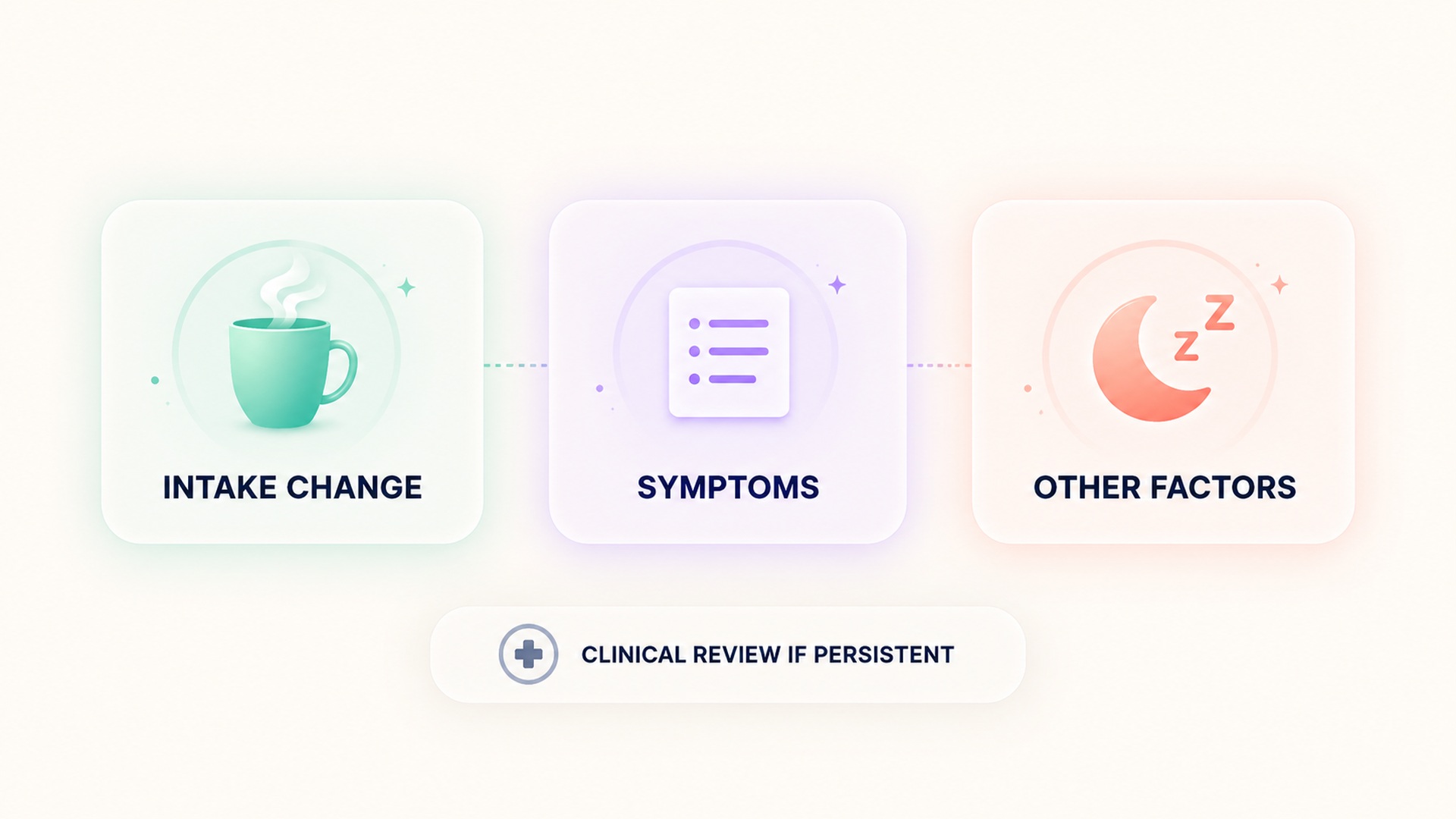
If fatigue continues or worsens, seek professional assessment rather than assuming caffeine withdrawal from the timing or score alone.
FAQ
Can cutting caffeine make me feel tired?
It can. Fatigue, drowsiness, headache, and difficulty concentrating are reported withdrawal symptoms after regular caffeine use is reduced or stopped. Those symptoms are not specific to withdrawal, so other causes may also need consideration.
Does a low wearable energy score confirm caffeine withdrawal?
No. A wearable score is an estimate and cannot diagnose withdrawal or identify the cause of fatigue. Record the intake change, timing, symptoms, sleep, and other relevant context separately.
Should I follow a fixed caffeine taper based on my wearable?
No. A wearable cannot prescribe a taper. If you have health or medication questions, persistent symptoms, or a clinician-directed plan, ask a qualified healthcare professional for individual guidance.
*This article is for informational purposes only and is not a substitute for professional medical advice, diagnosis or treatment.*
Sources:
U.S. Food and Drug Administration·Psychopharmacology·MedlinePlus·StatPearls Publishing·MedlinePlus·Drug and Alcohol Dependence
Related articles

Total fat does not describe the saturated fat in a food log
Total fat and saturated fat are related label fields, but they are not interchangeable. Keep the total and its saturated-fat component visible when recording food or comparing packages.

Net carbohydrate claims need the total carbohydrate record beside them
A “net carb” number can hide how it was calculated. Keep total carbohydrate, fiber, sugar alcohols, serving size, and the subtraction method together so a food record remains interpretable.

Check servings per container before logging a whole package
Nutrition values are often listed per serving even when a package contains several servings. Check the serving count and the amount eaten before entering the whole package into a food log.
Sodium and salt amounts should not be entered as the same number
Salt and sodium are related but they are not the same quantity. Keep the label’s nutrient value and the food’s salt description separate so a nutrition log does not silently change units.

Add caffeine milligrams across drinks, foods and supplements
A caffeine journal is more accurate when it counts milligrams from drinks, foods, and supplements together. Keep product serving sizes and unknown amounts visible instead of treating each item as one equal dose.
Sleep changes after reducing alcohol need more than a score comparison
Sleep may change after someone reduces alcohol, but a score comparison cannot explain the cause or the course. A useful review includes symptoms, timing, routine, device limits, and medical support when needed.
Alcohol tolerance does not establish that recovery is unaffected
Feeling less affected by alcohol does not show that the body or sleep is unaffected. Keep subjective tolerance, drinking records, wearable estimates, and clinical recovery as separate questions.

Count alcohol content rather than glasses in a recovery journal
A glass count can hide differences in serving size and alcohol strength. Record the beverage amount and its alcohol content so a journal preserves the inputs behind each estimate.
Recording beyond phone range requires sensor memory support
Live sensor broadcasting and local workout storage are different capabilities. Learn what to verify before leaving a phone behind and how to confirm that the saved session transferred afterward.

Repeated vibration can add steps without walking
Wrist step counters infer walking from motion patterns, so repeated vibration can sometimes add step-like movement to a total. Learn how to identify a suspicious time block without inventing a walk or discarding the rest of the day's data.