A supplement quality seal does not prove a recovery benefit
By Mr.Apps · Oct 22, 2026
Category:Wearable
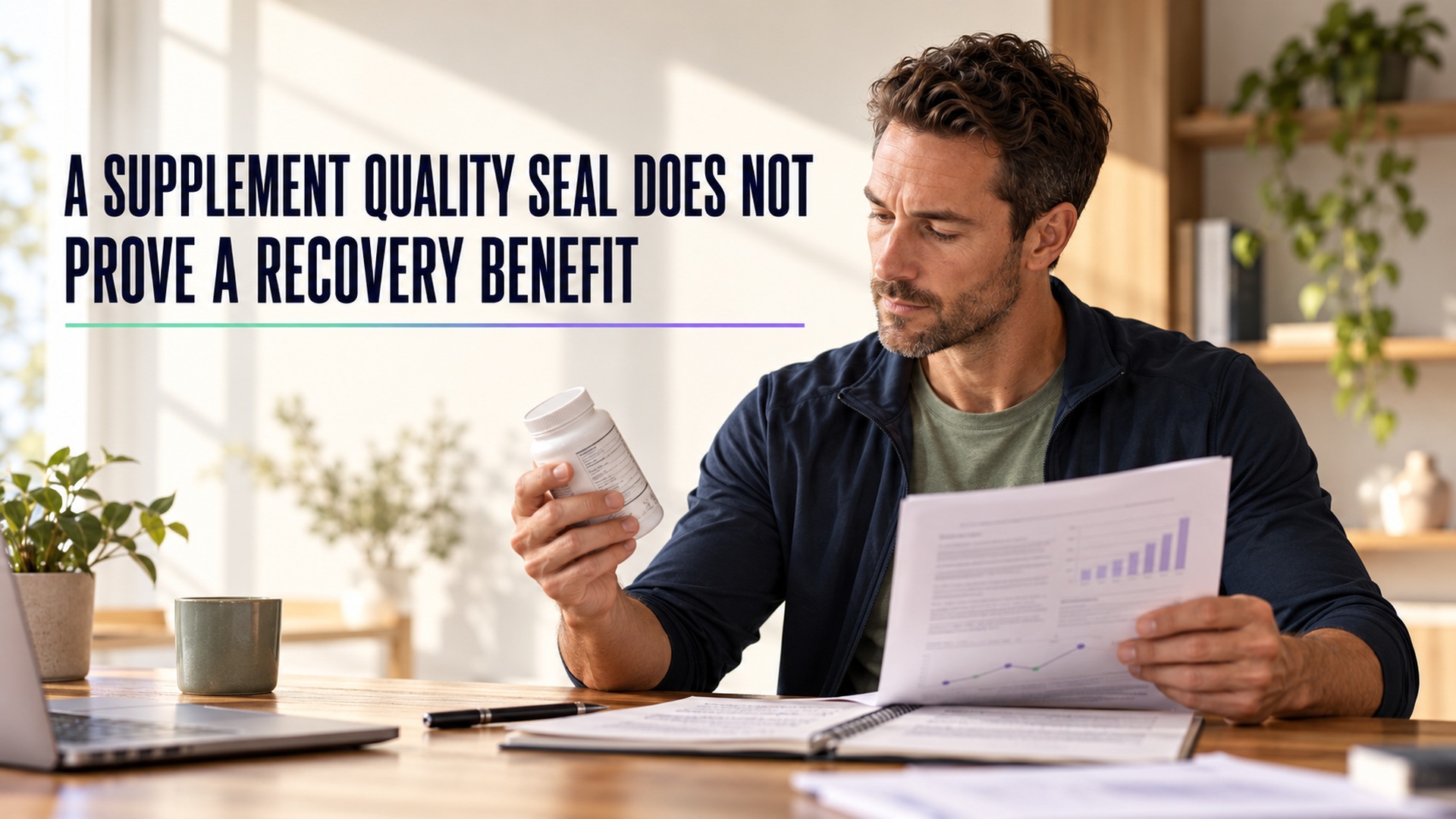
A third-party quality seal can be useful information, but it does not answer every question a person might have about a supplement. Depending on the program, testing may check whether the product contains its listed ingredients, whether the amount is within a defined range, or whether certain contaminants are below a limit. Those checks concern the product’s identity and quality under that program. They do not establish that the supplement improves sleep, exercise recovery, fatigue, or any other health outcome.
I separate these questions because “tested” can sound broader than the test actually was. A seal is not a personalized recommendation, a diagnosis, or proof that a product works. To evaluate a recovery claim, evidence about the specific ingredient, dose, population, and outcome is needed in addition to product-quality information.
What a quality check can establish
A third-party program can use its own written criteria and sampling process. The details matter: which ingredients are tested, whether the dosage is checked, whether contaminants are screened, how often batches are sampled, and whether manufacturing practices are inspected. A consumer fact sheet on dietary supplements explains that some independent organizations test product identity, listed ingredients, and contaminants, while also stating that a seal does not guarantee safety or effectiveness.
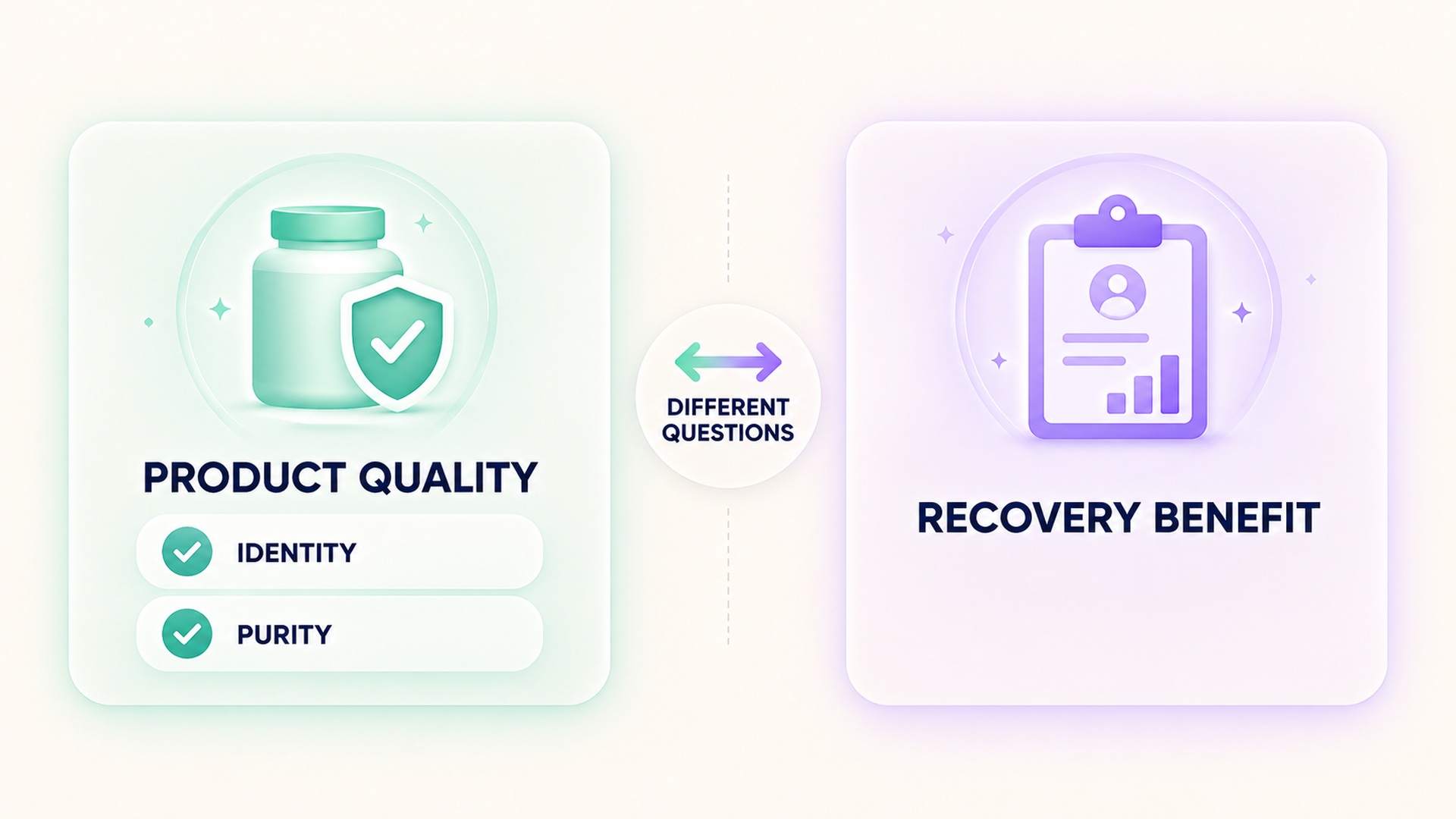
Ask what a program actually checked rather than relying on a general word such as “verified.” Did the review confirm ingredient identity, quantity per serving, contaminants, disintegration, label accuracy, or facility practices? Does it examine every batch or a sample? How often is the check repeated? These questions help explain what uncertainty the seal may reduce. They do not make the certification a trial of the product’s effect on recovery.
Product identity also matters. A seal may apply to a specific formulation or manufacturer process, and a product can change over time. Check the current listing and package details instead of assuming that a logo on one version covers a different formula. A supplement-education resource describes quality testing and the limits of a quality assurance seal; it notes that such a seal does not guarantee safety or effectiveness.
The word “quality” is therefore not one universal test. One program may verify certain label contents; another may include facility inspections or different contaminant panels. The seal should be interpreted within its published scope. If the program has a public database or certificate record, the product name, formulation, and current batch should match the record. A logo on a package alone may not reveal which checks were performed or when.
A clinical review of supplement certification discusses how third-party screening is used and why certification should not be read as proof of safety or effectiveness. That distinction is central: verifying that a product contains what it says can reduce uncertainty about composition, but it does not demonstrate the health result claimed in an advertisement or inferred from an anecdote.
Product quality and recovery are different evidence questions
The claim should also be specific. “Supports recovery” could refer to soreness, sleep, training performance, a lab measure, or a subjective feeling. Evidence for one outcome does not automatically support another. A study that uses a different dose, population, duration, or product formulation may not answer the claim on the package. A general review or testimonial may identify a question but is not enough to establish that the exact product works for the desired result.
When reading a study, check who participated, what comparison was used, what was measured, and how large or durable the observed difference was. Look for limitations and whether other studies reach similar conclusions. Even a well-designed trial may not apply to someone with a different health condition, medication, age, or training pattern. Product testing can make the study’s ingredient and dose more trustworthy, but it cannot replace the study.
To show a recovery benefit, research needs to test the relevant outcome. For example, a study may measure a defined exercise outcome, sleep measure, or symptom in a particular population. A result for one formulation, dose, or group does not automatically apply to another product or to every person. The evidence should also be considered for study design, sample size, comparison group, duration, and whether results were replicated.
A quality seal does not provide that trial. It does not compare the supplement with a placebo, measure recovery over time, or show that an observed change was caused by the product. It also does not establish that a product is appropriate for someone’s medication, health condition, or treatment plan. A consumer guide to supplement use recommends consulting a healthcare professional about supplement decisions, particularly because products can carry risks and interact with medicines.
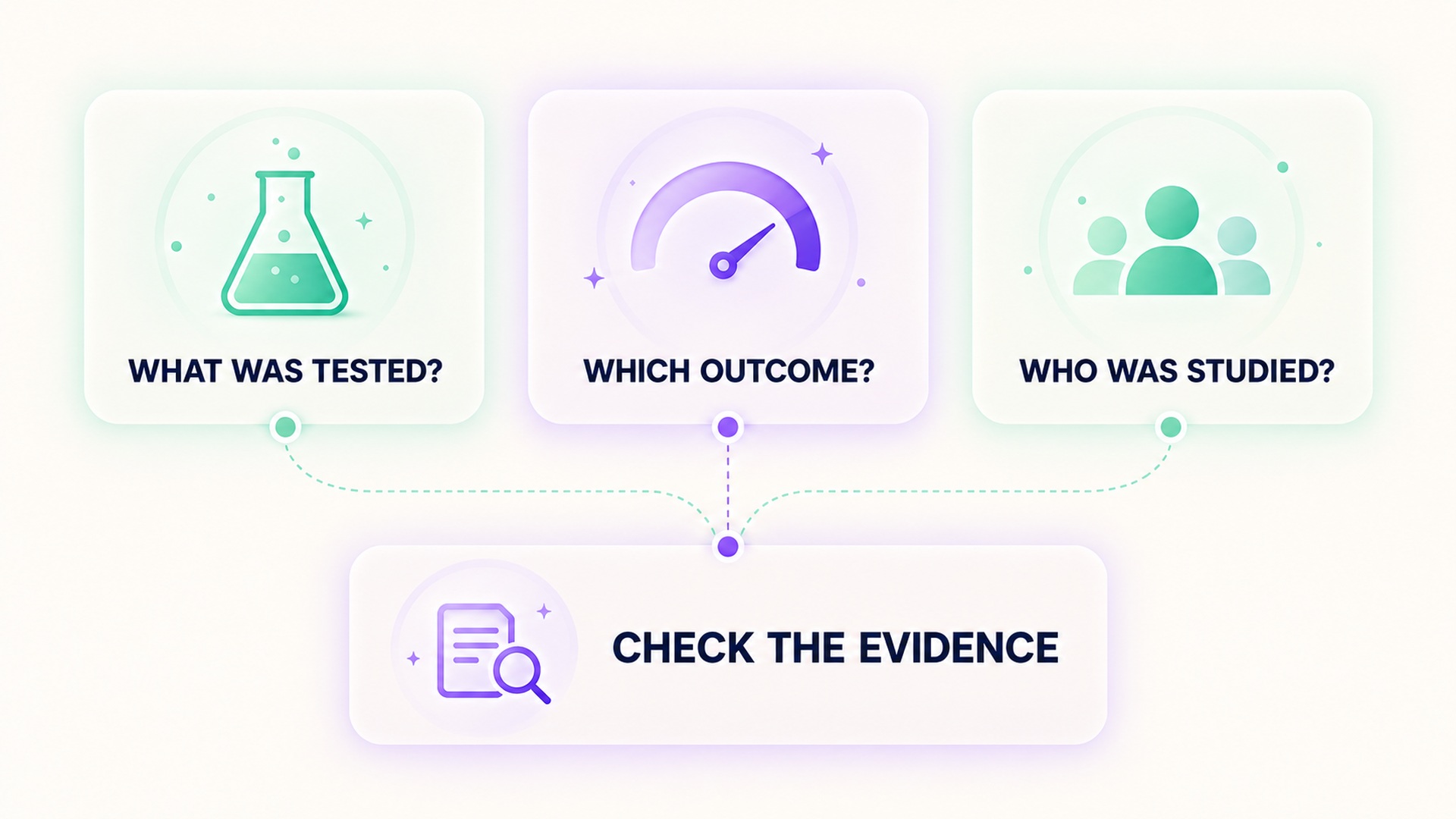
The evidence chain has several steps: identify the exact ingredient and dose; verify the product contains the stated amount; examine research on that ingredient for the intended outcome; and consider safety and individual circumstances. A seal may help with one step—product composition—but cannot substitute for the others. A study on an ingredient also may not test the specific product carrying the seal.
A consensus paper on certification programs discusses differences in third-party program components. Those differences matter when someone compares seals. The right question is not only whether a product is certified, but what the certification did, what evidence supports the outcome claim, and whether that evidence applies to the person’s situation.
Do not treat a score change as proof
Someone may start a supplement and see a wearable recovery score change the following week. That sequence alone does not show the supplement caused the change. Sleep, training load, illness, stress, diet, medication, and ordinary measurement variation can influence the same score. The person may also change several habits at once. A seal does not resolve those alternative explanations.
A useful record notes when a product was started or stopped, the ingredient and dose as printed on the label, and the outcome being observed. It should also preserve other relevant changes and any missing data. That may help a person and clinician discuss the experience, but it is not a controlled study. A related guide to interpreting wearable journals explains why timing and association do not establish cause.
Review the claim and the product separately
Before relying on a seal, read its criteria and verify the product listing if the program offers one. Check whether the certification applies to the exact formulation and whether it addresses the concern at hand. A contamination screen does not prove clinical effectiveness. A label-accuracy test does not guarantee that the label’s health claim is supported. A facility inspection does not determine whether the product changes recovery.
The product label and the health evidence also answer different questions. The label can show ingredients and serving directions, but a consumer should not assume that a listed ingredient has been proven to improve recovery. A regulatory information page about supplements explains that supplements are not approved for safety and effectiveness before they are marketed in the same way as medicines. This does not mean every supplement is ineffective; it means a seal is not regulatory approval or outcome evidence.
A quality seal also does not establish that a product is appropriate for a particular person or free of every possible risk. Testing may be limited to a defined list of contaminants and a particular sample. It does not account for every interaction, allergy, medical condition, or dose combination. The absence of a warning on a certificate should not be treated as individualized safety advice. Read the full label and discuss concerns with a clinician or pharmacist, especially when a supplement is added to an existing treatment plan.
When a supplement is being considered for a health condition, recovery problem, or alongside medication, ask a qualified professional before using it. Bring the label and the exact claim. Ask whether the evidence is for that ingredient, dose, and purpose. A more careful question is whether the product-quality checks are credible, whether research supports the specific outcome, and whether use is appropriate for the person. A quality seal can inform one part of that review, but it cannot answer all three. Keep those questions distinct in your notes.
A careful conclusion may be “quality checks passed, efficacy unclear.” That answer is more useful than overstating what a seal can establish.
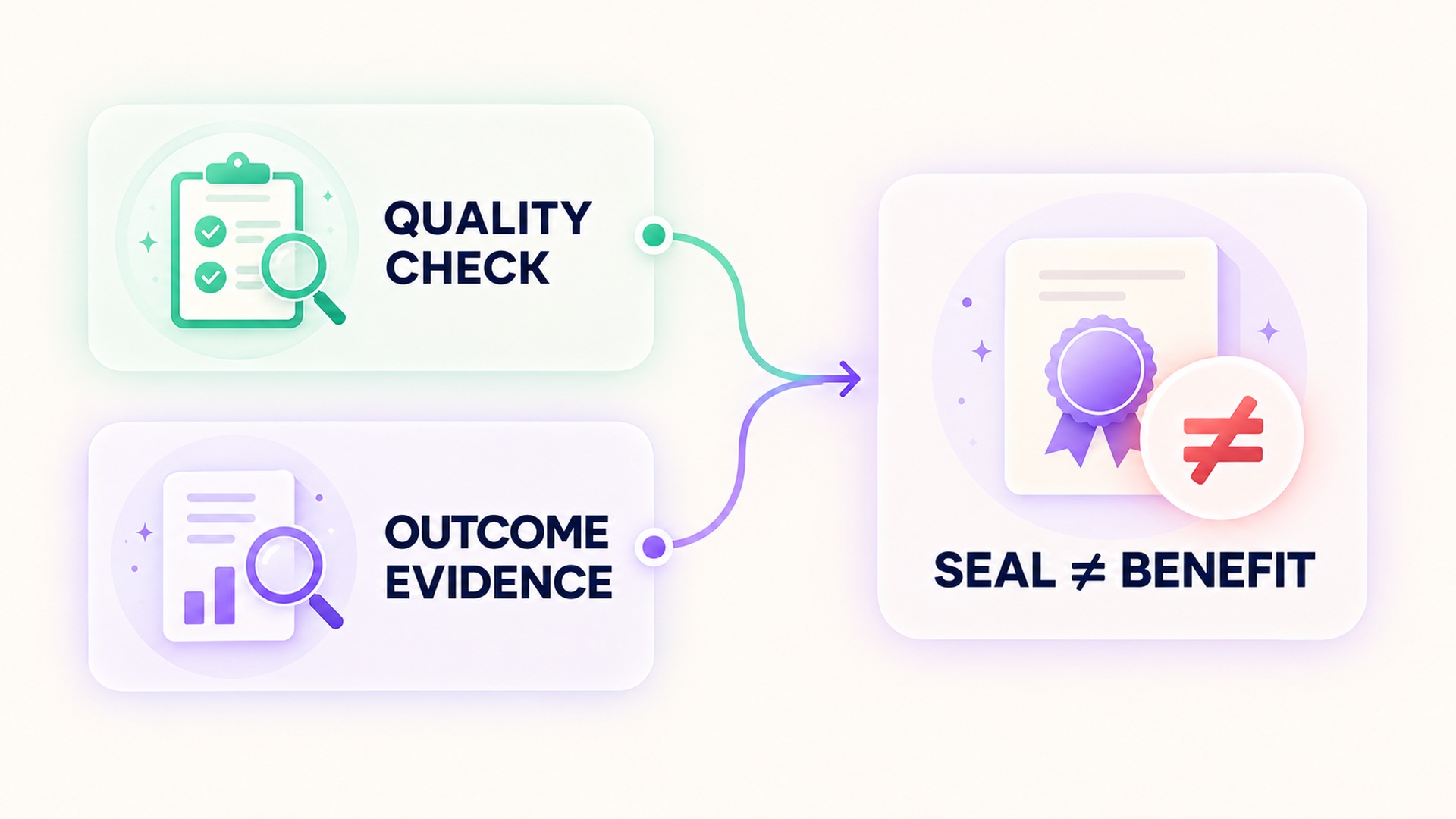
If evidence is limited or unclear, record that uncertainty instead of treating a seal as a substitute for an outcome study.
FAQ
What does a supplement quality seal mean?
It means the product passed the checks defined by that particular program, such as selected tests of identity, amount, or contaminants. Review the program’s scope and confirm that it applies to the exact product.
Does third-party testing prove a supplement improves recovery?
No. Product testing and outcome research are different. A seal may address composition or manufacturing checks, but it does not show that a supplement changes sleep, exercise recovery, or symptoms.
Can a wearable score confirm that a supplement works?
No. A score can change for many reasons and is not a controlled test. Keep the product record and other relevant changes visible, and discuss health or medication questions with a qualified professional.
*This article is for informational purposes only and is not a substitute for professional medical advice, diagnosis or treatment.*
Sources:
NIH Office of Dietary Supplements·Military Medicine·FDA·Current Sports Medicine Reports·FDA·FDA
Related articles

Lower energy after cutting caffeine may need withdrawal context
Fatigue after reducing caffeine can be part of withdrawal, but it is not the only possible explanation. Keep the timing of the change, symptoms, sleep, and other context together before interpreting an energy score.

Total fat does not describe the saturated fat in a food log
Total fat and saturated fat are related label fields, but they are not interchangeable. Keep the total and its saturated-fat component visible when recording food or comparing packages.
Net carbohydrate claims need the total carbohydrate record beside them
A “net carb” number can hide how it was calculated. Keep total carbohydrate, fiber, sugar alcohols, serving size, and the subtraction method together so a food record remains interpretable.

Check servings per container before logging a whole package
Nutrition values are often listed per serving even when a package contains several servings. Check the serving count and the amount eaten before entering the whole package into a food log.
Sodium and salt amounts should not be entered as the same number
Salt and sodium are related but they are not the same quantity. Keep the label’s nutrient value and the food’s salt description separate so a nutrition log does not silently change units.

Add caffeine milligrams across drinks, foods and supplements
A caffeine journal is more accurate when it counts milligrams from drinks, foods, and supplements together. Keep product serving sizes and unknown amounts visible instead of treating each item as one equal dose.

Sleep changes after reducing alcohol need more than a score comparison
Sleep may change after someone reduces alcohol, but a score comparison cannot explain the cause or the course. A useful review includes symptoms, timing, routine, device limits, and medical support when needed.
Alcohol tolerance does not establish that recovery is unaffected
Feeling less affected by alcohol does not show that the body or sleep is unaffected. Keep subjective tolerance, drinking records, wearable estimates, and clinical recovery as separate questions.

Count alcohol content rather than glasses in a recovery journal
A glass count can hide differences in serving size and alcohol strength. Record the beverage amount and its alcohol content so a journal preserves the inputs behind each estimate.
Recording beyond phone range requires sensor memory support
Live sensor broadcasting and local workout storage are different capabilities. Learn what to verify before leaving a phone behind and how to confirm that the saved session transferred afterward.