Net carbohydrate claims need the total carbohydrate record beside them
By Mr.Apps · Oct 22, 2026
Category:Wearable
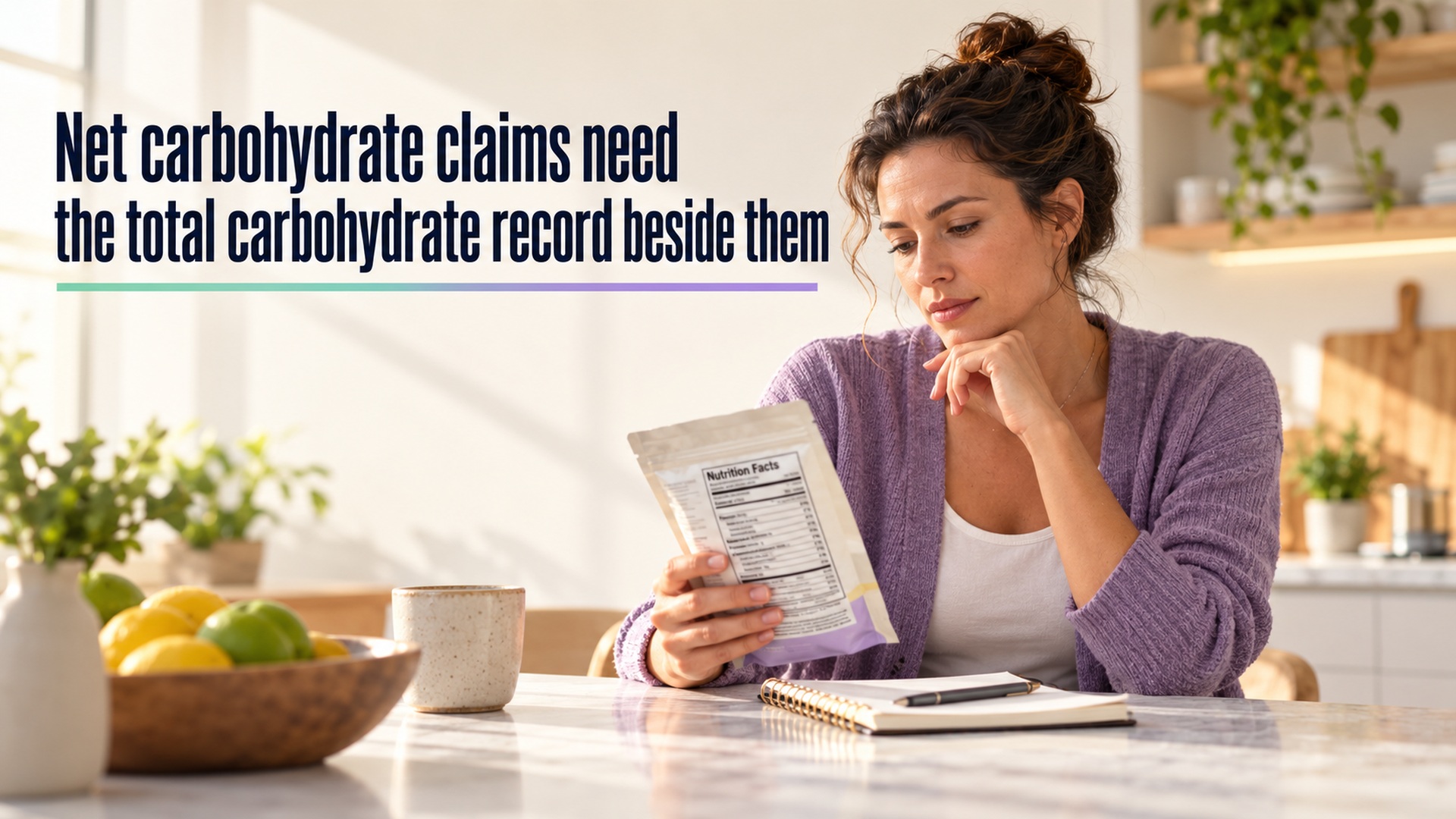
A food package may show a “net carbohydrate” claim, but that value can be a calculation rather than a separate nutrient measurement. The arithmetic often subtracts some amount of fiber or sugar alcohol from total carbohydrate. Without the original label values and the method, a later reader cannot tell what was counted or whether the calculation matches the intended use. I keep the total carbohydrate value beside the components and record any calculation separately.
This is especially important when someone uses a food log to discuss nutrition, monitor a health condition, or compare products. The label fields and a marketing calculation answer different questions. A log should not replace an individualized eating plan or clinical advice, and a “net” number should not be presented as a diagnosis or universal measure of what a body absorbs.
What total carbohydrate includes
On Nutrition Facts labels, total carbohydrate includes several types of carbohydrate, including dietary fiber, sugars, and starches. Fiber is shown as a component below the total. Some labels also list sugar alcohols, depending on the product and labeling rules. The Nutrition Facts carbohydrate guide explains how these components relate to the total and where the information appears.
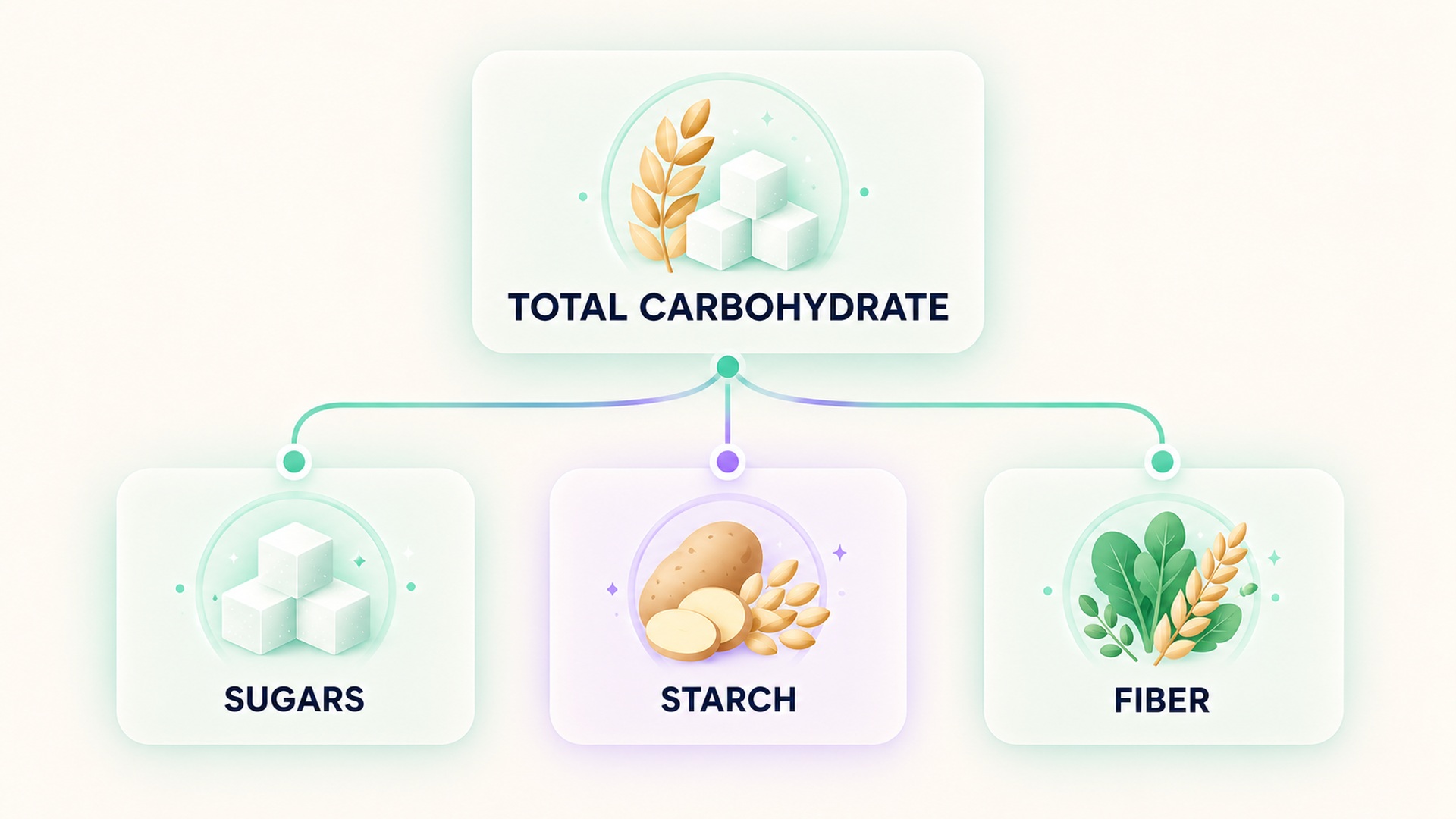
That relationship matters for data entry. If an app field asks for total carbohydrate, enter the label’s total rather than a calculated net amount. If someone wants to calculate a separate net value, preserve the total, fiber, sugar alcohol amount when available, serving size, and formula. Keeping the components makes the calculation auditable and allows it to be revised if a different method is needed.
A label-reading reference explains that total carbohydrate includes fiber and sugar, and advises readers to look at the label’s total value. The label’s subcategories help describe what contributes to the total. They do not automatically tell a person which number to use for a particular medical decision.
Why “net carbs” is not one universal calculation
The phrase “net carbs” can be used in marketing, but it does not have one universal legal definition for every product or purpose. Some calculations subtract all fiber, some subtract certain sugar alcohols, and other approaches subtract only a portion. The kind of fiber or sugar alcohol matters because different forms may be digested or absorbed differently. The ingredient and label may not provide enough detail to calculate an individual response precisely.
A consumer explanation of net-carbohydrate claims notes that these claims rely on assumptions about fiber and sugar alcohols and recommends keeping total carbohydrate in view. This does not mean every person must use the same calculation. It means that a number labeled “net” should not silently replace the standardized total carbohydrate field.
A serving-size reference explains why package amounts should be read against the listed serving. The same principle applies to total carbohydrate and its subcomponents.
Serving size also affects the calculation. A package may list amounts per serving while the person eats more than one serving. Multiply the total and each listed component by the amount actually consumed before calculating a separate net value. If the package provides values for the whole container as well as one serving, verify which column is being used. Otherwise, a correct formula can still produce a wrong total because it was applied to the wrong portion.
Keep the record transparent
A simple example shows why the separate fields matter. Suppose a label lists a serving’s total carbohydrate along with fiber and a sugar alcohol. A person eats two servings. First, scale each listed amount to two servings; then, only if desired, apply the chosen net-carbohydrate formula. If the calculation is done before serving size is adjusted, or if only the final number is saved, the daily record can be inconsistent. Keeping the intermediate values prevents that mistake.
Sugar alcohol is not a single ingredient with one predictable effect. Different substances can be handled differently by the body, and some may contribute energy or affect glucose despite being subtracted in a marketing calculation. The exact ingredient may be listed in the product’s ingredients, but the label does not necessarily quantify every relevant characteristic. A net-carb claim should therefore be treated as a manufacturer’s chosen calculation, not a personalized measurement of absorption.
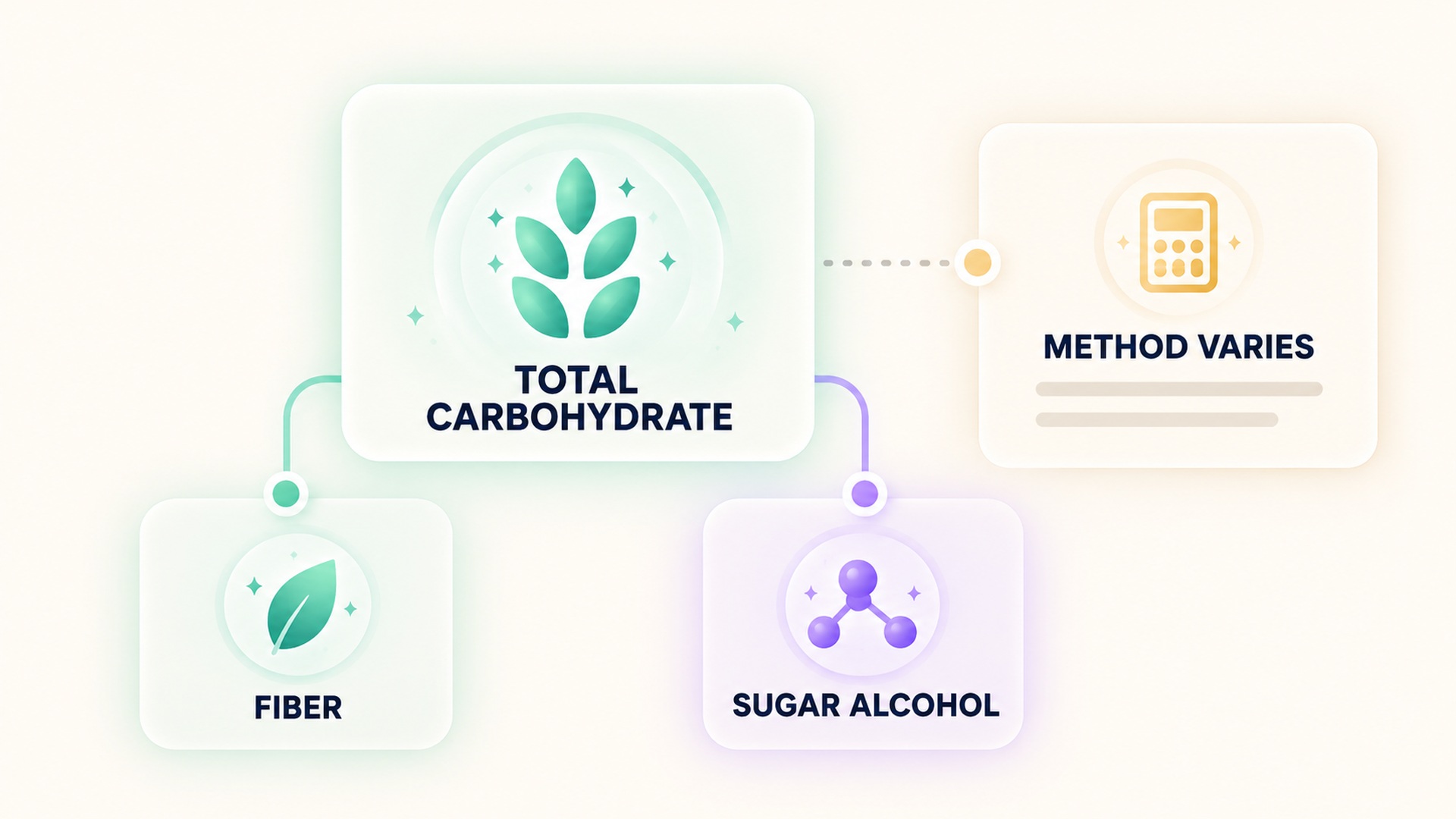
A useful food-log entry can retain the product or food description, serving size, total carbohydrate, fiber, sugar alcohol when listed, and amount consumed. If a “net” value is also stored, include the formula and identify it as a calculation. If the product does not provide a fiber or sugar alcohol amount, record that it is unavailable instead of assuming zero.
For a homemade meal, the total depends on ingredients and recipe yield. A single serving estimate may require weighing ingredients and deciding how the final dish is divided. A photograph does not show the amount of fiber or starch in each portion. When the amount is approximate, the log should say so. A calculated net number does not become more precise than the total and component estimates from which it was derived.
The same entry may be useful for one task and inadequate for another. Someone comparing products may want a consistent label calculation; someone following a clinical plan may need the label’s total carbohydrate; someone studying a meal pattern may want fiber, sugars, and serving size together. State the purpose of the log so a later reader knows why a particular number was saved. Do not assume the app’s default field matches every clinical or personal use.
Different people may track carbohydrates for different reasons. Someone following a clinician-directed plan should use that plan’s definitions, particularly if values inform medication decisions. Do not change an insulin dose, medication, or prescribed nutrition target based on a package claim or a generic subtraction rule. Ask the treating professional which label field and calculation are relevant.
A reference on carbohydrate and fiber information provides background on the fields shown on food labels. A general overview of carbohydrates also describes fiber and other carbohydrate sources. These resources can clarify terminology, but they cannot predict one person’s blood-glucose response to a specific food.
Compare products without losing the ingredients of the number
When comparing two packages, use the same serving basis and preserve total carbohydrate. One product may advertise a net value while another displays only the required nutrient information. Comparing the headline claims alone can conceal different serving sizes, fiber content, sugar alcohol types, or calculation rules. A fair comparison starts with the complete label and then applies one clearly stated method to both products if that method fits the reader’s purpose.
The same caution applies to food apps. Search results may include community-submitted entries or older label information. Check whether the serving size matches the food eaten and whether the total and component fields are present. If the app stores only a net number, add a note with the original total and source when possible. A related guide to keeping wearable and nutrition records in context explains why observations should remain separate from conclusions.
The strongest record is not the one with the fewest numbers. It is the one that keeps the number’s meaning. Save the total carbohydrate and the components; label a net amount as calculated; and keep the serving size and method with it. That approach supports a more useful conversation without claiming that a single label number describes digestion, metabolism, or a clinical outcome for every person.
When reading a package, do not confuse a “low” or “reduced” carbohydrate claim with the total amount shown in the nutrient panel. A comparative claim may refer to a product or serving basis that differs from the item a person eats. Check the full label, serving size, and claim conditions before adding the number to a log. If the package provides no total carbohydrate value for the consumed amount, save the claim as product text rather than treating it as a measured nutrient field.
If a nutrition plan requires a particular carbohydrate value, confirm which field the plan uses before changing the app. A product claim or formula saved for comparison may not be suitable for that task. Keep the original label and ask the treating professional how to record an item when the method is unclear.
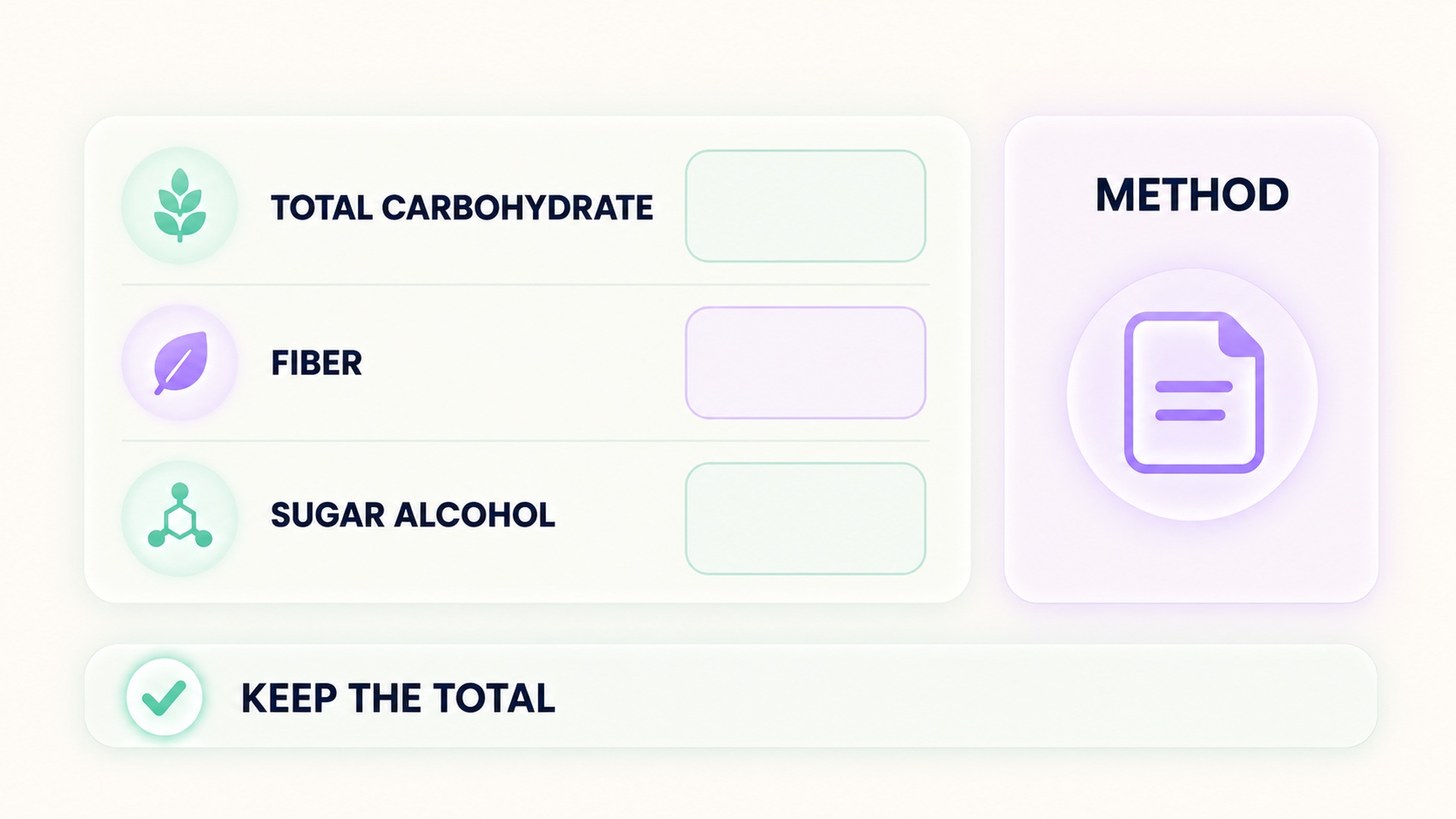
If a clinician requests a carbohydrate record, confirm whether the plan uses total carbohydrate or a defined calculation before changing the app fields.
FAQ
Are net carbs the same as total carbohydrates?
No. Total carbohydrate is the label value that includes carbohydrate components such as fiber and sugars. “Net carbs” is typically a calculated amount based on a chosen subtraction method, and that method should be recorded.
Should I subtract all fiber or sugar alcohols?
There is no single calculation that fits every product or purpose. The type and amount of fiber or sugar alcohol can matter, and a label may not give enough detail to predict an individual response. Follow a clinician’s instructions when tracking for a medical plan.
What should I enter in a food log?
Keep the label’s total carbohydrate, serving size, fiber, and sugar alcohol amount when available. If you also enter a net value, mark it as calculated and preserve the formula and original values.
*This article is for informational purposes only and is not a substitute for professional medical advice, diagnosis or treatment.*
Related articles

Check servings per container before logging a whole package
Nutrition values are often listed per serving even when a package contains several servings. Check the serving count and the amount eaten before entering the whole package into a food log.

Sodium and salt amounts should not be entered as the same number
Salt and sodium are related but they are not the same quantity. Keep the label’s nutrient value and the food’s salt description separate so a nutrition log does not silently change units.

Add caffeine milligrams across drinks, foods and supplements
A caffeine journal is more accurate when it counts milligrams from drinks, foods, and supplements together. Keep product serving sizes and unknown amounts visible instead of treating each item as one equal dose.

Sleep changes after reducing alcohol need more than a score comparison
Sleep may change after someone reduces alcohol, but a score comparison cannot explain the cause or the course. A useful review includes symptoms, timing, routine, device limits, and medical support when needed.

Alcohol tolerance does not establish that recovery is unaffected
Feeling less affected by alcohol does not show that the body or sleep is unaffected. Keep subjective tolerance, drinking records, wearable estimates, and clinical recovery as separate questions.

Count alcohol content rather than glasses in a recovery journal
A glass count can hide differences in serving size and alcohol strength. Record the beverage amount and its alcohol content so a journal preserves the inputs behind each estimate.

Recording beyond phone range requires sensor memory support
Live sensor broadcasting and local workout storage are different capabilities. Learn what to verify before leaving a phone behind and how to confirm that the saved session transferred afterward.

Repeated vibration can add steps without walking
Wrist step counters infer walking from motion patterns, so repeated vibration can sometimes add step-like movement to a total. Learn how to identify a suspicious time block without inventing a walk or discarding the rest of the day's data.

Instant pace can fluctuate while lap pace stays stable
Current pace and lap pace summarize different time windows, so one can jump while the other stays steady. Learn which field fits a live pacing decision and which is better for reviewing a sustained segment.

When a recorded route cuts corners, distance can be understated
A GPS route can connect recorded positions with a line that clips tight bends, leaving out part of the path. Learn why sampling, signal conditions, and route rendering can affect distance without implying a change in fitness or pace.