Caffeine half-life does not track perceived alertness
By Mr.Apps · Nov 4, 2026
Category:Energy
Alertness is a feeling, not a caffeine measurement
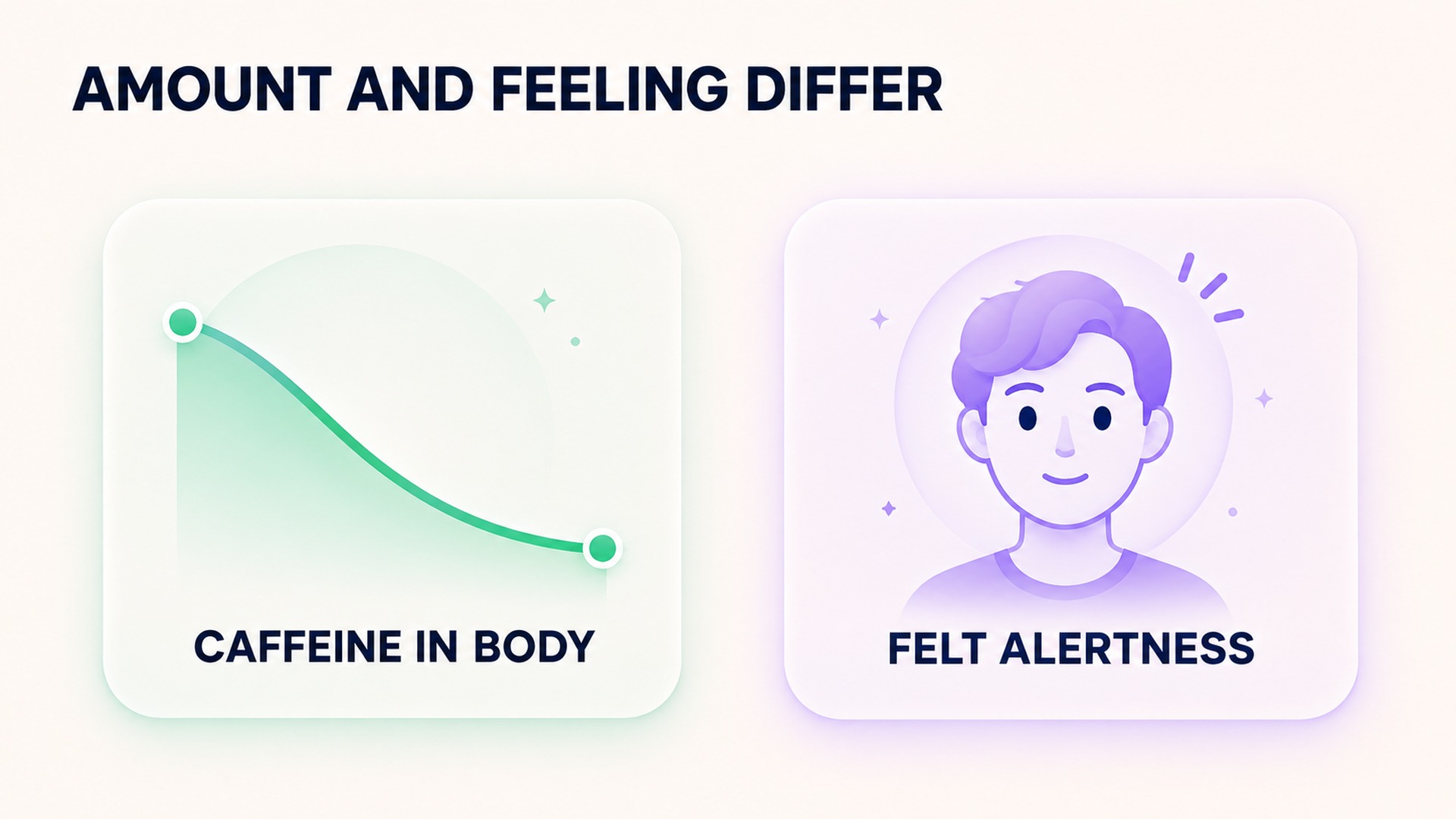
Caffeine’s elimination half-life describes how long it takes the amount of caffeine in the body to fall by half under a stated model. It is a pharmacokinetic measure, not a description of how awake or tired a person feels. Someone can feel alert while caffeine remains in the body, or feel tired even when caffeine is still present. Perceived alertness cannot be used as a meter of caffeine clearance.
A log can preserve the amount and timing of caffeinated drinks, medicines, and supplements, while keeping subjective feelings in a separate field. The two may be useful together, but they are different observations. I record intake and alertness in separate fields. A person’s response can vary with dose, tolerance, recent use, sleep, health, medicines, and other factors. A single sleep score or alertness rating cannot reveal the exact amount of caffeine remaining.
The clinical study of caffeine kinetics and subjective effects found that pharmacokinetic measures and reported effects varied with dose in a small study of healthy volunteers. Its findings apply to that protocol and group, not to every person. The measured concentration and a person’s reported feeling are separate outcomes.
What half-life describes
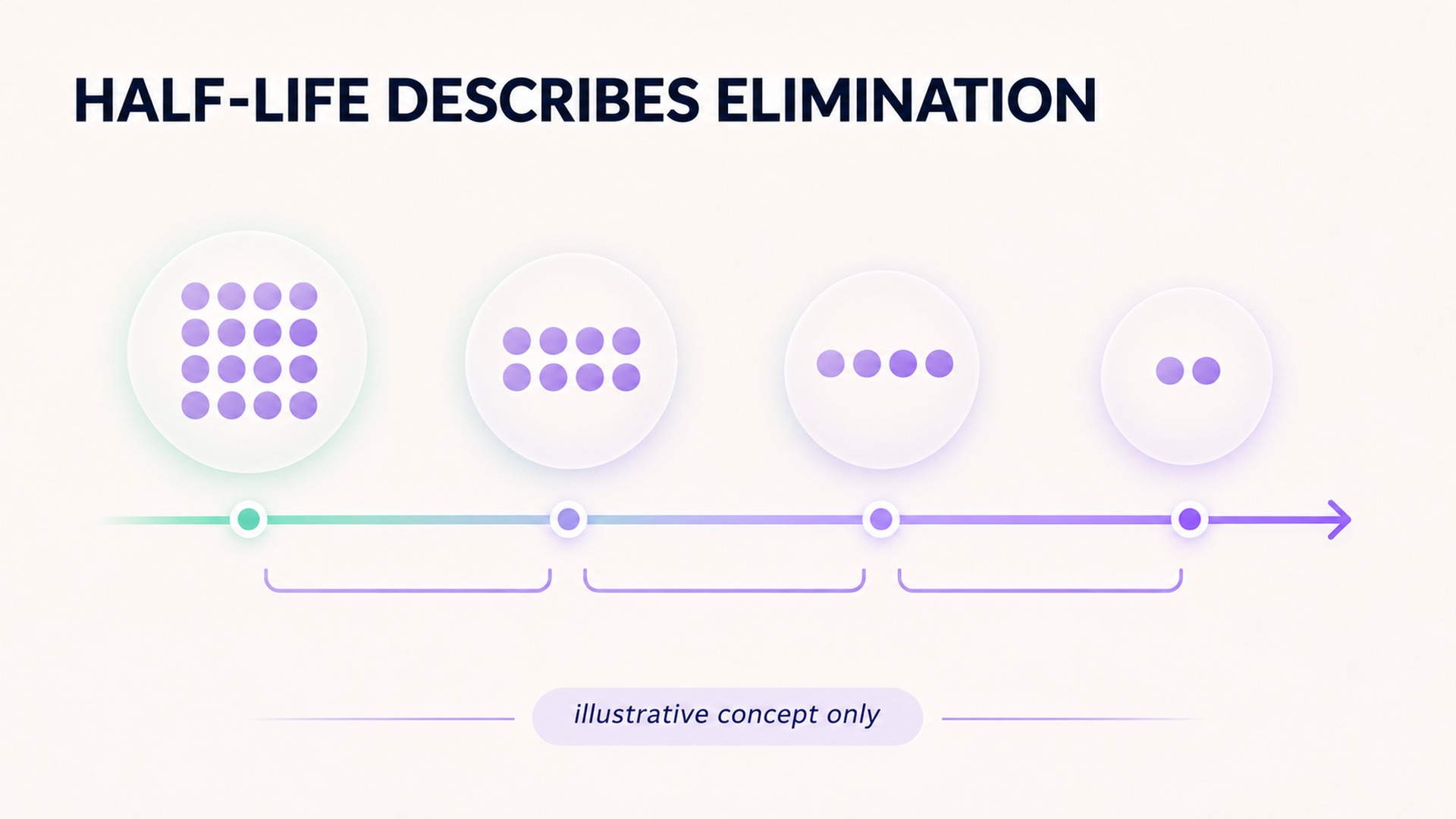
After caffeine is absorbed, the body metabolizes and eliminates it over time. Half-life summarizes the decline in concentration under particular conditions. It does not mean the substance is gone after one half-life. A portion remains, and the amount declines further across subsequent intervals. The number is a model-based description of concentration, not a countdown until all effects stop.
Half-life estimates in studies are often reported as averages or ranges for defined participants. Individual values can differ. Factors such as pregnancy, liver function, smoking status, medicines, and the amount consumed may affect caffeine metabolism. Study designs also differ in dose, sampling schedule, and how caffeine is measured. A value from a study should not be used as a personal clearance calculator without appropriate clinical context.
The research on a single dose of caffeine measured both plasma concentrations and participants’ reported feelings. The study illustrates why a concentration measure and a subjective rating are not the same variable. It was conducted with a small group under controlled conditions, so it does not establish one universal half-life or alertness timeline.
A person cannot infer a blood concentration from a device’s sleep-stage estimate, resting heart rate, or readiness score. Those signals are not caffeine assays. They may change for many reasons, and a device does not know all caffeine sources or individual metabolism. Keep the sensor output in its own field and avoid labeling it “caffeine remaining.”
Why alertness does not track the curve exactly
Caffeine can affect alertness, but the relationship between the amount in the body and the felt effect is not a simple one-to-one line. Repeated use can change subjective response. Sleep pressure, circadian timing, expectations, stress, and withdrawal symptoms can also influence how awake someone feels. Two people with similar intake may describe different experiences; one person may also respond differently on different days.
The consumer information on caffeine notes that sensitivity and effects can vary and encourages people to consider caffeine from all sources. It does not provide an individualized half-life calculator. A person should follow medical advice when a condition, pregnancy, or medicine makes caffeine relevant to care.
A person might feel less stimulated as the subjective effect fades while caffeine remains measurable. Conversely, a person experiencing poor sleep may feel tired despite having consumed caffeine recently. Neither observation proves a particular concentration. The sensation is important as an experience to document, but it is not a quantitative substitute for a blood or laboratory measurement.
Keep dose and time with the source
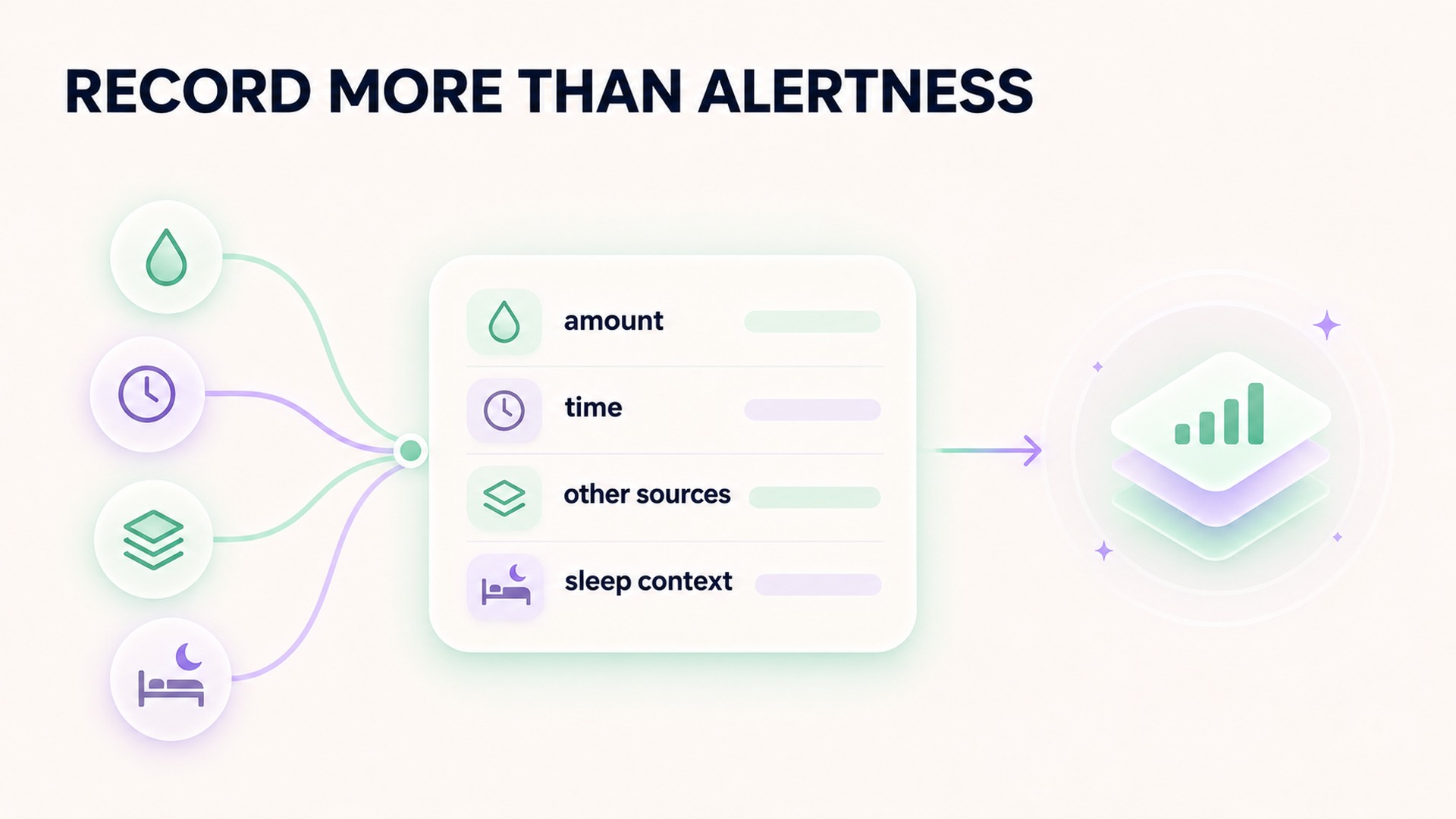
For a useful caffeine record, note the beverage or product, serving size, declared caffeine amount when available, time consumed, and any relevant symptoms or sleep context. Include caffeine from medications and supplements if the record is being used for a clinical discussion. Some foods and drinks may not declare the amount clearly, so mark that value as unknown rather than estimating from the product name alone.
Multiple servings complicate a simple half-life illustration. Doses taken at different times overlap, and the amount in a product can vary by preparation. A cup size is not a reliable caffeine dose unless the product’s amount is known. A tracker that assumes one standard dose may misrepresent a person’s intake. Keep individual entries before looking at a daily total.
The overview of caffeine and medicines describes common sources and effects. It can support general understanding, but the actual caffeine amount depends on the product and serving. A record should not assume that all coffee, tea, chocolate, or energy products contain the same dose. Read the available label and document uncertainty.
If sleep is the concern, record the timing of caffeine alongside sleep opportunity and other relevant conditions rather than using alertness as a proxy for elimination. A person can use the record to notice patterns, but a short self-observation period cannot isolate the effect of caffeine from every other influence. Do not infer a universal cutoff from a single night or a wearable score.
What a half-life estimate cannot do
A published average does not tell an individual exactly how much caffeine remains at a particular hour. To calculate that, one would need the dose, absorption, distribution, metabolism, elimination parameters, and other information that a routine food log does not provide. Even a mathematical estimate would depend on assumptions. The result should not be presented as a measured amount.
Nor does half-life identify whether caffeine is affecting a particular symptom. Sleep disruption, anxiety, palpitations, or stomach discomfort can have multiple causes. If symptoms are severe, recurrent, or concerning, seek medical advice. A record can help explain timing and products, but it cannot diagnose a condition or determine the safest amount for every person.
A related discussion of food notes alongside recovery data considers what personal records can show. For the clinical studies cited earlier, sample size and controlled doses limit generalization. Other research may report different estimates due to participant characteristics or methods. Any quoted half-life should be attributed to its source and framed as a study result, not a personal measurement.
A food or supplement tracker might show a daily caffeine total, but that total is not the same as the residual amount in the body. It sums recorded intake and does not necessarily account for metabolism. If the app estimates residual caffeine, check the assumptions and do not treat the output as a clinical laboratory result. Keep “intake total” and “estimated remaining” separate.
Record the observation without overclaiming
Amount and time describe exposure. Alertness is a subjective state. Record both fields separately. A useful note might say “caffeine-containing drink at a recorded time; felt alert later” without claiming that the feeling proves the caffeine had not cleared. If a source provides a dose, keep it with the product and serving. If not, mark it as unknown.
When discussing caffeine with a clinician, bring the record of timing, approximate amount, other sources, medicines, and symptoms. This context is more useful than a sleep-score interpretation alone. The clinician can consider health history and possible interactions. A general web article should not be used to change prescribed treatment or to set an individual dose.
An overview of sleep and caffeine context can provide broader background, but it does not measure blood caffeine. A clinical review of caffeine pharmacology describes factors that can affect metabolism. A half-life is a measure of concentration change under defined conditions. Alertness is a perception shaped by several factors. Keeping those fields separate allows the record to show what was consumed and how the person felt without pretending one measures the other. That is the limit a careful interpretation should preserve.
Sources of caffeine can be easy to miss
Caffeine may come from more than a morning drink. Tea, chocolate, some medicines, supplements, and packaged products can contribute. The amount can depend on serving size and preparation. A record that notes only coffee may omit other sources, while a label may not quantify every ingredient. Keep source-by-source entries when the total is being discussed with a clinician.
Repeated doses can overlap. If someone consumes caffeine at separate times, the body is processing earlier amounts while later doses are absorbed. The time of the last serving alone does not describe total exposure. A simplified half-life curve can illustrate decline after one known dose, but it is not a personal estimate for multiple products and unknown amounts.
A useful note can separate three fields: what was consumed, how the person felt, and any device observation. Those fields may show a pattern over time, but a pattern does not establish a pharmacological cause. Changes in sleep schedule, stress, illness, travel, and medication can coincide with caffeine use. Keep the timeline and avoid claiming that one measure explains all others.
FAQ
Does feeling alert mean caffeine is still in my system?
Not necessarily. Alertness is subjective and cannot show the amount of caffeine remaining. The two observations should be recorded separately.
Is caffeine gone after one half-life?
No. A half-life describes a reduction by half under a model. Some amount remains after that interval.
Can a wearable estimate my caffeine half-life?
A routine wearable does not measure caffeine concentration. Its sleep or readiness signals cannot provide an exact clearance estimate.
*This article is for informational purposes only and is not a substitute for professional medical advice, diagnosis or treatment.*
Sources:
Journal of Clinical Pharmacology·British Journal of Clinical Pharmacology·FDA·MedlinePlus·National Heart, Lung, and Blood Institute·StatPearls Publishing
Related articles

Vitamin A records should preserve the form as well as the unit
Preformed vitamin A and provitamin A carotenoids are different forms with distinct conversion context. Keep the source form, original unit, and any calculated equivalent together rather than treating all values as interchangeable.

A proprietary blend can hide individual supplement amounts
A proprietary blend total reports the combined weight, not necessarily the amount of each listed ingredient. Keep undisclosed quantities marked as unknown instead of inferring a dose from ingredient order or marketing claims.

Glycemic index needs portion context to describe glycemic load
Glycemic index describes a tested food response under a defined protocol, while glycemic load also accounts for carbohydrate amount in a serving. Neither value predicts an individual sensor trace or replaces a care plan.

Potassium salt substitutes need more than a lower sodium goal
Some salt substitutes replace sodium chloride with potassium chloride, which changes the ingredient and mineral context. Keep the label and portion visible, especially when kidney disease or medicines may affect potassium balance.

Food date labels do not replace safe storage instructions
A printed date describes only part of a food’s context and may refer to quality or a specific product rule. Preserve the exact label phrase alongside opening, handling, and storage information that is known.

Lactose intolerance and milk allergy need different food notes
Lactose intolerance concerns digestion of a milk sugar, while milk allergy involves an immune reaction to milk proteins. Record the exact product wording and symptoms without treating a lactose-free claim as an allergy clearance.
Kilojoules and kilocalories need one consistent food-log unit
Food labels and trackers may use kilojoules or kilocalories for the same energy value. Keep the original label unit beside any conversion so every total remains clear and checkable.

Protein grams leave amino acid quality unreported
Protein grams show an amount for a stated serving, while amino acid composition and digestibility describe other properties. Keep the declared quantity separate from any quality measure or score that the source actually reports.

Time in glucose range needs the target range beside it
Time in range is a percentage calculated from glucose readings within chosen bounds over a defined period. Keep the target interval, units, sensor coverage, and clinical context beside the result so the percentage can be interpreted correctly.
Glucose sensor timing can lag behind changes in blood
Continuous glucose monitors sample interstitial fluid and estimate blood glucose from that signal. During rapid changes, the sensor reading may reflect a later point in the curve, so keep both measurement times and the device context visible.