Potassium salt substitutes need more than a lower sodium goal
By Mr.Apps · Nov 4, 2026
Category:Energy

A salt substitute changes the ingredient
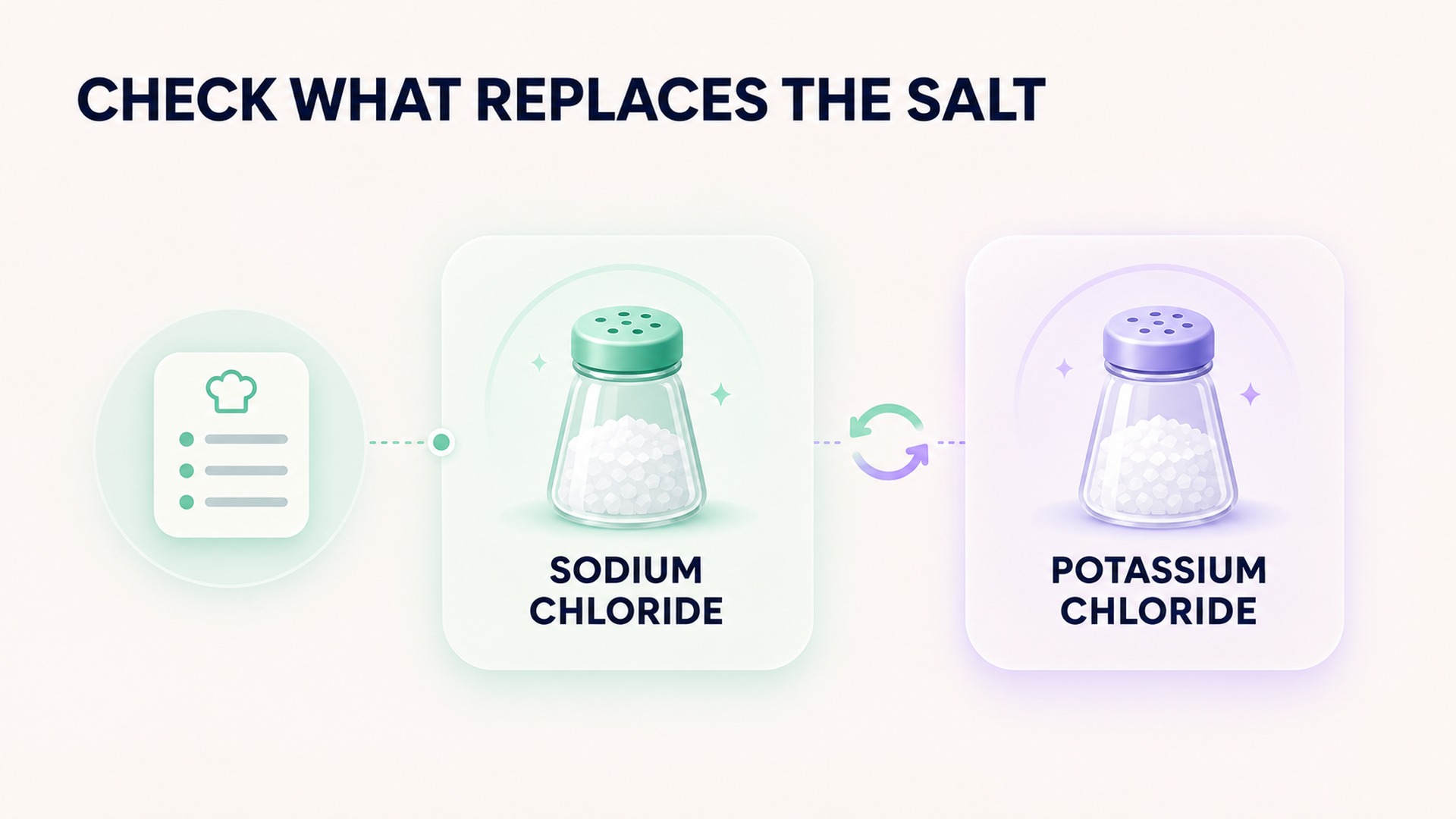
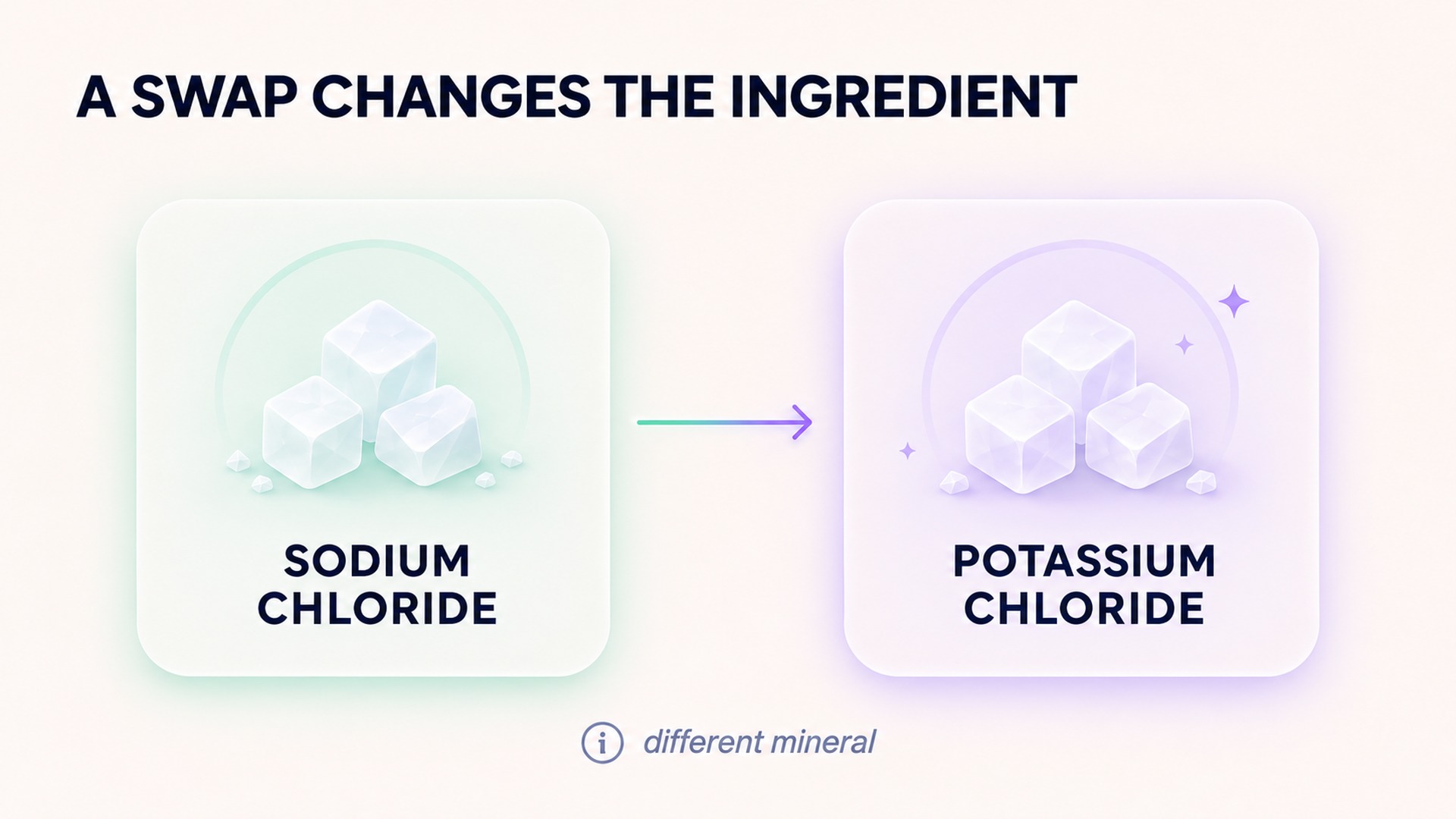
A food product described as a lower-sodium salt substitute may replace some or all of the sodium chloride with another ingredient, often potassium chloride. That change affects more than the sodium number. I record the replacement ingredient alongside the sodium claim. It can increase potassium exposure, and the relevance depends on a person’s kidney function, medicines, and other potassium sources. A lower-sodium goal does not by itself establish that a potassium-based product is appropriate for everyone.
A useful record begins with the ingredient list and the amount used. Keep the product name, the exact potassium compound if listed, serving size, and the portion added to food. If the package makes a “reduced sodium” claim, preserve the comparison information from the label rather than translating it into a broad health conclusion. The composition of products can vary, and a label’s front panel may not show every relevant ingredient.
The consumer fact sheet on potassium explains that potassium is an essential nutrient and notes that some salt substitutes contain potassium chloride. It also identifies kidney disease and certain medicines as contexts in which potassium balance can become a concern. That is a reason to keep the ingredient visible and to ask a qualified professional when personal medical conditions or medicines could matter.
Potassium has a different role from sodium
Sodium and potassium are both minerals, but they are not interchangeable labels for the same effect. Sodium chloride is common table salt. Potassium chloride can be used to replace some sodium chloride in food products, changing the mineral profile of the serving. A person who looks only at the sodium line may miss that the substitute contributes potassium.
The amount consumed matters. A small amount used occasionally is different from repeated use across meals, and the potassium contribution can also come from other foods, supplements, or medicines. This article is not a recommendation to add or avoid potassium. The recordkeeping point is to capture the source and not infer total exposure from the sodium claim alone.
The nutrition label guidance for sodium describes how sodium appears on packaged-food labels and how serving size frames the amount. The nutrition panel may not make every person-specific concern apparent. A product can have less sodium per serving while also containing potassium chloride, so read the ingredient list along with the nutrient declaration.
A salt substitute may also be sold as a seasoning blend. Other ingredients can include herbs, acids, flavorings, or additional minerals. Read the complete ingredient list, not only the front description. If a product label lists potassium chloride but not a quantitative potassium value, do not estimate the amount from the ingredient order. The order of ingredients does not tell a consumer the precise milligrams per serving.
Kidney and medication context
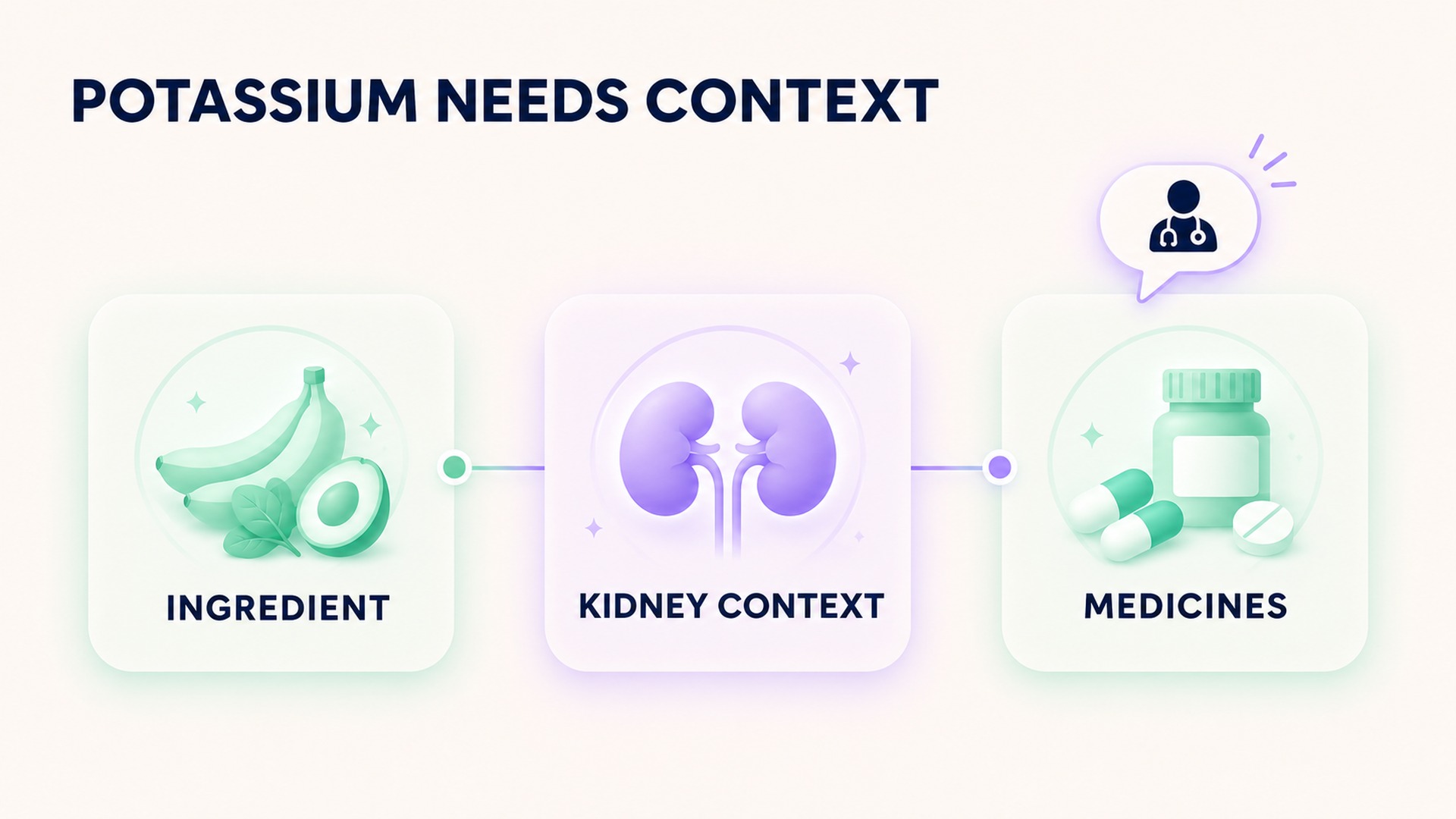
The kidneys help regulate potassium in the body. When kidney function is impaired, the body may have difficulty clearing excess potassium. Some medicines can also alter potassium balance. The degree of concern depends on the clinical situation, so a general food label cannot determine whether a particular salt substitute is suitable for an individual.
The kidney health guidance on potassium describes how kidney disease and treatment can affect the need to monitor dietary choices. The overview of chronic kidney disease explains why kidney function is part of the clinical context. More specific nutrition recommendations may depend on laboratory results, disease stage, medicines, and the overall eating pattern. People with a kidney condition should follow the advice of their care team rather than changing their salt use based on a generic online list.
Medication context is also important. Certain blood-pressure medicines and other prescriptions can affect potassium levels. Do not stop or adjust a prescribed medicine because a label lists potassium, and do not assume a salt substitute is safe because it is sold in a grocery store. If there is uncertainty, show the product label to a clinician or pharmacist who can consider the person’s current medicines and health information.
What a food record should capture
For a repeatable record, note the exact product, portion used, frequency, whether potassium chloride is listed, and the sodium or potassium information shown on the label. Keep the date and source of the label if products change. If the recipe uses a measured amount, preserve the measure rather than writing only “salt substitute.” A pinch, a teaspoon, and an ingredient used in a packaged food are not equivalent entries.
If a clinician has asked a person to track potassium, distinguish label data from estimates. Some labels provide potassium in milligrams, while others may list the ingredient without a clear amount. Mark missing values as unknown. Do not calculate a potassium dose from the position of an ingredient in the list or from the sodium reduction percentage. Ingredient lists are ordered by weight in many contexts, but that order is not a substitute for a quantitative declaration.
A digital diet tracker may list “salt substitute” as a generic item. Confirm that the selected database entry matches the product’s ingredients. If the product is not represented accurately, keep a text note or use the package’s declared values rather than selecting a similar item based on its name. A generic entry can omit potassium chloride or use a different serving size.
The clinical potassium resource for people with kidney disease explains that potassium needs and restrictions vary. It can help frame questions, but an online table cannot account for an individual’s laboratory results or medicines. The record is a tool to support a conversation, not a substitute for that conversation.
Lower sodium does not settle the decision
Reducing sodium may be part of a clinician’s plan for some people, but the specific method matters. A salt substitute is only one possible change, and it can shift the amount of another mineral. The comparison should include the product’s serving, potassium ingredients, the rest of the diet, and medical context. A front label that emphasizes sodium does not answer all of those questions.
In a household, avoid assuming that one seasoning choice is appropriate for every person who eats the same meal. The same dish can be served with different seasonings or no added salt, depending on a person’s needs and preferences. Clear labeling and separate storage can help prevent confusion when a household uses more than one product.
The heart-health information about sodium and salt describes sodium as one part of broader cardiovascular health guidance. A separate discussion of food notes alongside recovery data considers how a food log can support interpretation. That recordkeeping context does not make potassium-based substitutes suitable for all readers. If a clinician has set a sodium target, ask how to interpret that target alongside kidney health, medication use, and potassium intake.
A food log should also avoid turning a small measurement into an exact daily exposure estimate when label information is incomplete. Restaurant meals, packaged foods, and seasoning added during preparation can all contribute. A person may be able to note which product was used without knowing its precise mineral content. Preserving that uncertainty is better than filling it with a guessed value.
When to ask for qualified advice
A person with chronic kidney disease, a prior potassium concern, or medicines that can affect potassium should check with a clinician or pharmacist before making a sustained switch to a potassium-containing salt substitute. This is particularly important when a care plan already includes potassium testing or dietary guidance. The professional can review the exact product and the person’s current treatment.
The conversation should include the label, the amount used, how often it is used, and the reason for the change. If the goal is lower sodium, there may be alternatives that fit the individual plan. Avoid relying on broad claims such as “heart healthy” or “natural” to resolve a medical question. Marketing language does not show an individual’s potassium handling.
Do not use symptoms or a wearable reading to infer a potassium level. Potassium balance is not reliably estimated from ordinary activity, heart rate, or a wellness score. If someone has concerning symptoms or a known abnormal laboratory result, follow the instructions from their care team and seek appropriate medical attention. A food record cannot determine whether a laboratory result needs urgent follow-up.
A sodium reduction claim describes one product characteristic. The ingredient list and a person’s medical context describe others. Keep those details in the same record and ask a qualified professional to interpret personal implications when kidney disease or medicines are involved.
A person who has been told to limit potassium should not assume that a seasoning is exempt because it is used in a small amount. The amount and frequency still belong in the record, especially when the care team has asked about dietary sources.
FAQ
Are potassium salt substitutes suitable for everyone?
No. Kidney function and some medicines can affect potassium balance. A person with relevant health conditions should ask a clinician or pharmacist about the specific product.
Does “reduced sodium” mean the product contains no potassium?
No. Some products use potassium chloride in place of some sodium chloride. Read the full ingredient list and nutrition information.
Can I estimate potassium from ingredient order?
No. Ingredient order does not provide a precise potassium amount. Use a declared quantity or record that the amount is unknown.
*This article is for informational purposes only and is not a substitute for professional medical advice, diagnosis or treatment.*
Sources:
NIH Office of Dietary Supplements·FDA·National Institute of Diabetes and Digestive and Kidney Diseases·National Institute of Diabetes and Digestive and Kidney Diseases·National Kidney Foundation·Centers for Disease Control and Prevention
Related articles

Food date labels do not replace safe storage instructions
A printed date describes only part of a food’s context and may refer to quality or a specific product rule. Preserve the exact label phrase alongside opening, handling, and storage information that is known.

Lactose intolerance and milk allergy need different food notes
Lactose intolerance concerns digestion of a milk sugar, while milk allergy involves an immune reaction to milk proteins. Record the exact product wording and symptoms without treating a lactose-free claim as an allergy clearance.

Kilojoules and kilocalories need one consistent food-log unit
Food labels and trackers may use kilojoules or kilocalories for the same energy value. Keep the original label unit beside any conversion so every total remains clear and checkable.

Protein grams leave amino acid quality unreported
Protein grams show an amount for a stated serving, while amino acid composition and digestibility describe other properties. Keep the declared quantity separate from any quality measure or score that the source actually reports.

Time in glucose range needs the target range beside it
Time in range is a percentage calculated from glucose readings within chosen bounds over a defined period. Keep the target interval, units, sensor coverage, and clinical context beside the result so the percentage can be interpreted correctly.

Glucose sensor timing can lag behind changes in blood
Continuous glucose monitors sample interstitial fluid and estimate blood glucose from that signal. During rapid changes, the sensor reading may reflect a later point in the curve, so keep both measurement times and the device context visible.

Peak flow and spirometry report different breathing measures
Peak flow records the highest expiratory flow from a forceful breath out. Spirometry measures airflow and exhaled volume over time, so the test name, units, effort quality, and report comments should stay with each result.

A resting metabolic rate test depends on the test protocol
A resting metabolic rate test estimates energy use from gas exchange under defined conditions. The preparation, equipment, analysis method, and report details all affect how the value should be interpreted.

Bone density T-scores and Z-scores use different references
A T-score compares bone density with a young-adult reference, while a Z-score uses a more closely age-matched reference. Keep the score type, skeletal site, and report interpretation together because the two numbers are not interchangeable.

Waist measurements need a consistent anatomical landmark
Waist circumference can differ when the tape crosses different anatomical sites or follows a different plane. Keep the landmark, posture, breathing phase, and tape position with each date so a trend uses a consistent protocol.