Glycemic index needs portion context to describe glycemic load
By Mr.Apps · Nov 4, 2026
Category:Energy

Two measures describe different parts of carbohydrate context
Glycemic index and glycemic load are related terms, but they do not answer the same question. Glycemic index compares the blood-glucose response to a defined amount of available carbohydrate from a food with a reference food, under a study protocol. Glycemic load combines that index with the amount of carbohydrate in a serving. The portion therefore changes the load calculation, while the index is a property reported for a tested food preparation. I keep the two values separate in a food record.
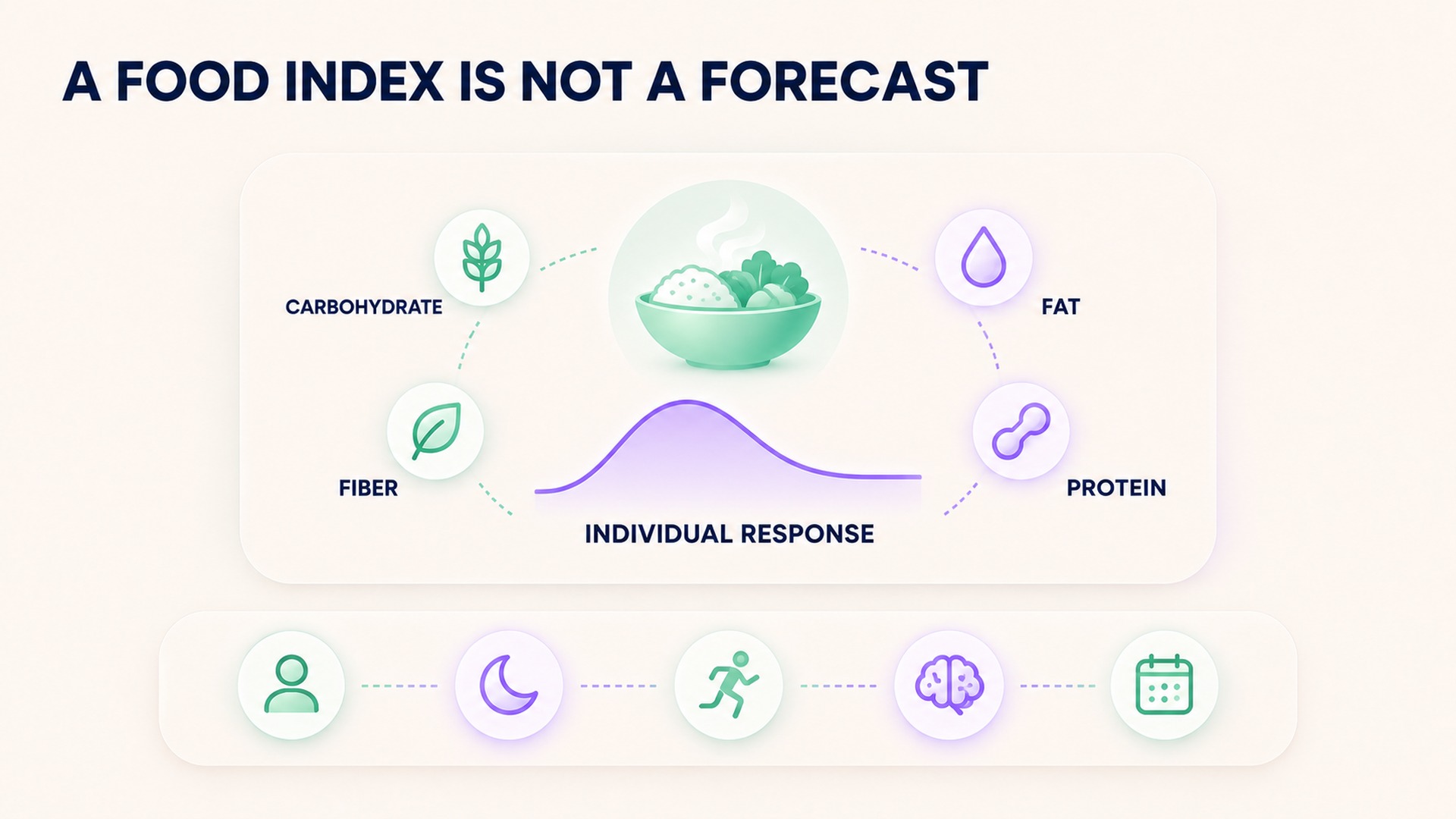
A food’s published glycemic index is not a prediction of exactly what one person’s glucose sensor will show after eating it. Individual responses can differ, and a meal is more than one isolated food. Food variety, ripeness, preparation, the other foods eaten, timing, activity, and health context can all matter. Keep a published value tied to its source and tested food rather than treating it as a personal result.
The overview of glycemic index and glycemic load explains that index alone does not show how much digestible carbohydrate a serving contributes. It describes glycemic load as including both the index and the carbohydrate amount. That distinction is useful for reading a food table, but it does not make the value a treatment target or a guarantee of an individual response.
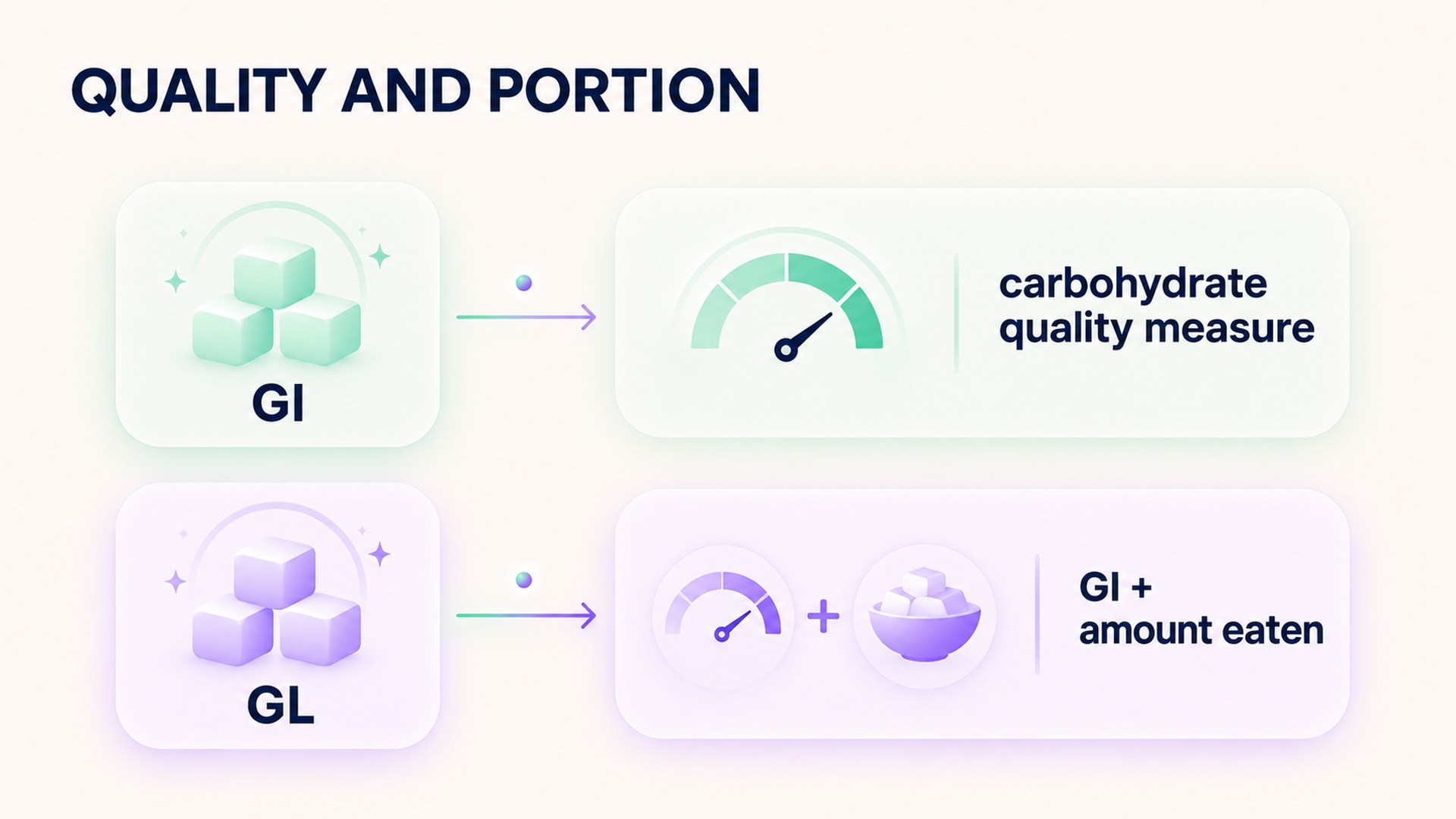
What glycemic index represents
A glycemic index is derived from a comparison made under a defined test method. Participants consume a portion containing a specified amount of available carbohydrate, and researchers measure blood-glucose responses over time. The response is compared with a reference condition. The value belongs to the tested food form, the testing method, and the study context. It is not a label for all foods with the same common name.
Cooking, processing, ripeness, variety, and storage can affect the carbohydrate structure of food. A value from one preparation may not match another. A database may provide a single number, but the underlying research may include a specific type of food and preparation. If the source does not describe those details, the number should be treated as a limited reference rather than a universal constant.
The methodological definitions used in nutrition research distinguish the glycemic index from related measures and discuss its limitations. A published index can support comparison within a defined context, but it does not erase variation among people or meals. It also does not mean that a food with a higher index is automatically unsuitable or that a lower-index food is always a better choice for every person.
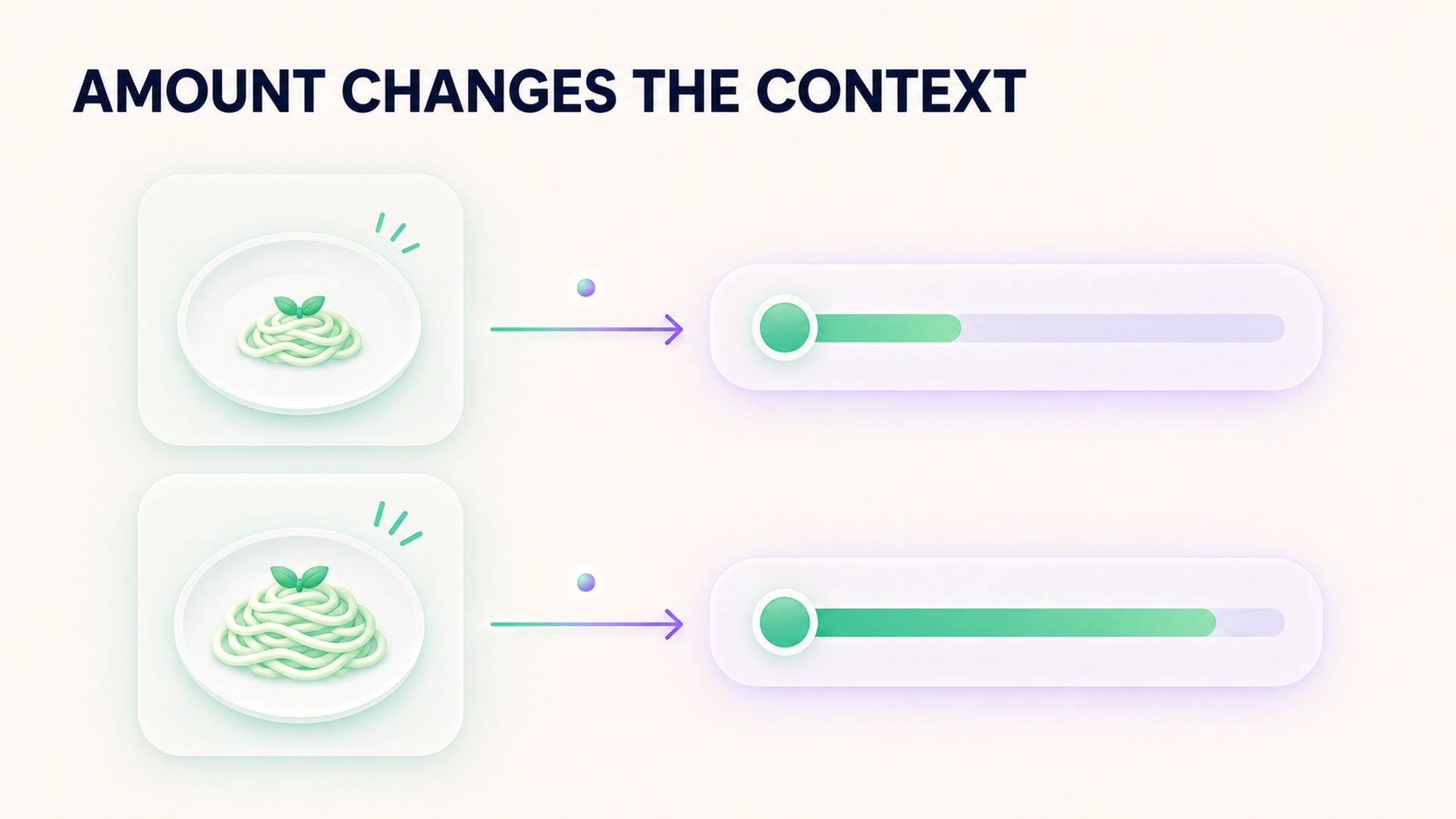
Portion size changes glycemic load
Glycemic load includes an amount of carbohydrate, so serving size matters. A food with a particular index can contribute a different load when the portion changes. That arithmetic does not say how much a person should eat. It is a way to describe the carbohydrate exposure represented by a specific serving under the assumptions of the calculation.
A common conceptual formula is glycemic index multiplied by available carbohydrate in the serving, with the result scaled by the conventional divisor used in the source. When recording a published glycemic load, preserve the serving amount and the database’s definition. If calculating it, retain the source index and carbohydrate amount separately so the inputs can be checked. Do not derive a load from total carbohydrate without knowing whether the method accounts for fiber or other available-carbohydrate conventions.
The nutrition information on carbohydrate and blood sugar explains that carbohydrate foods can affect blood glucose and that meal planning needs individual context. It is not a source of a personal glycemic-load target. A person using glucose-lowering medication should follow their care plan rather than changing medication based on a published food index or load figure.
Serving basis is a frequent source of error. A table might describe a standard portion, while the actual amount eaten is larger or smaller. A food log that copies the glycemic index but changes the portion should not carry over a glycemic-load value unchanged. Conversely, a calculated load should not be presented without the portion used. The two fields belong together.
Mixed meals and real-world response
A person rarely eats a laboratory portion of one food in isolation. Meals combine carbohydrate with protein, fat, fiber, and other components. The meal’s texture, preparation, and eating sequence may differ from the study setup. A glycemic index measured for a single food cannot be assumed to predict the curve for a mixed meal with the same ingredient.
Continuous glucose monitoring adds another layer of context. A sensor measures glucose in interstitial fluid, not directly in a test tube of blood, and its values have device and timing limitations. A post-meal trace can help a person and care team understand patterns under a specified plan, but it does not validate a food’s published glycemic index. The values describe different observations.
The diabetes meal-planning guidance discusses eating patterns within an individual care plan. Research reports should be read with their date, methods, and research question in view. Nutrition evidence develops through studies that use specific populations and food protocols. A single chart does not capture every preparation or every individual. Avoid turning a group average into a forecast for one meal or one person.
Food labels generally do not report glycemic index. When a website or app supplies a value, check whether it identifies the tested variety, preparation, source, and serving assumptions. Some tables draw from older studies or combine values from different methods. If the source is unclear, mark the value as unverified or omit it rather than presenting it as precise.
A useful food log keeps the inputs visible
For an entry, record the food and preparation, the portion, the carbohydrate amount and source, and any glycemic index or load value with its citation. If the figure is calculated, preserve the inputs and formula. If an application supplies it, note the app or database and avoid assuming that it refers to the exact product or cooked form in front of you.
If a glucose reading is also recorded, keep it separate from the published index. Note the sensor or measurement method, time, meal context, and any relevant care instructions. Do not compare a sensor trace from one day with a study-derived index as though one verifies the other. They have different measurement sources and different uncertainty.
For people who manage diabetes, carbohydrate counting and medication decisions should follow their clinician’s plan. A published glycemic index is not a dosing instruction. The guidance on carbohydrate intake and diabetes describes carbohydrate as one part of food planning and encourages individualized approaches. It should not be used to adjust a prescription without the clinician responsible for the plan.
The purpose of these measures is descriptive. Index summarizes a relative response under a defined test; load adds a serving’s carbohydrate quantity. Neither one, by itself, determines whether a food belongs in a person’s diet. A log can help retain context, but dietary decisions involve preferences, nutritional adequacy, health conditions, medication, and the broader pattern of eating.
Avoid over-reading a number
A lower glycemic index does not guarantee a small glucose change in an individual. A higher index does not mean the food must be excluded. A lower load can reflect a smaller carbohydrate portion, not a special property of the food. These measures can help compare specific examples, but they should not be converted into moral categories or universal “good” and “bad” lists.
If a value seems surprising, check the food form, portion, source, and calculation before interpreting it. Confirm whether the table uses available carbohydrate, total carbohydrate, or another convention. Check whether the serving is cooked or uncooked. The issue may be a mismatch between the database entry and the food, not a biological effect.
Do not infer long-term health outcomes from a single meal score. Research on dietary patterns may examine associations between eating patterns and health outcomes, but those findings are distinct from a glycemic index value for one food. Association does not show that one item caused a health outcome. A food record should preserve what each measurement represents and how it was obtained.
When a professional has asked someone to track a specific measure, bring the original source and serving details to that conversation. The most useful record often includes the uncertainty rather than hiding it. If no reliable published value matches the food, that absence is preferable to a false precision. A plain-language carbohydrate overview provides general nutrition context, while the individual’s care plan governs personal decisions. A related discussion of food notes alongside recovery data considers how to keep observations useful without assuming that an app provides a complete explanation.
For a comparison, write the tested food form and the serving beside the number. Without those details, the index or load may look more exact than the underlying match.
FAQ
Does glycemic index include portion size?
No. Glycemic index is based on a defined carbohydrate test amount. Glycemic load adds the carbohydrate quantity in a stated serving.
Can a glycemic index predict my glucose sensor response?
No. A published value reflects a tested food and protocol. Personal meals and responses vary, and a sensor measures a different signal.
Is a low glycemic load a meal recommendation?
No. It is a descriptive calculation for a serving. It does not replace individualized nutrition or medical guidance.
*This article is for informational purposes only and is not a substitute for professional medical advice, diagnosis or treatment.*
Sources:
Harvard T.H. Chan School of Public Health·American Journal of Clinical Nutrition·Centers for Disease Control and Prevention·National Institute of Diabetes and Digestive and Kidney Diseases·MedlinePlus·American Diabetes Association
Related articles

Food date labels do not replace safe storage instructions
A printed date describes only part of a food’s context and may refer to quality or a specific product rule. Preserve the exact label phrase alongside opening, handling, and storage information that is known.

Lactose intolerance and milk allergy need different food notes
Lactose intolerance concerns digestion of a milk sugar, while milk allergy involves an immune reaction to milk proteins. Record the exact product wording and symptoms without treating a lactose-free claim as an allergy clearance.

Kilojoules and kilocalories need one consistent food-log unit
Food labels and trackers may use kilojoules or kilocalories for the same energy value. Keep the original label unit beside any conversion so every total remains clear and checkable.

Protein grams leave amino acid quality unreported
Protein grams show an amount for a stated serving, while amino acid composition and digestibility describe other properties. Keep the declared quantity separate from any quality measure or score that the source actually reports.

Time in glucose range needs the target range beside it
Time in range is a percentage calculated from glucose readings within chosen bounds over a defined period. Keep the target interval, units, sensor coverage, and clinical context beside the result so the percentage can be interpreted correctly.

Glucose sensor timing can lag behind changes in blood
Continuous glucose monitors sample interstitial fluid and estimate blood glucose from that signal. During rapid changes, the sensor reading may reflect a later point in the curve, so keep both measurement times and the device context visible.

Peak flow and spirometry report different breathing measures
Peak flow records the highest expiratory flow from a forceful breath out. Spirometry measures airflow and exhaled volume over time, so the test name, units, effort quality, and report comments should stay with each result.

A resting metabolic rate test depends on the test protocol
A resting metabolic rate test estimates energy use from gas exchange under defined conditions. The preparation, equipment, analysis method, and report details all affect how the value should be interpreted.

Bone density T-scores and Z-scores use different references
A T-score compares bone density with a young-adult reference, while a Z-score uses a more closely age-matched reference. Keep the score type, skeletal site, and report interpretation together because the two numbers are not interchangeable.

Waist measurements need a consistent anatomical landmark
Waist circumference can differ when the tape crosses different anatomical sites or follows a different plane. Keep the landmark, posture, breathing phase, and tape position with each date so a trend uses a consistent protocol.