Lactose intolerance and milk allergy need different food notes
By Mr.Apps · Nov 4, 2026
Category:Energy

Similar food notes can describe different conditions
A food record may say “milk caused symptoms,” but that note leaves out what the person knows about the cause. Lactose intolerance and milk allergy involve different mechanisms. Lactose is a sugar in milk. Lactose intolerance occurs when digestion of that sugar is limited, commonly because the small intestine does not produce enough lactase. Milk allergy involves an immune reaction to proteins in milk. A lactose-free label addresses lactose; it does not by itself confirm that milk proteins are absent.
For a food record, the mechanism determines which ingredient, symptom, and diagnosis details to capture. A person who avoids lactose for digestive symptoms may make different food decisions from someone who must avoid milk protein because of an allergy. A short note should not collapse both into “dairy problem.” I keep the product statement, symptoms, and diagnosis status in separate fields. It is more useful to preserve the exact product, the label wording, what was eaten, the symptoms and timing, and any clinician-confirmed diagnosis.
A plain-language explanation of lactose intolerance describes a digestive condition in which the body cannot fully digest lactose. That explanation helps separate the sugar from the milk proteins that trigger an allergic immune response. The word “intolerance” should not be used as a substitute for an allergy diagnosis, and symptoms alone do not establish which condition is present.
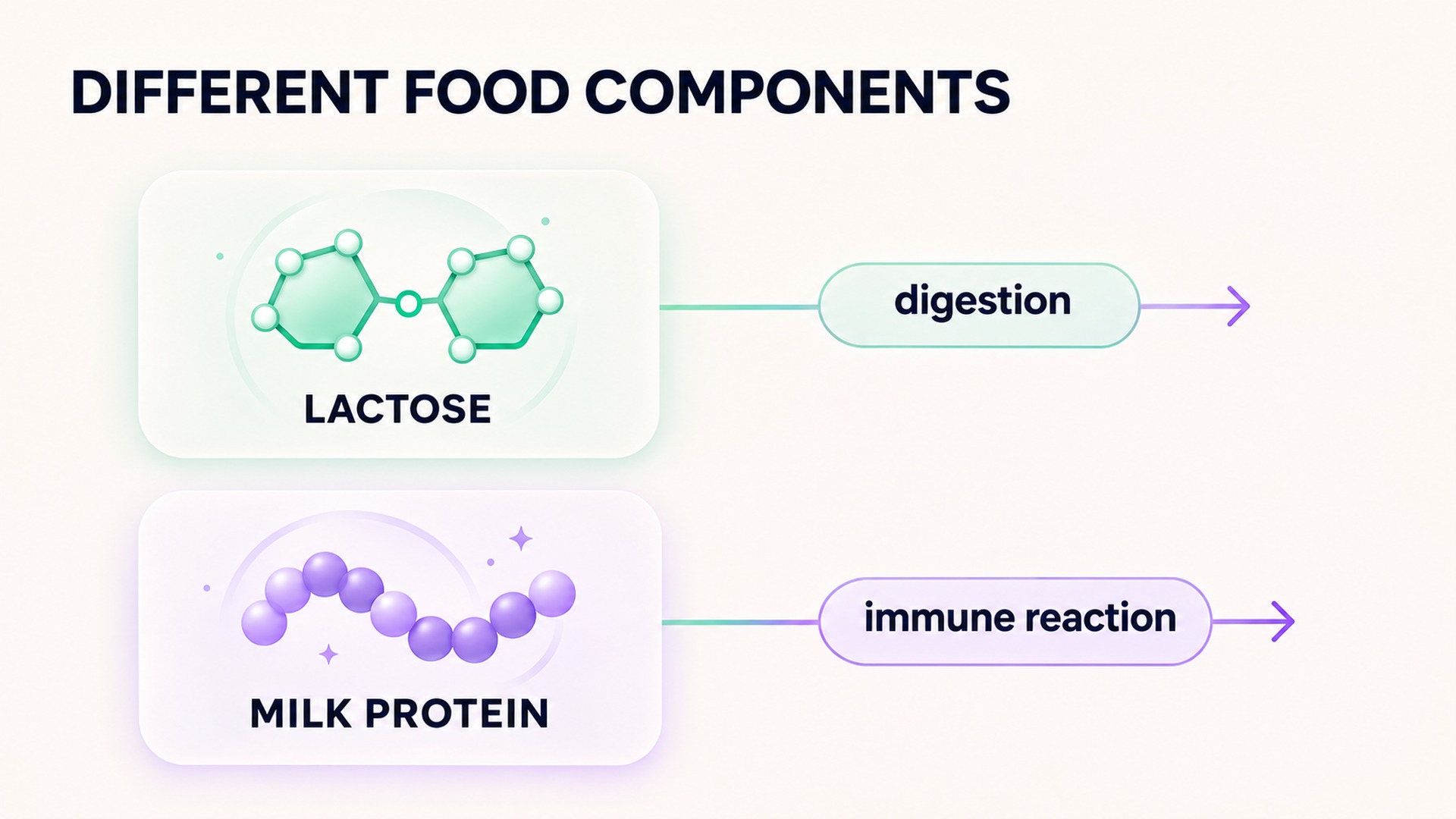
Lactose is a sugar; milk allergy concerns proteins
Lactose is made of two linked simple sugars. Lactase is the enzyme that breaks lactose down in the digestive tract. When lactose is not digested adequately, it can move into the colon, where bacteria ferment it. Some people then experience symptoms such as gas, abdominal discomfort, or diarrhea. The amount tolerated can vary, and the pattern of symptoms should be discussed with a qualified professional when diagnosis or management is uncertain.
Milk allergy is different. The immune system reacts to one or more milk proteins. Reactions can involve skin, digestive, or respiratory symptoms and can be severe. A food record cannot diagnose an allergy or determine whether a future exposure is safe. If a person has a known allergy, they should follow the individualized plan provided by their health professional and use the product label and advice appropriate to that plan.
The dietary guidance for lactose intolerance notes that some people can tolerate differing amounts of lactose and describes lactose-free and lactose-reduced products as ways to lower lactose. That is relevant to digestion of the sugar. It should not be interpreted as assurance for a milk-protein allergy. The product may still be made from milk and contain the proteins that matter for an allergy.
Words on packaging are not interchangeable. “Lactose-free” generally refers to the sugar being absent or reduced under the applicable product definition. “Non-dairy” can also be confusing in everyday language and may not be a reliable allergy clearance by itself. Ingredients, allergen statements, manufacturing information, and the person’s own clinical plan all matter. Do not infer safety from one front-of-package phrase.
Read the ingredient and allergen information
For packaged foods, the ingredient list and allergen declaration can provide important information about milk ingredients. Milk proteins can appear as ingredients such as casein or whey, so the word “lactose” is not the only term relevant to an allergy. The overview of milk as an allergen explains common milk-protein sources and the need to check labels. It also warns that products described as non-dairy can still contain milk-derived ingredients.
Food labeling rules depend on jurisdiction and product type. A packaged food label may name milk in the ingredients or a separate allergen statement. An imported product, restaurant meal, or unpackaged food may require additional questions. The consumer guidance on reading food allergen labels explains how declared major allergens appear on many packaged foods. It does not replace a product-specific review or advice for a person with a severe allergy.
A useful note keeps the exact label language rather than translating it into a conclusion. For example, “carton states lactose-free; ingredient list includes milk” is more informative than “safe milk.” The record should not call an item allergy-safe unless that conclusion comes from a source qualified to assess it for that person. If restaurant staff or a manufacturer provide ingredient information, record who supplied it and when, while recognizing that recipes and handling may change.
Cross-contact is another separate issue. A food that does not list milk as an intentional ingredient may still be exposed to it during manufacturing or preparation. A precautionary statement can indicate a possible risk, but the meaning and reliability of such wording can vary. The record should capture the actual statement rather than treating it as a universal guarantee. A clinician or allergy specialist can clarify how to use the label in an individual plan.

Symptoms and timing need context
Symptoms after a meal are observations. They do not on their own prove lactose intolerance, milk allergy, or a causal relationship. A careful record can include the food and exact product, portion, preparation, ingredient list, time eaten, time symptoms began, symptom type and duration, and any other relevant exposure. If a reaction is urgent or severe, use the emergency plan and seek appropriate care rather than trying to complete a log first.
The same symptom can have more than one possible cause, and a person can have a digestive intolerance and an allergy as separate conditions. Self-experimentation with suspected allergens can be dangerous. A food-and-symptom diary may support a clinical conversation, but it should not replace evaluation or a supervised diagnostic process. Do not remove broad food groups or reintroduce a suspected allergen solely based on an app’s inference.
If the record comes from a wearable or meal-tracking application, distinguish measured data from user-entered notes. A device may show meal timing or heart rate, but it cannot identify milk proteins or diagnose an immune reaction. A symptom label generated by software is not a clinical finding. Retain the person’s own description and the source of each entry.
For lactose symptoms, tolerance can differ among people and may differ by food form or portion. The clinical overview of lactose intolerance describes symptoms and testing approaches. A professional can consider the timing, health history, and other potential causes. The fact that someone reports symptoms after one dairy food does not establish that every dairy product causes the same response.
For allergy, the threshold for safety is not determined by a symptom diary. A reaction can be unpredictable, and symptoms may not appear identically each time. The allergy-care overview for milk explains that milk allergy is an immune condition and that management should be guided by an allergy professional. Do not rely on a small prior reaction to assume a later exposure will be mild.
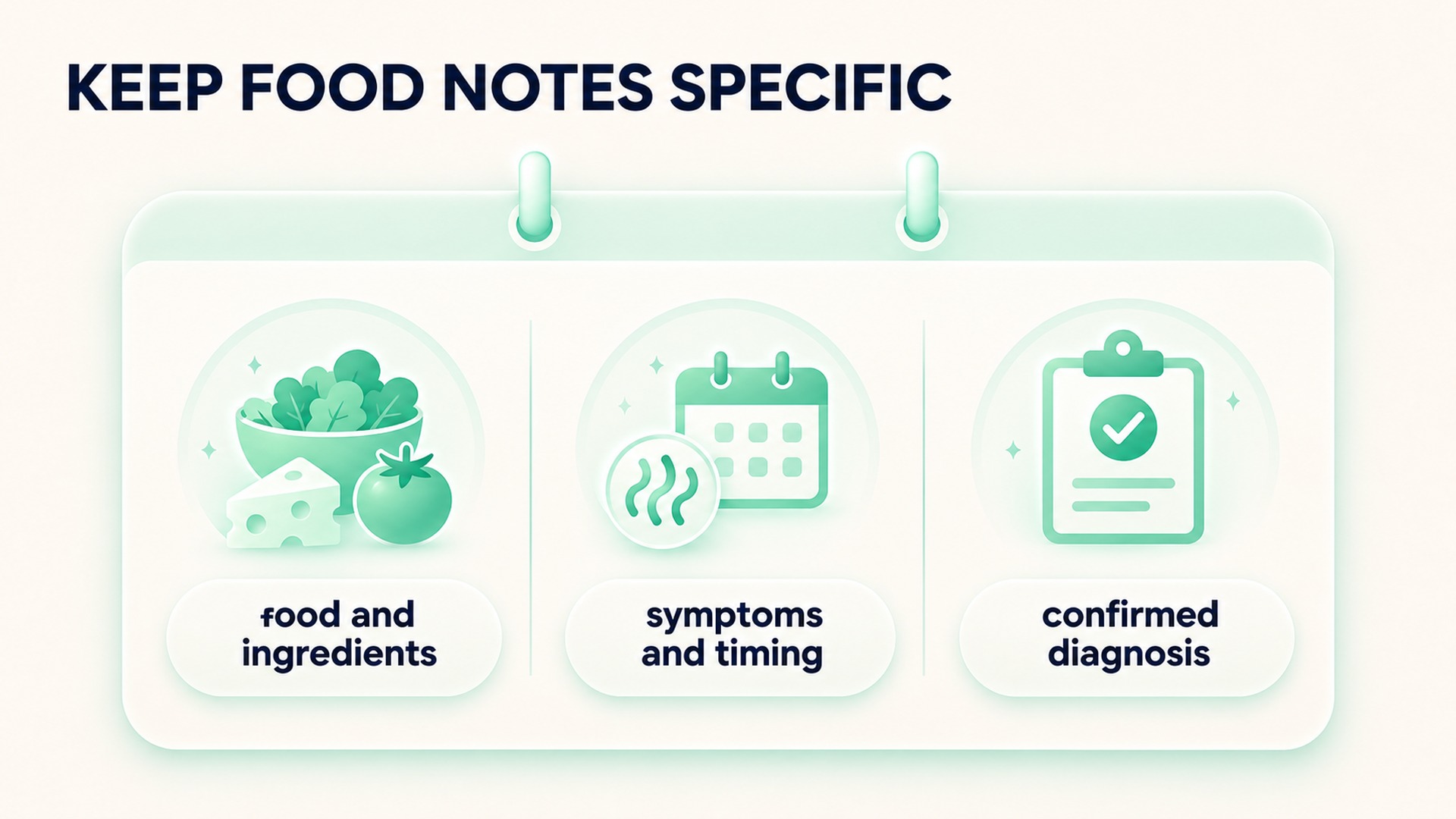
Build a record that keeps the distinction clear
Use separate fields for the food, ingredient or allergen statement, lactose claim, portion, symptoms, timing, diagnosis status, and source of the note. Keep “suspected,” “reported,” and “clinician-confirmed” distinct. If a product is labeled lactose-free, record those exact words and note any milk ingredients separately. If the person has a confirmed allergy plan, keep the plan’s instructions accessible without rewriting them from memory.
A simple chronology is often more useful than a long narrative. Include what was eaten, how much, whether the food was homemade or packaged, and what symptoms followed. For a packaged product, a photograph of the ingredient and allergen panel can help preserve the exact version, provided the record is stored appropriately. For food prepared by someone else, note the information that was actually confirmed and anything that remained unknown.
Do not use the word “allergy” casually to describe gas or bloating after milk. Do not use “intolerance” to minimize a diagnosed immune reaction. The terms guide different conversations and safety decisions. A health professional can help determine whether symptoms fit a digestive issue, allergy, another condition, or a combination.
If the goal is to compare reactions over time, keep the conditions as similar as practical and avoid changing several dietary factors at once without guidance. Even then, a pattern in a private log is not proof of mechanism. The appropriate next step depends on severity and history. Seek urgent help for signs of a severe allergic reaction, and use the prescribed action plan if one exists.
This recordkeeping approach protects the meaning of the observation. It separates a sugar-digestion question from an immune-allergy question, keeps product statements precise, and leaves diagnosis with the appropriate professional. A related discussion of food notes alongside recovery data explains the role of a food log, while diagnosis and allergy-specific advice should come from a qualified health professional. The two kinds of information should remain distinct in the record.
FAQ
Does lactose-free milk mean milk-protein-free?
No. Lactose-free describes the lactose content or treatment. Milk proteins may still be present, so the label and allergy plan matter.
Can symptoms alone distinguish lactose intolerance from milk allergy?
No. Symptoms can guide a clinical conversation, but diagnosis depends on evaluation. Severe or urgent symptoms require appropriate care.
What should I write in a food reaction log?
Record the food and label, portion, symptoms and timing, relevant context, and whether a diagnosis is confirmed. Keep unknowns explicit.
*This article is for informational purposes only and is not a substitute for professional medical advice, diagnosis or treatment.*
Sources:
National Institute of Diabetes and Digestive and Kidney Diseases·National Institute of Diabetes and Digestive and Kidney Diseases·Food Allergy Research & Education·FDA·MedlinePlus·American College of Allergy, Asthma & Immunology
Related articles

Kilojoules and kilocalories need one consistent food-log unit
Food labels and trackers may use kilojoules or kilocalories for the same energy value. Keep the original label unit beside any conversion so every total remains clear and checkable.

Protein grams leave amino acid quality unreported
Protein grams show an amount for a stated serving, while amino acid composition and digestibility describe other properties. Keep the declared quantity separate from any quality measure or score that the source actually reports.

Time in glucose range needs the target range beside it
Time in range is a percentage calculated from glucose readings within chosen bounds over a defined period. Keep the target interval, units, sensor coverage, and clinical context beside the result so the percentage can be interpreted correctly.

Glucose sensor timing can lag behind changes in blood
Continuous glucose monitors sample interstitial fluid and estimate blood glucose from that signal. During rapid changes, the sensor reading may reflect a later point in the curve, so keep both measurement times and the device context visible.

Peak flow and spirometry report different breathing measures
Peak flow records the highest expiratory flow from a forceful breath out. Spirometry measures airflow and exhaled volume over time, so the test name, units, effort quality, and report comments should stay with each result.

A resting metabolic rate test depends on the test protocol
A resting metabolic rate test estimates energy use from gas exchange under defined conditions. The preparation, equipment, analysis method, and report details all affect how the value should be interpreted.

Bone density T-scores and Z-scores use different references
A T-score compares bone density with a young-adult reference, while a Z-score uses a more closely age-matched reference. Keep the score type, skeletal site, and report interpretation together because the two numbers are not interchangeable.

Waist measurements need a consistent anatomical landmark
Waist circumference can differ when the tape crosses different anatomical sites or follows a different plane. Keep the landmark, posture, breathing phase, and tape position with each date so a trend uses a consistent protocol.

Lean tissue on a body scan includes more than muscle
A body-composition scan reports method-dependent compartments such as lean soft tissue, not a direct count of skeletal muscle. Keep the exact scan label, body region, method, date, and testing context with the result before comparing it over time.

Urine albumin concentration needs its creatinine context
A spot urine albumin concentration changes with how diluted the sample is. The albumin-to-creatinine ratio adds context, while the full report and clinical question still guide interpretation.