How to Use a Wearable Journal Without Mistaking Correlation for Cause
By Mr.Apps · Sep 8, 2026
Category:Recovery

A wearable journal looks simple on the surface. You note a late meal, a demanding day, a hard training session, an unusually early bedtime, or a long walk. A few days later, the app offers a pattern: recovery was lower after one of those habits, or sleep looked better when another one appeared.
That can be useful. It can also be misleading.
I treat a wearable journal as a way to make the context around my numbers visible. It is not a laboratory, and it does not turn a dashboard into proof. The goal is to notice repeatable clues, then make modest decisions that fit the evidence. That approach protects you from a common trap: seeing two things happen together and assuming that one caused the other.
Start with the question, not the list of things to log
The easiest way to make a journal unhelpful is to track everything. A long checklist may feel thorough, but it usually produces scattered data and weak conclusions. It also creates work that few people can sustain.
Start with one question you can answer, such as whether a later training session aligns with lower next-day readiness. For a late workout, record only whether it was later than usual, its broad intensity, and its duration.
This matters because consumer wearables already compress a large amount of information into estimates. A review of wearable-health research
notes that device makers use different sensors, timing choices, and proprietary algorithms to produce the numbers people see in an
app. That makes consistent use of one device over time more useful than treating a single score as a universal measurement.

The journal should add what the sensor cannot see. It can capture context such as a disrupted routine, an unusually long commute, a change in training, or a late dinner. It cannot reliably measure every part of life, and it does not need to.
Decide what counts as the outcome
Before looking for a pattern, decide which outcome matters. Pick one or two signals at most. That may be a weekly recovery trend, your usual morning resting heart rate, total sleep time, or a simple personal note about how ready you felt to train.
For most people, the best outcome is a personal trend rather than a precise daily score. Wearable data can be affected by device fit, syncing, charging, movement, temperature, and the particular way an app processes a signal. Reviews of person-generated wearable data describe variation within the same person as well as differences caused by device and data-collection methods. The practical lesson is to look for a pattern in comparable conditions, not a verdict from one morning.
Give the pattern enough time
One unusual day is a story, not a finding. Two similar days may be coincidence. A few weeks of reasonably consistent logging give you a better starting point, especially when the habit you are watching happens more than once.
I prefer a short review once each week. Look at the days when the habit was present and ask whether the same direction appears more than once. Then look for obvious alternatives. Did the lower score occur after a harder workout, a later bedtime, a heat wave, a disrupted travel schedule, or a night when the device was not worn normally? This is not overthinking. It is basic context.
Wearable research repeatedly identifies data quality, interoperability, and missing context as limits on interpretation. The same review that discusses the promise of health tracking also explains why differences in sensors, processing, and collection conditions make conclusions less secure. Data quality is part of the result, not an administrative detail you can ignore after the chart appears.
Watch for the hidden third factor
Imagine that your recovery trend is lower on days after a late meal. It is tempting to blame the meal. But perhaps late meals usually happen on days when work ran long, training moved later, bedtime shifted, and sleep became shorter. In that case, the meal may be one piece of the picture, or simply a marker for a more demanding day.
This is called confounding. A third factor influences both the habit you logged and the result you care about. Personal data has plenty of it because real life has plenty of moving parts.
You can reduce the problem without pretending to solve it completely. Add one or two context tags that commonly travel with the habit. If you are reviewing late training, also note bedtime and whether the session was easy, moderate, or hard. If you are reviewing work stress, note whether the day included unusual travel, illness symptoms, or a major schedule change. Keep the tags broad enough that you will actually use them.
Then compare like with like. A late easy session should not be compared only with an early hard session. The question is whether the comparison has become fairer.

Change one practical thing at a time
When a pattern looks plausible, the next step is not to overhaul your entire routine. Change one modest, safe variable for a short period and see whether the broader trend changes too.
For example, if late workouts repeatedly coincide with delayed sleep and less steady morning data, move one or two sessions earlier for two weeks while keeping training volume broadly similar. Write down the change before you begin.
This does not prove cause in a scientific sense. It does make your personal observation more useful. You have a clearer before-and-after period, fewer simultaneous changes, and a decision you can revisit. A methodical approach to sensor reliability follows the same basic idea: measurement is more useful when the conditions and the purpose are clear.
Do not use this process to test something that could create a health risk. A wearable journal is not a safe way to experiment with medication, symptoms, or serious fatigue. If you have concerning symptoms, a persistent change in how you feel, or a question about treatment, speak with a qualified healthcare professional. The device can provide a timeline to discuss, but it cannot settle the clinical question.
Keep the journal light enough to survive real life
Choose tags that are clear and repeatable. Good examples include later-than-usual training, high work demand, disrupted sleep routine, long travel day, unusually early bedtime, or rest day. Avoid vague labels such as “bad day” because they are hard to compare later. Avoid labels that combine several ideas, such as “stressful day with poor food choices and little time,” because you will not know which piece mattered.
Privacy belongs in this decision as well. Health apps can collect sensitive behavioral information, and wearable research has raised questions about how consumer data is stored, shared, and governed. Before connecting a journal to another service, review the permissions and data policy. Enable only the connection that adds a benefit you can name. If a feature does not improve your decisions, it does not need more of your data.
Read the result with the right amount of confidence
First, you may find no pattern. That is still useful. It means the habit did not show a clear relationship in the period you reviewed, or the available data was not strong enough to show one.
Second, you may find a repeatable association. For example, a certain routine may repeatedly appear alongside later bedtimes and lower next-day readiness. Treat that as a prompt for a small adjustment, not a diagnosis or a permanent rule.
Third, you may find a pattern that deserves outside input. A sustained change in symptoms, exercise tolerance, heart rate, sleep, or general wellbeing should be discussed with a healthcare professional rather than managed through more tagging. Some wearable technologies have formal medical authorization for specific uses, but many consumer features are designed for general wellness. The FDA's list of authorized sensor-based digital-health devices shows why it is important to distinguish a particular cleared use from a broad health claim.
The most valuable habit is simple: hold your conclusion loosely. If the same relationship continues under similar conditions, it becomes more interesting. If it disappears, revise your view. Personal tracking works best when it helps you notice, test, and adapt without pretending that a score knows the whole story.

A simple weekly review
At the end of the week, ask four questions:
- Did the habit occur often enough to compare?
- Did the outcome move in the same direction more than once?
- What other changes happened on those days?
- Is there one low-risk adjustment worth trying next week?
That is enough. Current product updates are making it easier to add custom behaviors and review context inside wearable apps, but more convenient logging does not make an association causal.
FAQ
How many days of wearable journal data do I need?
There is no universal number. Aim for several repeat observations of the habit under reasonably similar conditions. A few weeks is usually more informative than a few isolated days, especially when sleep, training, and schedule vary.
Can a wearable journal prove that a habit caused my recovery score to change?
No. It can show an association in your data. Other changes may explain the pattern, and consumer algorithms estimate rather than directly measure many health signals. Use a pattern to guide a cautious adjustment, then review what happens.
What should I do if the journal shows a worrying pattern?
Check that the device was worn and synced normally, review the broader trend and your symptoms, and seek clinical advice for concerning or persistent changes. Bring a concise timeline rather than relying on one score alone.
*This article is for informational purposes only and is not a substitute for professional medical advice, diagnosis or treatment.*
Sources:
National Library of Medicine·National Library of Medicine·National Library of Medicine·U.S. Food and Drug Administration·WHOOP·National Library of Medicine
Related articles

Zone 2 Training and Recovery: Can Easy Cardio Increase Your Daily Energy?
Easy aerobic work can build fitness and make daily tasks feel less costly, but Zone 2 is not automatically recovery-neutral. I show how to set the intensity, track the total dose, and judge energy, sleep, and HRV over several weeks.

Why Your Readiness Score Has Been Low for Weeks
A readiness score that stays low for weeks calls for a timeline, not a search for one bad night. I explain how to check data quality, investigate accumulated changes in sleep and training, run a controlled reset, and recognize when symptoms deserve professional attention.

Low Recovery Score but Feel Great: Should You Trust Your Body or Your Wearable?
A low recovery score can conflict with how energetic and capable you feel, but neither signal tells the whole story by itself. I use a practical framework that combines symptoms, data quality, multi-day trends, and workout risk to decide whether to continue, modify, or rest.
Can your wearable tell you're getting sick before you feel it?
Resting heart rate, HRV, and temperature can shift before you feel sick. What early illness signals from wearables really mean, and how to respond.
What Heart Rate Recovery After Exercise Can Tell You About Fitness
Why Hot Weather Can Raise Heart Rate and Lower Recovery
Hot weather can make your heart rate run higher, your HRV look worse, and your recovery score drop even when you did not train harder. Here’s why heat changes the body’s workload and how to protect your energy.
Best Apps to Track Poor Recovery and Fatigue in 2026

Your Bedroom May Be Too Warm for Good Recovery
For two summers, I lived in a bedroom that never quite cooled down after dark, and a heart rate tracker I was wearing for something else entirely showed me exactly what that was costing me overnight. It turns out a warm room doesn't just make sleep less pleasant. It measurably raises heart rate, lowers heart rate variability, and cuts into the recovery your body is supposed to get while you're asleep. Here's what the research says about why, who's most affected, and the small changes that actually help.

Why jet lag hits harder after some flights and how to recover faster
Some time zone changes barely touch you, and others wreck you completely, even when the shift on paper looks about the same. The difference usually comes down to direction: eastward travel fights your body's natural clock in a way westward travel doesn't, which is also why "I slept a full night" doesn't always mean you're actually recovered. Here's what the research says about why that happens, and a simple first-48-hours plan built around light, timing, and realistic expectations rather than gimmicks.
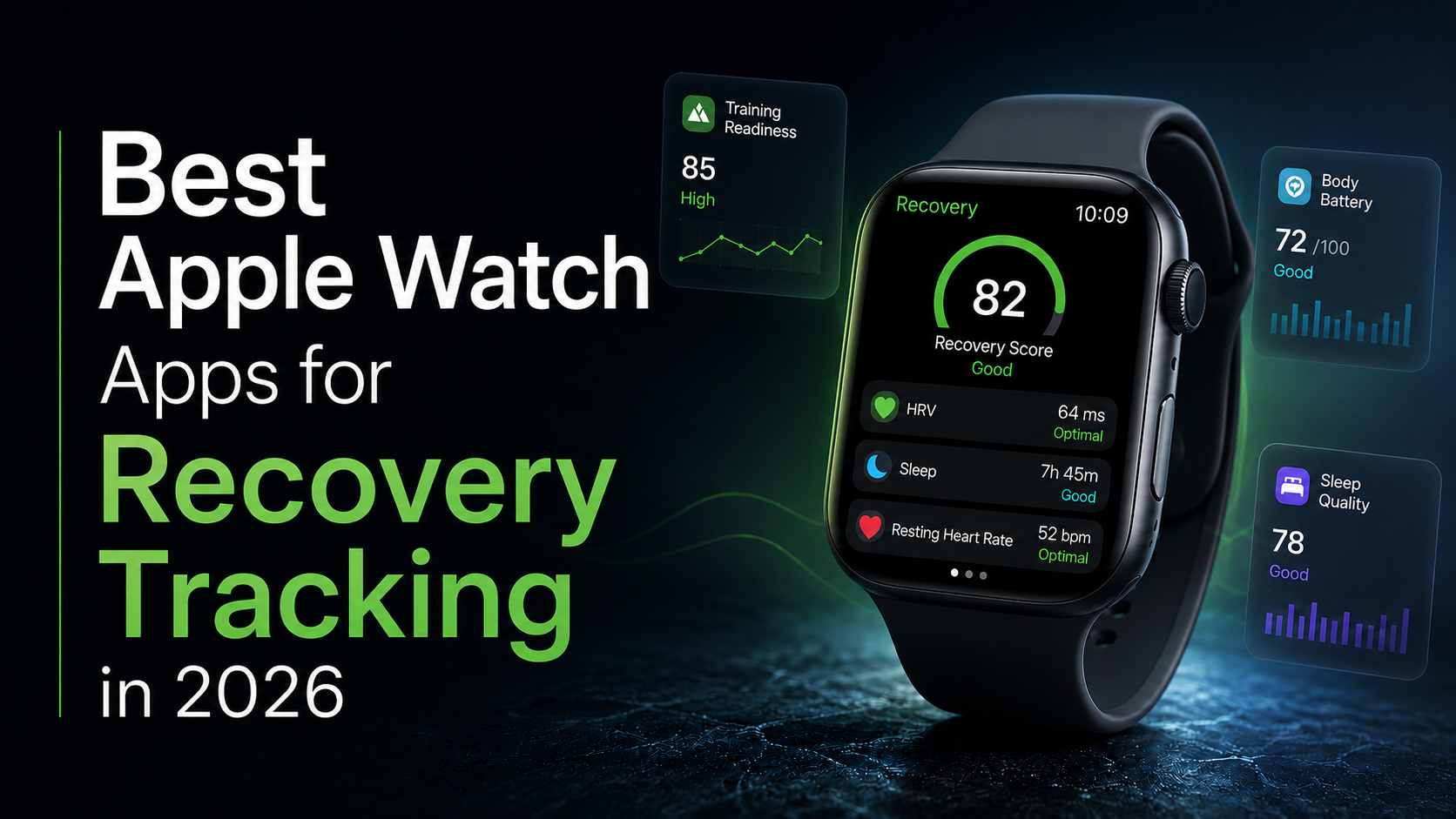
Best Apple Watch Apps for Recovery Tracking in 2026
Your Apple Watch already tracks sleep, HRV, heart rate, and activity, but recovery can still feel confusing without clear interpretation. This guide compares the best Apple Watch recovery apps for 2026, from simple daily energy scores to deeper training-readiness tools, helping you choose the right app for your goals.