Zone 2 Training and Recovery: Can Easy Cardio Increase Your Daily Energy?
By Mr.Apps · Sep 7, 2026
Category:Recovery

Zone 2 training can support recovery and daily energy when the intensity, duration, and weekly load fit the person. It builds aerobic work capacity with less acute strain than hard intervals, but "easy" does not mean free. A session can still lower energy or HRV when it is too long, added to an already full week, performed in heat, or fueled poorly.
I noticed this after turning relaxed cycling into a mileage challenge. The first sessions left me clear-headed. A few weeks later, I was extending every ride because the watch still called it easy. My pace looked gentle, but the total load had quietly doubled. Morning energy flattened before any single workout looked alarming.
That is why I judge Zone 2 training and recovery across weeks.
Zone 2 needs a definition before it needs a target
Zone labels are inconsistent. In a five-zone model, Zone 2 usually describes low aerobic intensity below the first lactate or ventilatory threshold. In a three-zone model, the second zone can describe a harder domain between the first and second thresholds. Two coaches can mean different work.
Research reflects that confusion. A systematic review of exercise threshold methods found varied protocols, names, and agreement among heart-rate variability, ventilatory, and lactate thresholds.
For this article, I mean the easy aerobic range below the first major threshold. Breathing is controlled, the effort is sustainable, and conversation remains comfortable. I am working, not strolling, but I do not need to concentrate on surviving the next minute.
The CDC talk test gives a useful field cue: at moderate intensity, talking is possible but singing is not. Many Zone 2 sessions sit toward the easier part of that range, depending on the model and the individual.

Why low-intensity cardio can improve energy over time
Regular aerobic training can improve oxygen use and work capacity, making familiar tasks feel less demanding. When stairs, brisk walking, or a normal workout uses less of my capacity, I may finish the day with more in reserve.
A 2026 systematic review and meta-analysis of low-intensity endurance training found improvements in aerobic fitness and several cardiometabolic risk factors in working-age adults. It also noted that definitions of low and moderate intensity vary and that evidence for a uniquely optimal Zone 2 is limited.
Easy cardio is useful without being magical. The benefit comes from a repeatable training stimulus I can recover from.
I notice the energy effect indirectly. My comfortable walking pace rises, my breathing settles sooner after hills, and ordinary errands feel less costly. Those changes are often more meaningful than a single readiness score.
Easy cardio is not the same as sedentary movement
Light household movement and slow walking support health and break up sitting, but they may not create the same aerobic stimulus as sustained low-intensity training. Zone 2 asks for enough continuous work to raise breathing and circulation while staying below a harder threshold.
I use three checks:
- I feel warm and know I am exercising.
- I can speak in full sentences without gasping.
- The effort could continue for a while, but it is not completely passive.
Heart rate is helpful only after I verify that the zone roughly matches those cues. An age-based maximum can shift the boundaries, wrist sensors can lag, and heat can raise heart rate at the same pace.
If my breathing says easy but the watch says hard for several sessions, I review the settings rather than forcing the pace down immediately. Personalized zones and a stable route make comparisons cleaner.
Easy cardio is not the same as high-intensity training
Intervals create a larger acute disturbance. They can be efficient for improving fitness, but they also tend to produce more muscular strain, sympathetic activation, and recovery demand.
In a two-week study comparing increased high-intensity and low-intensity training, both approaches improved running performance. The high-intensity group showed more muscle soreness and a decline in a marker of parasympathetic activity during the first week, while the low-intensity group did not show the same pattern.
That does not make intervals bad or Zone 2 automatically restorative. It shows why the two sessions should not be treated as equivalent stress. A balanced program can use both, with easier work creating volume that does not demand maximal recovery every time.

Why a Zone 2 session can still lower HRV
Zone 2 HRV does not move in one guaranteed direction. The acute effect depends on session duration, fitness, hydration, temperature, sleep, emotional stress, and what training came before it. A long easy run can be a large load for a new runner. A short ride at the same relative intensity may be restorative for an experienced cyclist.
I avoid reading a next-morning HRV dip as proof that easy cardio is harmful. I look at magnitude, persistence, and context. If HRV returns toward baseline, sleep is normal, and energy is steady, the dip may simply reflect a normal training response.
I pay more attention when lower HRV persists for several days alongside rising resting heart rate, worse sleep, irritability, heavy legs, or declining performance. That cluster suggests the total load deserves adjustment.
The same principle applies to a high recovery score. It does not guarantee that adding another hour is wise. A score summarizes available signals; it does not know every stressor or upcoming demand.
Track the dose, not just the zone
When easy cardio stops feeling helpful, intensity is only one suspect. Duration and frequency often explain more. Sixty minutes at an easy pace is still twice the time of thirty minutes, and five sessions create a different week from two.
I record four simple variables:
- Minutes in the intended easy range
- Session effort from 1 to 10
- Morning energy from 1 to 5
- Weekly resting HRV and heart-rate trend
I also flag heat, illness, poor sleep, and unusually demanding days. This gives me a practical recovery score after Zone 2 without inventing precision.

I review weekly averages. A single excellent ride can hide a demanding week, while one poor night can make a sustainable plan look unsuccessful. The principles behind HRV-guided endurance training support adapting harder sessions to individual recovery, but I still use symptoms and performance beside the number.
A four-week test for daily energy
To see whether low-intensity cardio improves energy, I keep the experiment modest. During week one, I observe my normal training, sleep, and morning energy. For the next three weeks, I add two or three consistent easy sessions without changing several other habits.
I start with a duration I can recover from, often 25 to 40 minutes. I keep routes and timing reasonably similar, and I do not extend a session just because I feel good that day. At the end of each week, I ask:
- Is morning energy improving, stable, or declining?
- Is sleep duration and timing reasonably consistent?
- Are resting HRV and heart rate within normal personal variation?
- Does the same pace feel easier?
- Am I eager to train, neutral, or increasingly reluctant?
If energy improves and the load feels sustainable, I can add time gradually. If energy falls for several days, I first reduce duration or frequency. If concerning symptoms appear, I stop testing and seek appropriate care.
Exercise timing also matters. A late session may feel easy yet interfere with sleep for some people, while others tolerate it well. I consider how exercise timing can affect sleep quality before blaming the intensity alone.
Build a week that leaves room for life
The public-health target for adults is at least 150 minutes of moderate-intensity aerobic activity per week, plus muscle-strengthening work, with more benefits possible at higher volumes. The Physical Activity Guidelines for Americans also emphasizes that inactive people benefit from starting with smaller amounts and building gradually.
I treat that guidance as a direction, not a demand to jump immediately to a full schedule. Two manageable sessions that become routine are more useful than an ambitious week followed by exhaustion.
I also preserve at least one day with genuinely low demand. Zone 2 may be easy training, but rest is still rest. The body does not organize stress into neat categories such as exercise, work, travel, and family duties. It responds to the total.
What success looks like
Success is not a permanently elevated HRV or endless energy. I look for a quieter set of improvements: steadier afternoons, easier familiar efforts, normal sleep, and the ability to complete the week without accumulating fatigue.
If the wearable and my experience disagree, I check the zone definition, sensor quality, duration, and context. I also use heart-rate recovery after exercise as a separate lens rather than mixing it with overnight HRV.
Easy cardio can increase daily energy, but it does so through adaptation, not instant recovery magic. The right dose feels almost understated. It is repeatable enough to build fitness and restrained enough to leave energy for the rest of life.
FAQ
Should Zone 2 increase my HRV the next morning?
Not always. HRV may rise, fall, or stay similar after one session. Review personal trends across several weeks beside sleep, resting heart rate, energy, and performance rather than judging the workout from one reading.
How do I know if my Zone 2 is too hard?
If you cannot speak comfortably, breathing becomes strained, or the session requires sustained focus to maintain the pace, you may be above an easy aerobic range. Repeated fatigue, poor sleep, or declining performance also suggests the total dose is too high.
Can I do Zone 2 every day?
Some trained people tolerate frequent easy cardio, but daily training is not necessary for benefit and may be too much for a beginner. Start with two or three sessions, build gradually, and seek professional advice if you have cardiovascular disease, unexplained symptoms, or medical restrictions.
*This article is for informational purposes only and is not a substitute for professional medical advice, diagnosis or treatment.*
Sources:
Sports Medicine Open·Centers for Disease Control and Prevention·Scandinavian Journal of Medicine and Science in Sports·Medicine and Science in Sports and Exercise·Medicine and Science in Sports and Exercise·U.S. Department of Health and Human Services
Related articles

Why Your Readiness Score Has Been Low for Weeks
A readiness score that stays low for weeks calls for a timeline, not a search for one bad night. I explain how to check data quality, investigate accumulated changes in sleep and training, run a controlled reset, and recognize when symptoms deserve professional attention.

Low Recovery Score but Feel Great: Should You Trust Your Body or Your Wearable?
A low recovery score can conflict with how energetic and capable you feel, but neither signal tells the whole story by itself. I use a practical framework that combines symptoms, data quality, multi-day trends, and workout risk to decide whether to continue, modify, or rest.
Can your wearable tell you're getting sick before you feel it?
Resting heart rate, HRV, and temperature can shift before you feel sick. What early illness signals from wearables really mean, and how to respond.

What Heart Rate Recovery After Exercise Can Tell You About Fitness
Why Hot Weather Can Raise Heart Rate and Lower Recovery
Hot weather can make your heart rate run higher, your HRV look worse, and your recovery score drop even when you did not train harder. Here’s why heat changes the body’s workload and how to protect your energy.
Best Apps to Track Poor Recovery and Fatigue in 2026

Your Bedroom May Be Too Warm for Good Recovery
For two summers, I lived in a bedroom that never quite cooled down after dark, and a heart rate tracker I was wearing for something else entirely showed me exactly what that was costing me overnight. It turns out a warm room doesn't just make sleep less pleasant. It measurably raises heart rate, lowers heart rate variability, and cuts into the recovery your body is supposed to get while you're asleep. Here's what the research says about why, who's most affected, and the small changes that actually help.

Why jet lag hits harder after some flights and how to recover faster
Some time zone changes barely touch you, and others wreck you completely, even when the shift on paper looks about the same. The difference usually comes down to direction: eastward travel fights your body's natural clock in a way westward travel doesn't, which is also why "I slept a full night" doesn't always mean you're actually recovered. Here's what the research says about why that happens, and a simple first-48-hours plan built around light, timing, and realistic expectations rather than gimmicks.
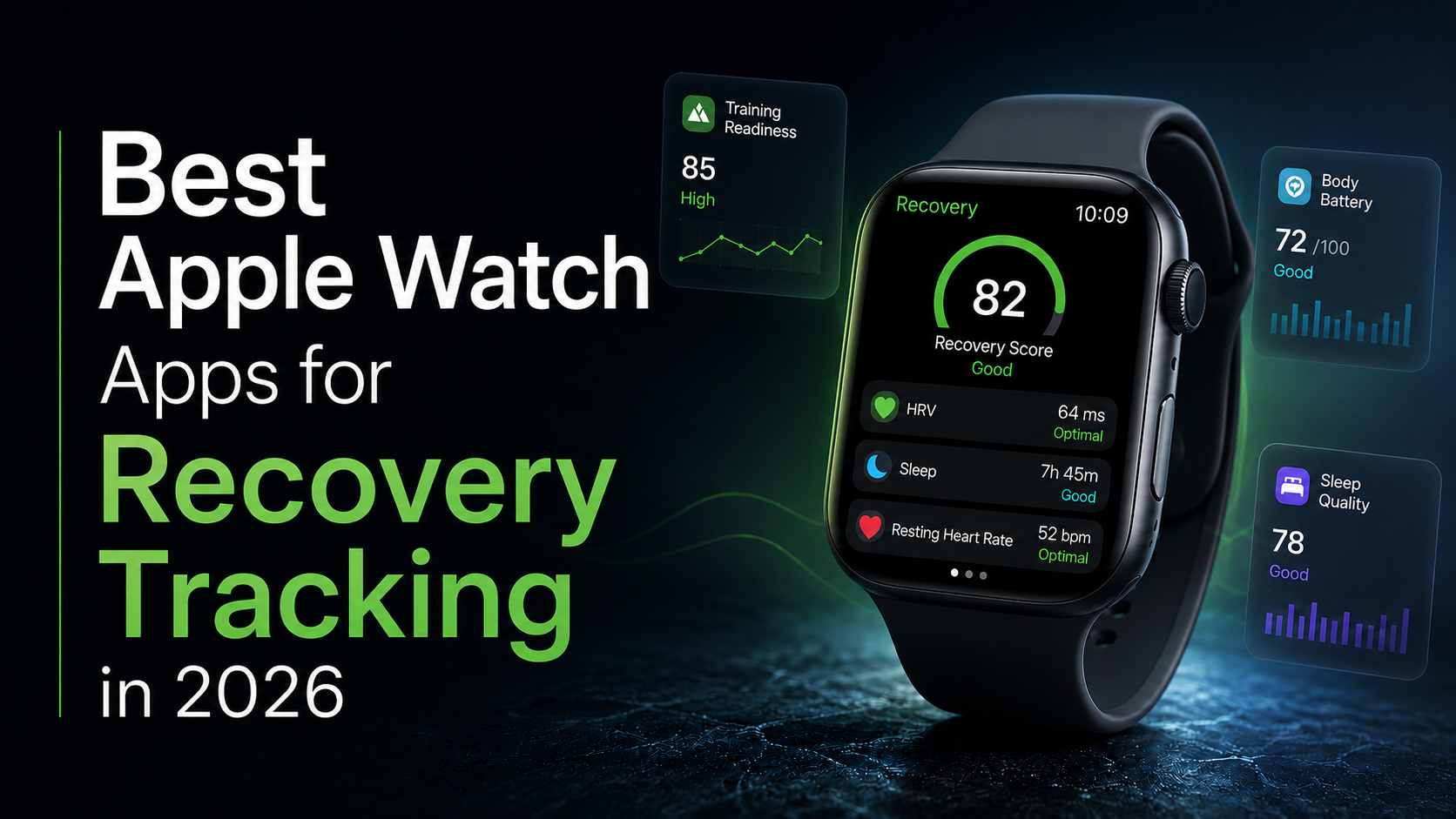
Best Apple Watch Apps for Recovery Tracking in 2026
Your Apple Watch already tracks sleep, HRV, heart rate, and activity, but recovery can still feel confusing without clear interpretation. This guide compares the best Apple Watch recovery apps for 2026, from simple daily energy scores to deeper training-readiness tools, helping you choose the right app for your goals.
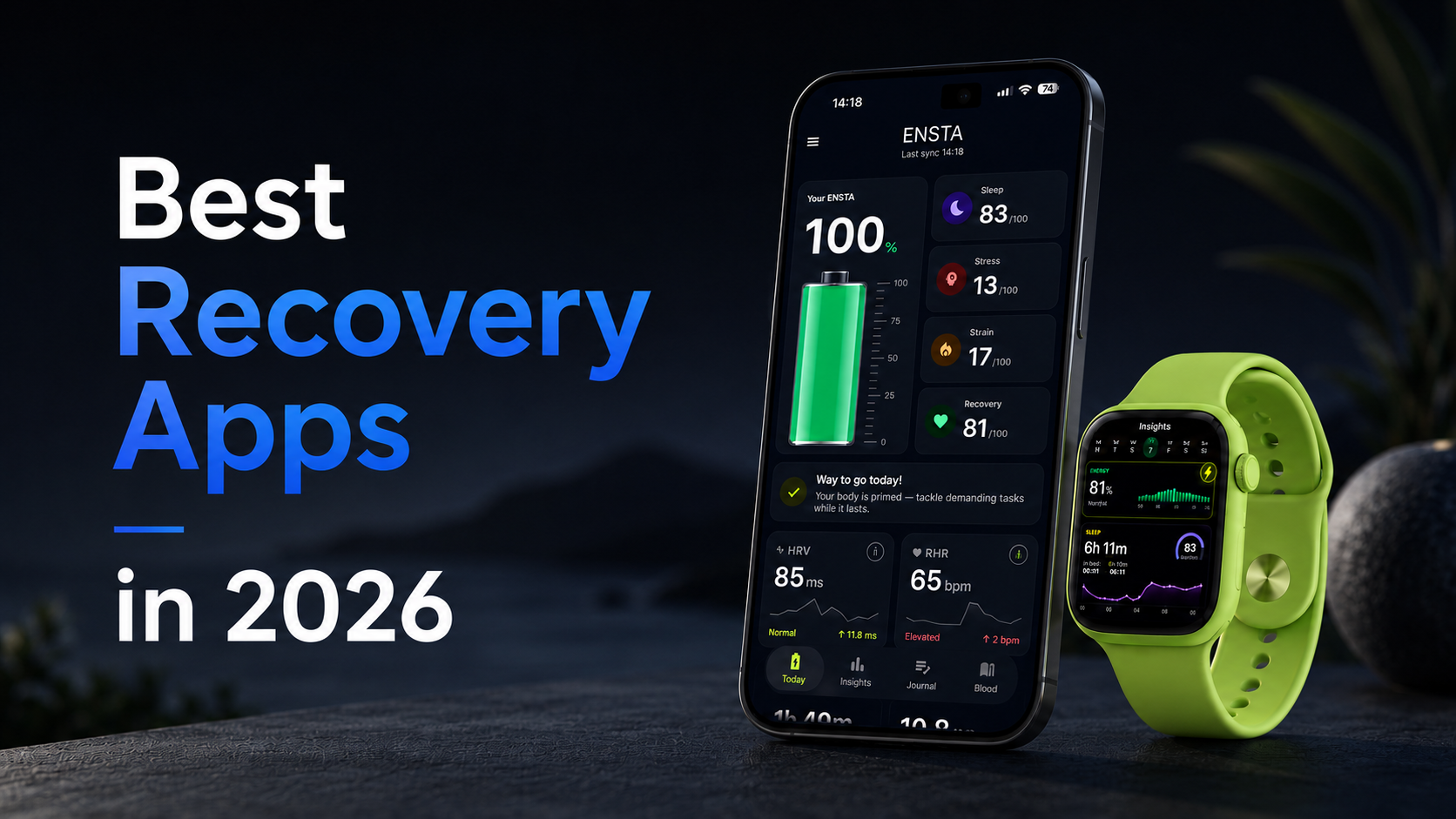
Best Recovery Apps in 2026
Compare the best recovery apps in 2026, including Ensta, WHOOP, Oura, Athlytic, Elite HRV, and Muscle Recovery Tracker. Learn which recovery tracker is best for your body, sleep, HRV, stress, strain, training load, and daily energy score — whether you want a simple free recovery app, an Apple Watch recovery app, a sleep-focused readiness score, or an athlete-grade recovery tracker.