Alcohol tolerance does not establish that recovery is unaffected
By Mr.Apps · Oct 22, 2026
Category:Wearable
A person can feel less of alcohol’s obvious effects over time and still have reasons to pay attention to drinking and health. Tolerance describes a reduced response to an amount that previously produced a stronger effect, or the need for more alcohol to feel the same effect. It does not show that alcohol has stopped affecting the body, that sleep has not changed, or that recovery is complete. When a wearable score looks stable, that score cannot settle those broader questions either.
I keep these concepts separate because “recovery” can mean several things: waking refreshed, adapting after exercise, or recovery from alcohol use disorder. Those outcomes are not interchangeable. A drink journal or sleep graph may help organize observations, but neither can determine whether a person has developed tolerance or whether a health concern is present. The practical task is to record information accurately and seek appropriate care when the pattern or symptoms warrant it.
What tolerance describes
Tolerance is a change in response, not a certificate of safety. Clinical criteria describe it as needing markedly more alcohol to achieve an intended effect, or experiencing a markedly diminished effect when using the same amount. Those observations concern how a person responds; they do not imply that the amount consumed is harmless. A clinical explanation of alcohol-related screening treats tolerance as one factor among several that a qualified professional may assess.
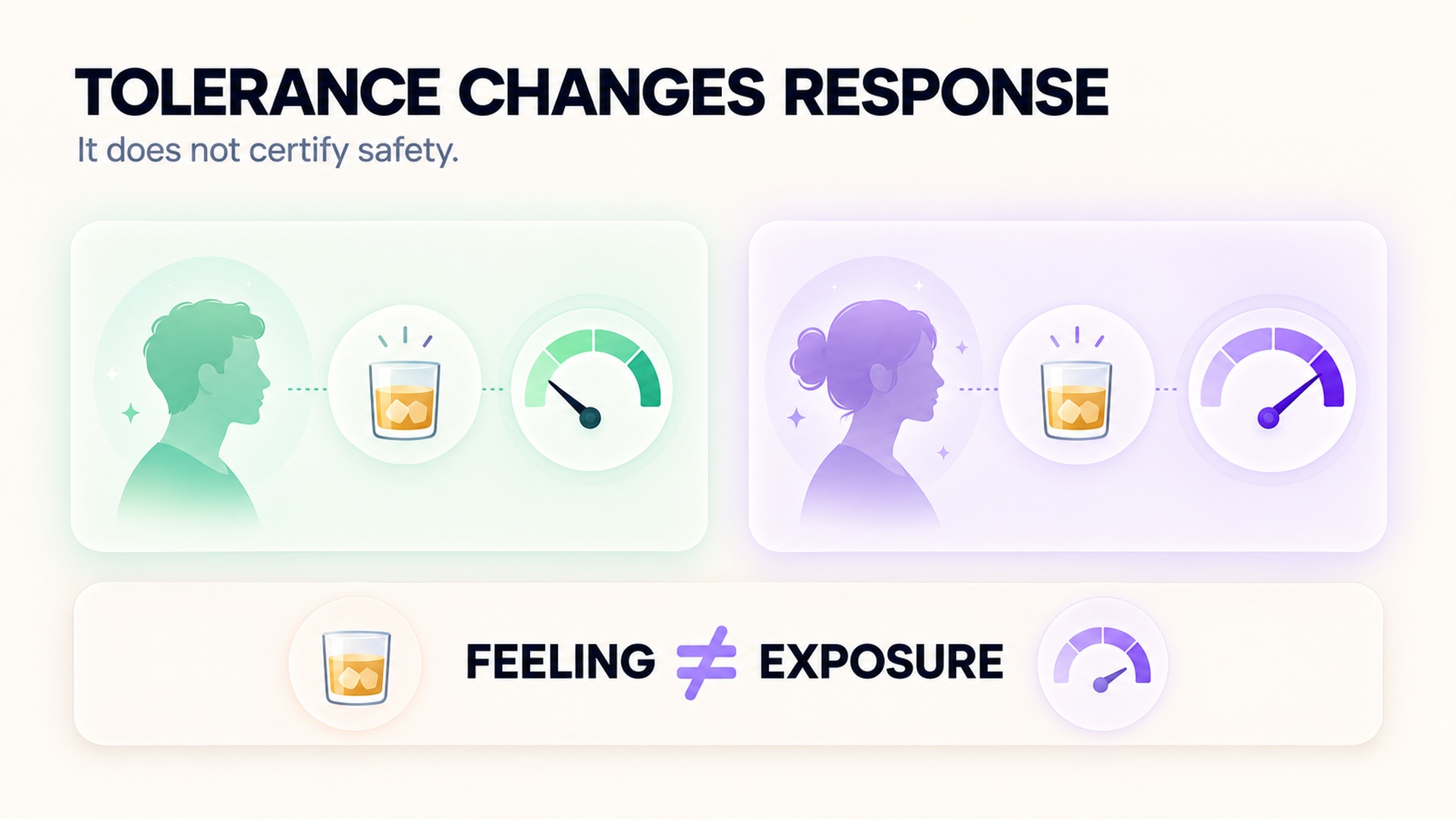
The difference between feeling and physiological exposure matters. Someone may show fewer obvious signs of intoxication while consuming a larger amount. The outward response may be less visible, but the alcohol is still present and can still affect judgment, coordination, sleep, and other body functions. A review of drinking patterns and alcohol effects explains that risk changes with the amount and pattern of drinking and is not measured by how impaired a person feels.
Tolerance also does not mean that every person follows the same progression. It is not possible to infer a diagnosis from one night, one score, or an informal comparison between two periods. Health professionals consider the broader history, effects on daily life, attempts to cut down, withdrawal symptoms, and other criteria. A summary of diagnosis and recovery concepts describes why an assessment uses more than a single metric.
Why “I feel fine” and “the score is normal” are limited
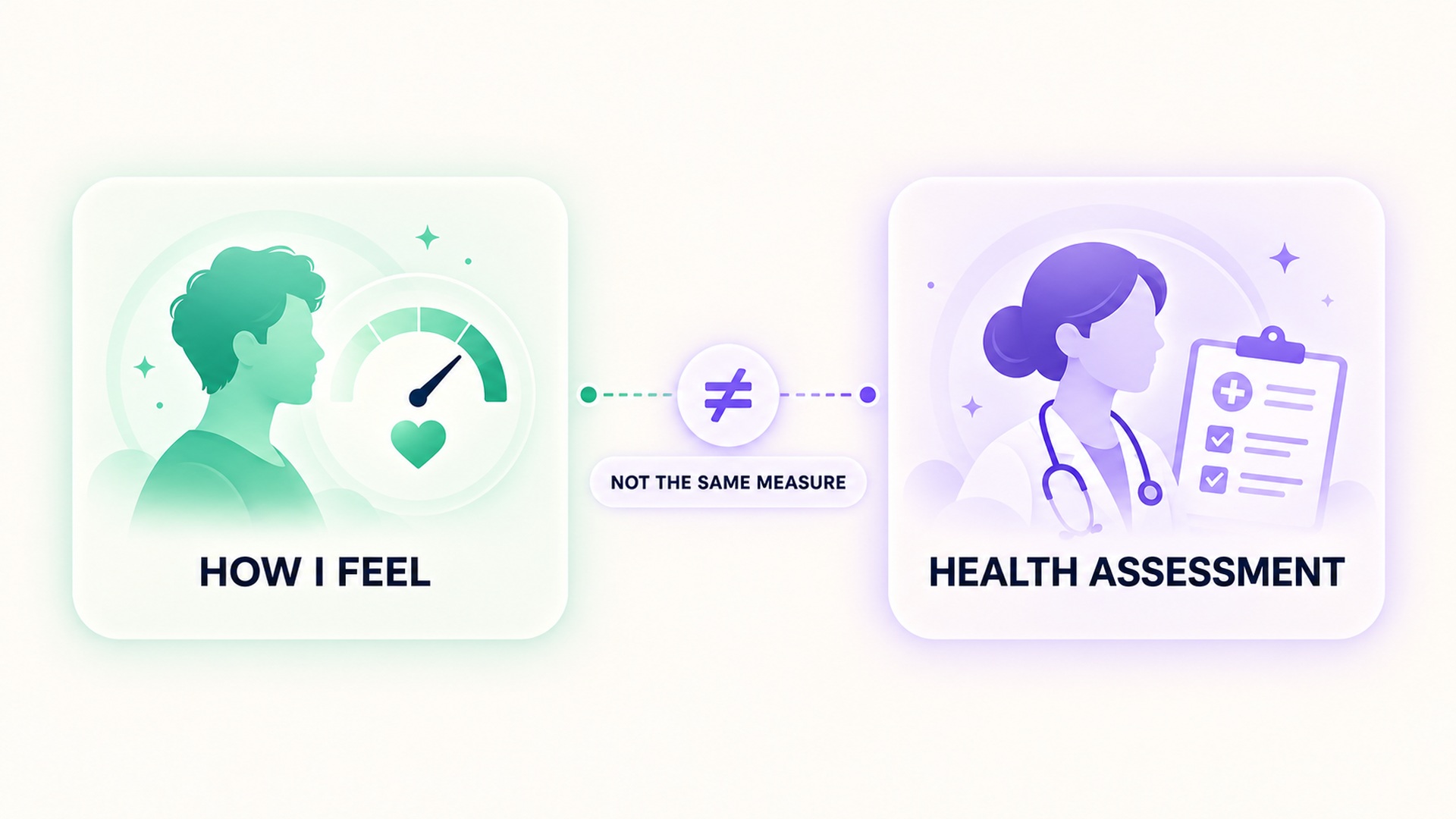
A subjective report is useful, but it answers a specific question: how the person feels at that moment. It cannot measure every physiological effect. Likewise, a wearable score is an estimate produced from selected signals and an algorithm. It may help someone see a repeated pattern under similar conditions, but it is not a direct measurement of alcohol in the body and is not a diagnostic test.
One stable night does not prove that alcohol left sleep unchanged. One poor night does not prove alcohol caused the result. Sleep can shift with bedtime, stress, illness, meal timing, medication, temperature, exercise, and missing sensor data. Wearables may also classify sleep stages differently from clinical testing. I would keep the observed score beside the context rather than treating it as a verdict.
A fair comparison requires consistent definitions. Record the amount and strength of the beverage when known, the timing, sleep duration, and whether the device captured the night as expected. Preserve uncertainty when the pour or timing is unclear. Avoid converting a subjective “felt normal” note into a clinical conclusion. An overview of recovery research terms also distinguishes remission and cessation from broader well-being, which can change across multiple dimensions.
Recovery is not one wearable number
Physical recovery after exercise is different from recovery from alcohol use disorder. A training score may summarize recent sleep, activity, or heart-rate trends. It does not evaluate alcohol-related health, dependence, or withdrawal. Conversely, a clinical recovery plan is not validated by a favorable training score. The word “recovery” should be defined before comparing any data.
The same caution applies to sleep. Sleep continuity, time asleep, how rested someone feels, and a device’s stage estimate are related but distinct. A person may remember sleeping poorly even if a score is typical, or feel rested after a night the device rated lower. None of those discrepancies proves that a person is imagining symptoms or that the wearable is clinically wrong; they show that the measures answer different questions.
If someone is discussing drinking with a health professional, a simple record may help: what was consumed, the approximate amount, when it happened, and what symptoms or functional effects followed. The record should not try to calculate impairment or prescribe a limit. A public-health explanation of alcohol use notes that alcohol-related harms can occur across different levels of use. No personal score can certify that a particular amount is safe.
Do not use a score to manage withdrawal
A particularly important boundary is stopping after heavy or prolonged drinking. Withdrawal can include symptoms such as trouble sleeping, anxiety, nausea, sweating, tremor, or more severe complications. The risks differ among individuals. A wearable cannot determine whether withdrawal is likely or safe to manage without medical supervision, and a normal heart-rate or sleep summary should not be used as reassurance.
If a person may be physically dependent on alcohol, they should seek medical advice before making a major change. Severe symptoms or a rapidly worsening condition require urgent care. A clinical treatment overview explains that withdrawal management can require medical support. This is not a reason to delay help while collecting more wearable data.
The same restraint applies to claims about “detox,” supplements, or recovery hacks. A consumer device cannot show that a practice has removed alcohol or reversed harm. Keep records factual: dates, amounts when known, symptoms, and the device’s actual output. Avoid assigning an unverified cause or treatment effect to a change in score.
A careful way to review a pattern
Start with the question. If the concern is sleep, define which sleep outcome matters: awakenings, duration, perceived rest, or an estimate. If the concern is training, keep exercise load and rest days in view. If the concern is tolerance, dependence, or alcohol-related health, a wearable score is not the right test; a clinician can assess the relevant history and symptoms.
Then check whether the observations are comparable. Use the same units and definitions, account for missing data, and note changes in routine. A single night offers little basis for a causal conclusion. Repeated observations may reveal a pattern worth discussing, but they still cannot rule out other explanations or diagnose a condition.
Avoid “green means safe” interpretations. A reassuring chart can be useful feedback about a narrow algorithmic estimate, but it cannot establish that a person’s drinking is harmless or recovery unaffected. A low score should also not be treated as proof of damage. A related guide to interpreting wearable journals explains how to keep an observed association separate from a causal claim.
The most accurate conclusion is often limited: the person reports feeling less affected; the log records a certain pattern; the wearable estimates a particular sleep or recovery value. Those statements can coexist without proving what caused the result. If there is concern about health, withdrawal, or difficulty controlling drinking, professional support matters more than collecting another score.
A review can also separate short-term experience from longer-term health. A person may report no obvious morning symptoms while still having questions about the amount consumed, sleep quality, mood, or medication interactions. The absence of a noticeable symptom is not a measurement of every underlying effect. At the same time, a single symptom after drinking is not enough to identify a cause. The record should help a clinician understand timing and context, not label the person or forecast a diagnosis.
If the record is shared, include only the information needed for the conversation and describe how each field was collected. A manually entered drink estimate is different from a sensor-derived sleep stage. Marking these sources clearly helps prevent a later reader from treating them as equally precise. A useful journal may include an “unknown” option, a note about unusually large or unmeasured servings, and a field for whether the device was worn for the full night. That level of transparency makes the limits easier to see. It also allows the person to correct an entry without rewriting the interpretation around it.
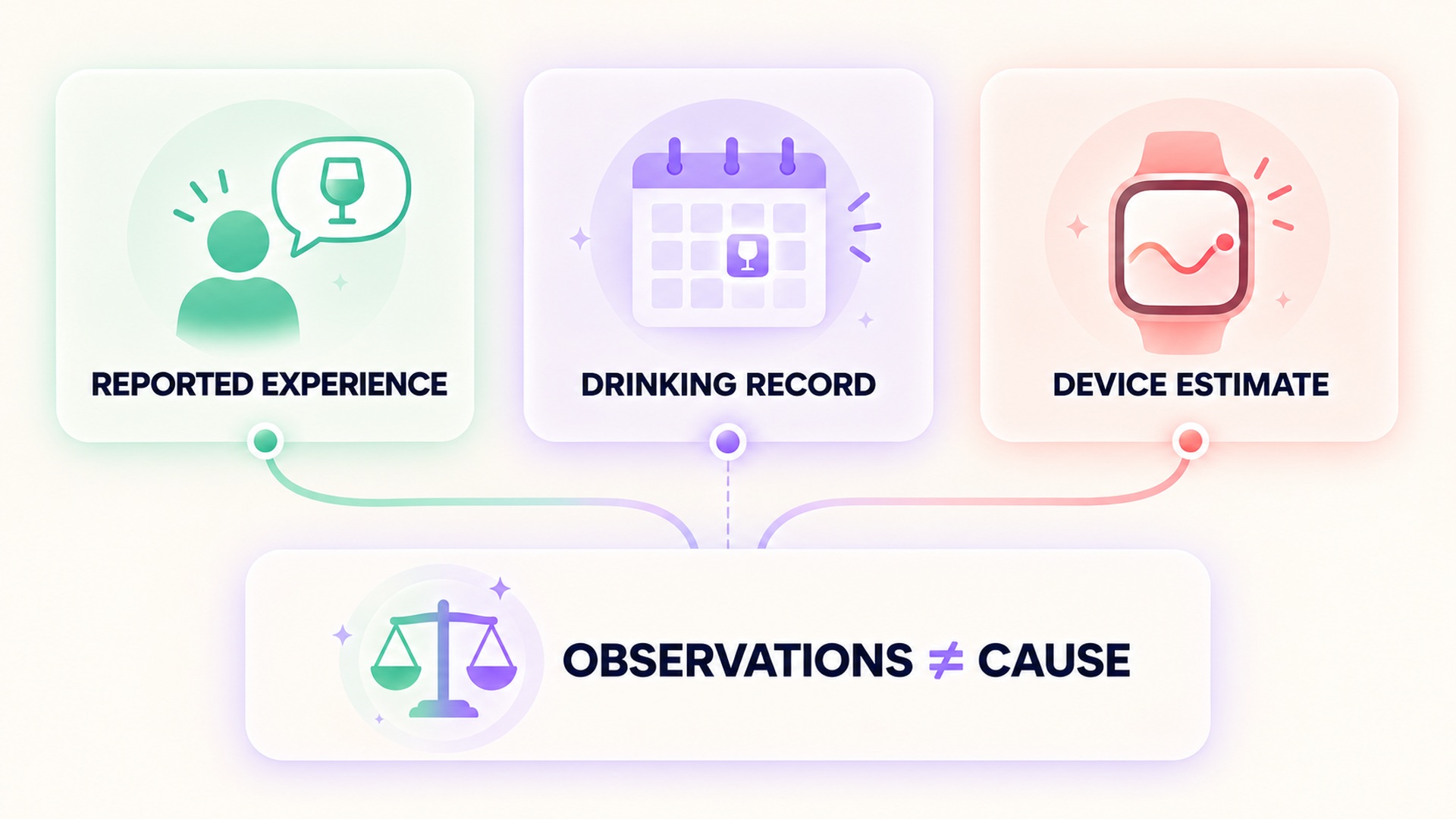
A clear record may make a conversation more focused, but it cannot replace diagnostic criteria or a clinical assessment. Keep that boundary in view when reviewing the chart.
FAQ
Does higher alcohol tolerance mean alcohol no longer affects the body?
No. Tolerance means the felt or visible response has diminished, or more alcohol is needed to produce a similar effect. It does not show that exposure is harmless or that sleep and health are unaffected.
Can a wearable score show that drinking did not affect recovery?
No. A wearable estimates selected signals and cannot measure every alcohol-related effect. A normal score does not establish that there was no effect, and a lower score cannot identify alcohol as the cause.
Should I use a wearable to decide whether it is safe to stop drinking?
No. A wearable cannot assess withdrawal risk. Anyone who may be physically dependent should seek medical advice before making a major change, and severe or worsening symptoms need urgent care.
*This article is for informational purposes only and is not a substitute for professional medical advice, diagnosis or treatment.*
Sources:
National Institute on Alcohol Abuse and Alcoholism·National Institute on Alcohol Abuse and Alcoholism·National Institute on Alcohol Abuse and Alcoholism·National Institute on Alcohol Abuse and Alcoholism·National Institute on Alcohol Abuse and Alcoholism·Centers for Disease Control and Prevention
Related articles
Count alcohol content rather than glasses in a recovery journal
A glass count can hide differences in serving size and alcohol strength. Record the beverage amount and its alcohol content so a journal preserves the inputs behind each estimate.
Recording beyond phone range requires sensor memory support
Live sensor broadcasting and local workout storage are different capabilities. Learn what to verify before leaving a phone behind and how to confirm that the saved session transferred afterward.
Repeated vibration can add steps without walking
Wrist step counters infer walking from motion patterns, so repeated vibration can sometimes add step-like movement to a total. Learn how to identify a suspicious time block without inventing a walk or discarding the rest of the day's data.

Instant pace can fluctuate while lap pace stays stable
Current pace and lap pace summarize different time windows, so one can jump while the other stays steady. Learn which field fits a live pacing decision and which is better for reviewing a sustained segment.

When a recorded route cuts corners, distance can be understated
A GPS route can connect recorded positions with a line that clips tight bends, leaving out part of the path. Learn why sampling, signal conditions, and route rendering can affect distance without implying a change in fitness or pace.
Why a floor counter can change when air pressure changes
Some wearable floor counters estimate elevation from air pressure and movement signals. Learn why weather, doorways, and calibration can affect the estimate, and how to review a surprising count.
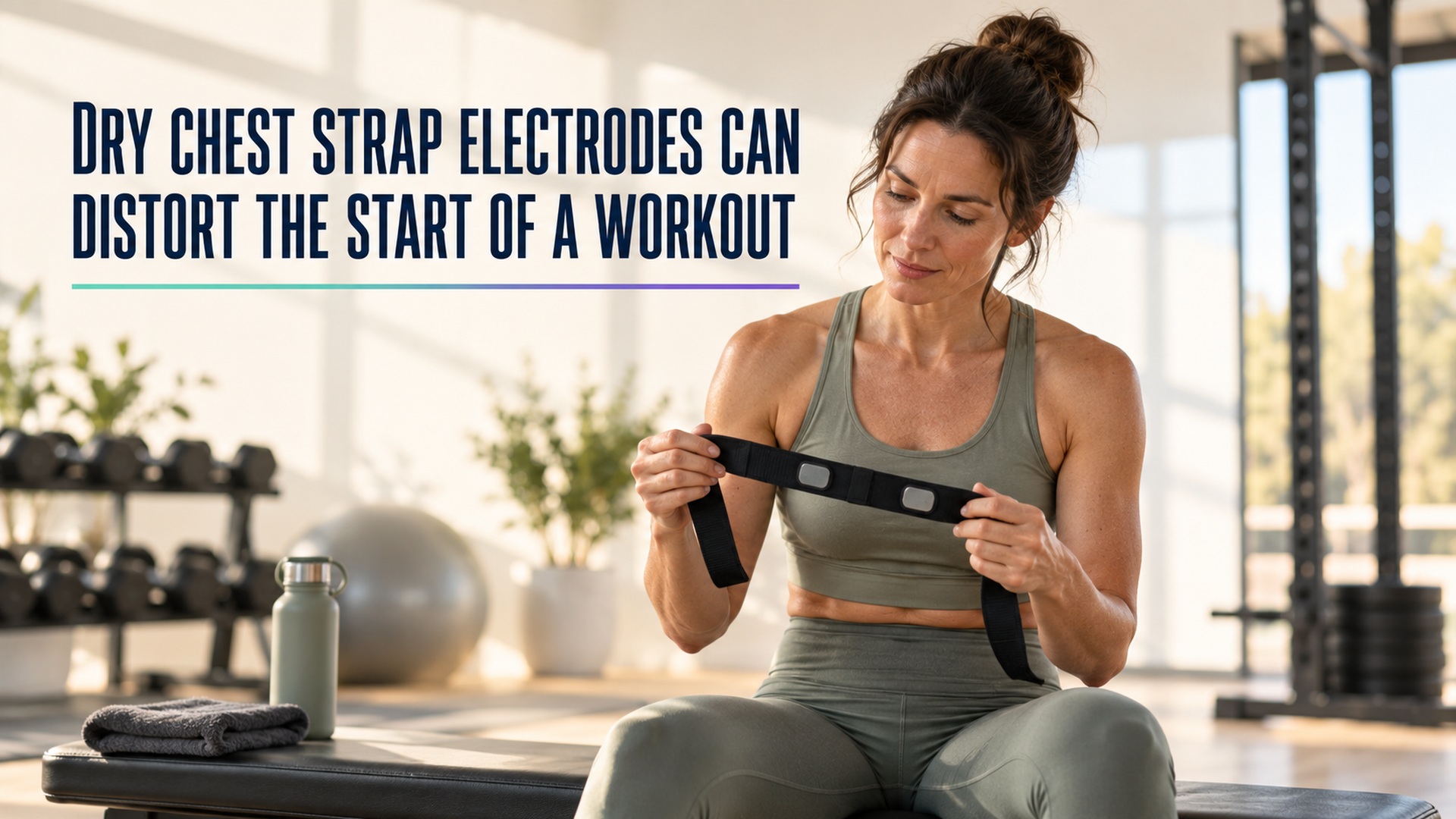
Dry chest strap electrodes can distort the start of a workout
Some chest straps need specific electrode preparation to make reliable skin contact. Learn how dry or moving contact can affect an early trace and what to check before treating a startup spike as a heart-rate change.
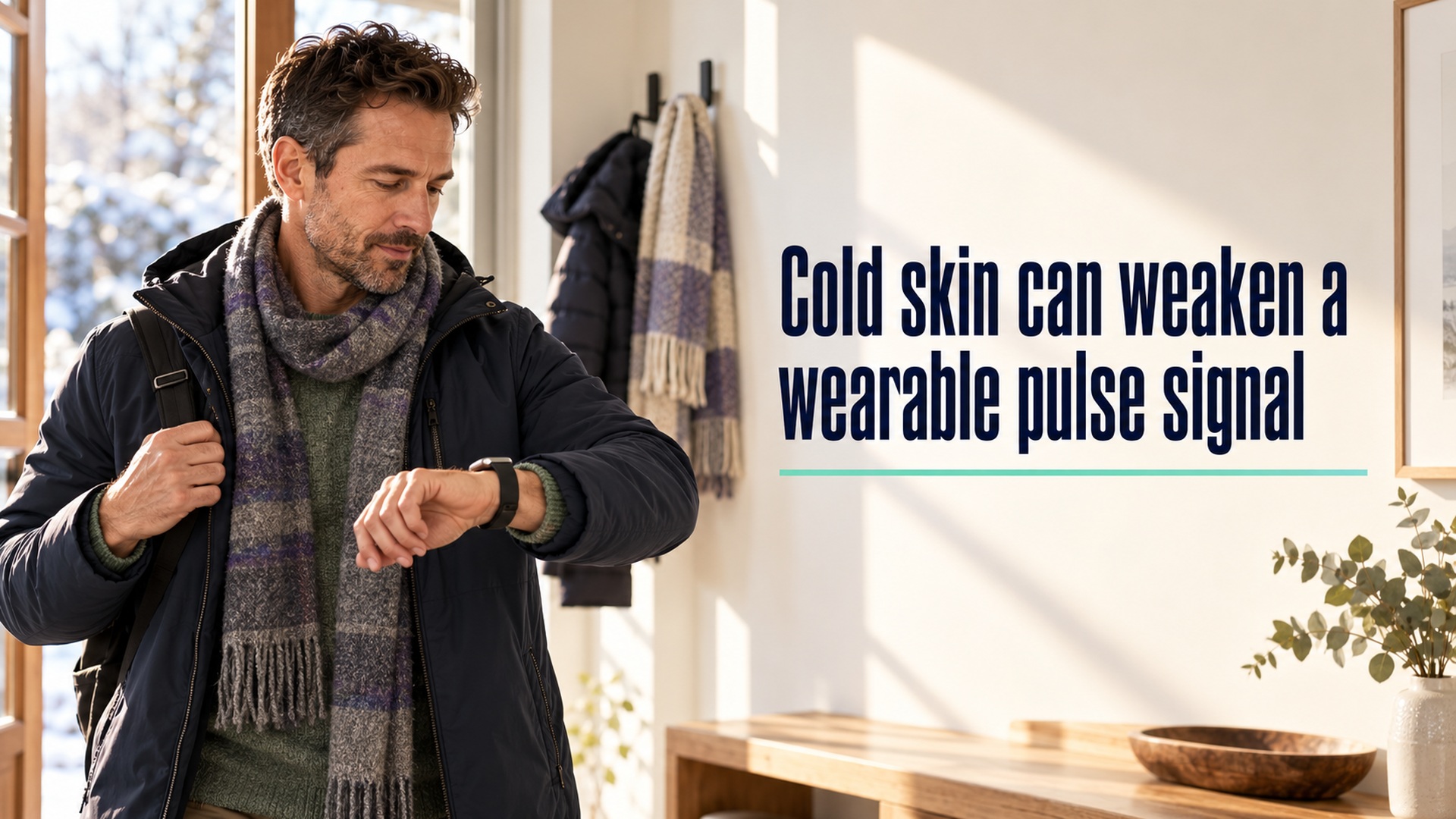
Cold skin can weaken a wearable pulse signal
Cold exposure can reduce blood flow near the skin and make an optical wrist signal harder to read. Learn how to check a device-specific trace without mistaking missing data for a cardiovascular finding.
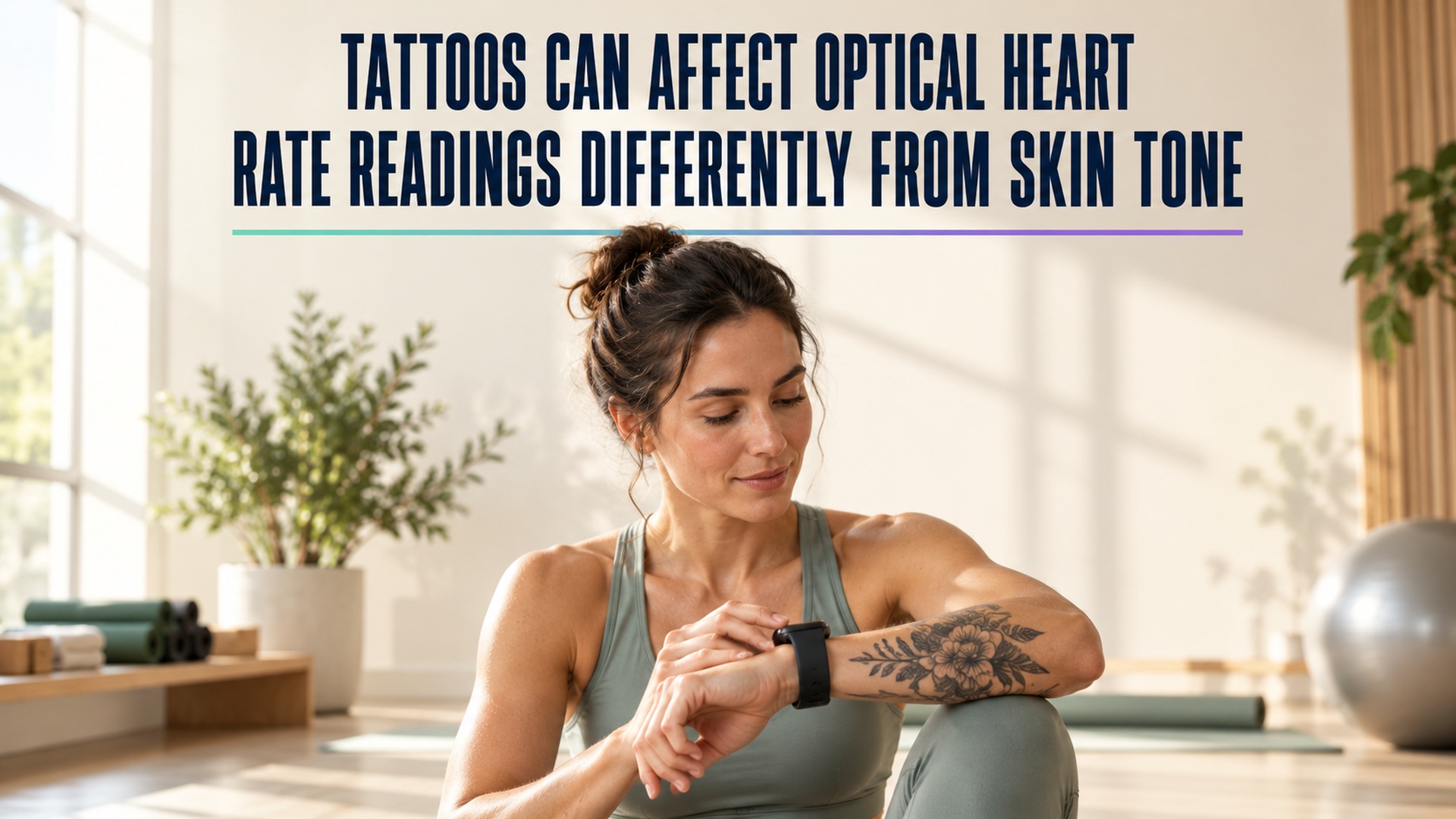
Tattoos can affect optical heart rate readings differently from skin tone
Tattoo ink and natural skin pigmentation are distinct factors for optical heart-rate sensors. Learn how to check a device-specific trace without generalizing from one wearable study or treating a gap as a health finding.
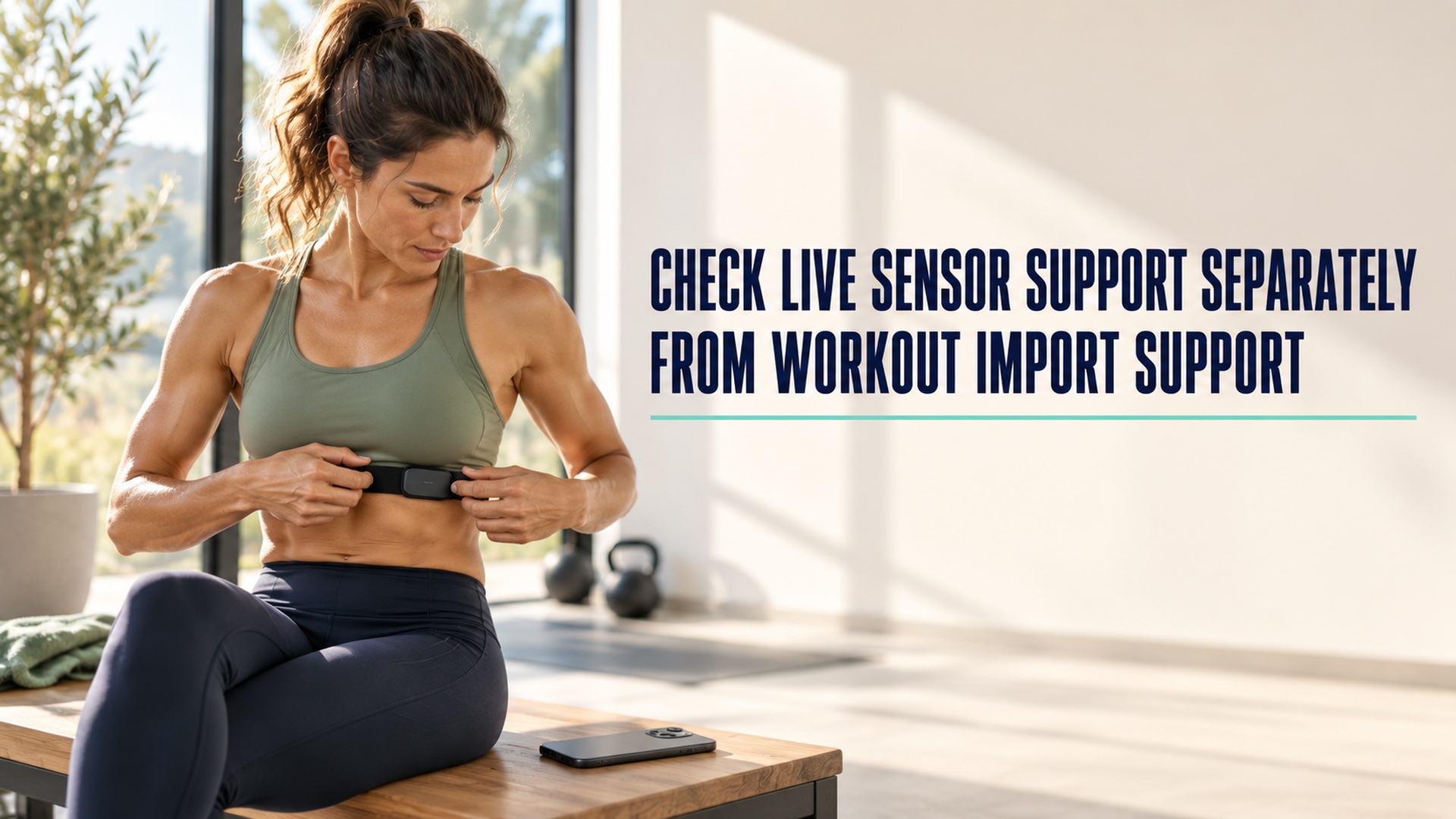
Check live sensor support separately from workout import support
A heart-rate graph arriving after a workout does not show whether an external sensor streamed data live. Check sensor pairing, app compatibility, active recording, and later import as separate steps.