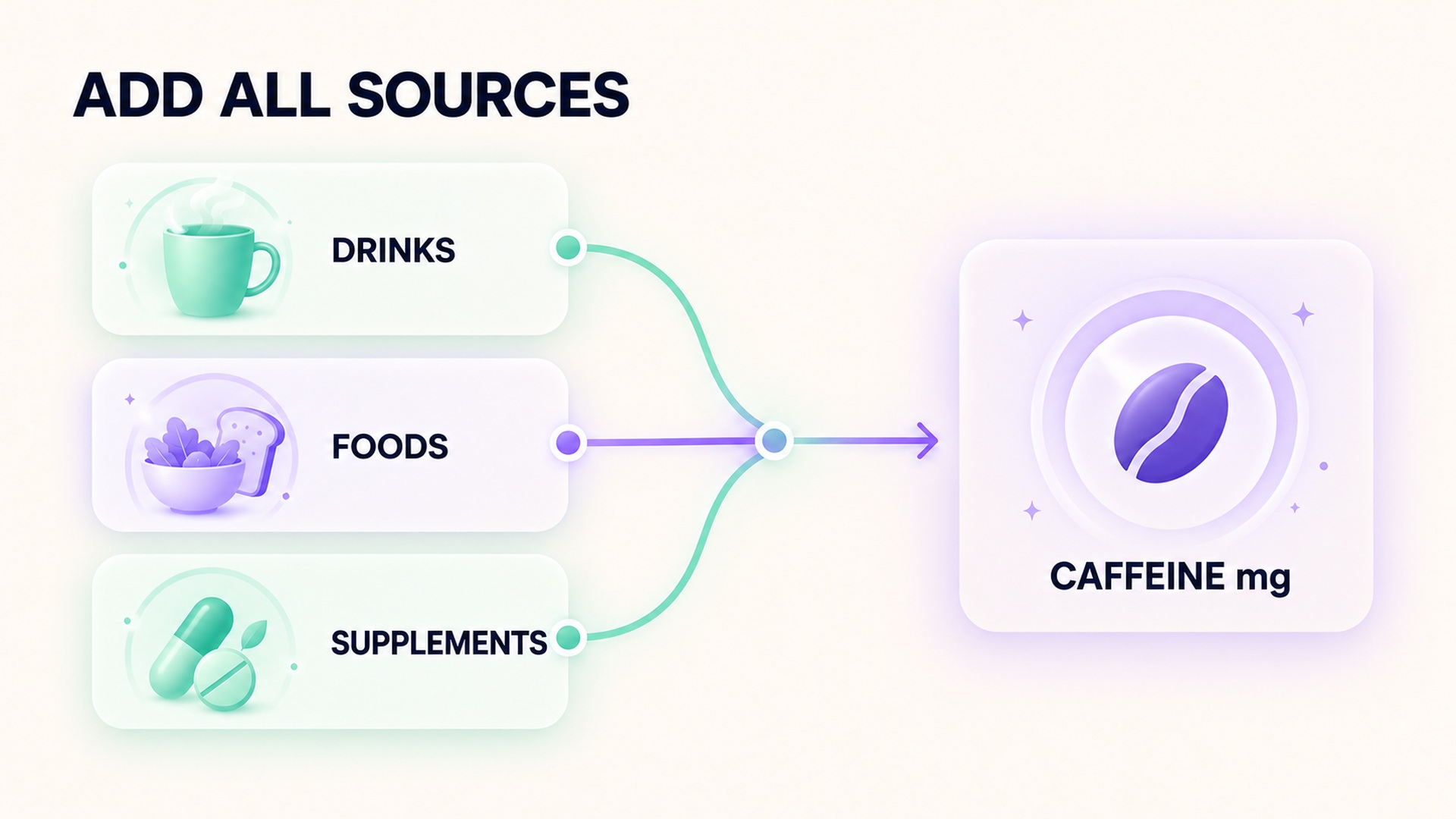
Add caffeine milligrams across drinks, foods and supplements
By Mr.Apps · Oct 22, 2026
Category:Wearable

A caffeine log that counts cups can miss the amount that matters. Cups and containers vary in size, products vary in strength, and caffeine can come from foods, supplements, and some medicines as well as familiar drinks. If I want to understand an intake pattern, I record the estimated milligrams and the serving behind that estimate. That makes the record more useful than a simple count of “two coffees,” while keeping the uncertainty visible.
The goal is not to prescribe a personal limit from a spreadsheet. Caffeine sensitivity differs, and health conditions, pregnancy, age, and medications can change what guidance is relevant. A log can show what someone consumed and when; it cannot establish whether the pattern is safe for that person. A guide to keeping a wearable journal offers a broader reminder to keep recorded exposure, timing, and later outcomes separate. Use clinical advice for individual questions and product labels or reliable reference data for the amount.
Why a cup count can mislead
“Coffee,” “tea,” and “energy drink” are categories, not fixed doses. A small brewed serving can contain a different amount from a large one. Brewing method, beans or leaves, preparation time, and concentration can also matter. Decaffeinated products may still contain some caffeine. A consumer guide to caffeine amounts and sources explains that foods and supplements can contribute alongside beverages.
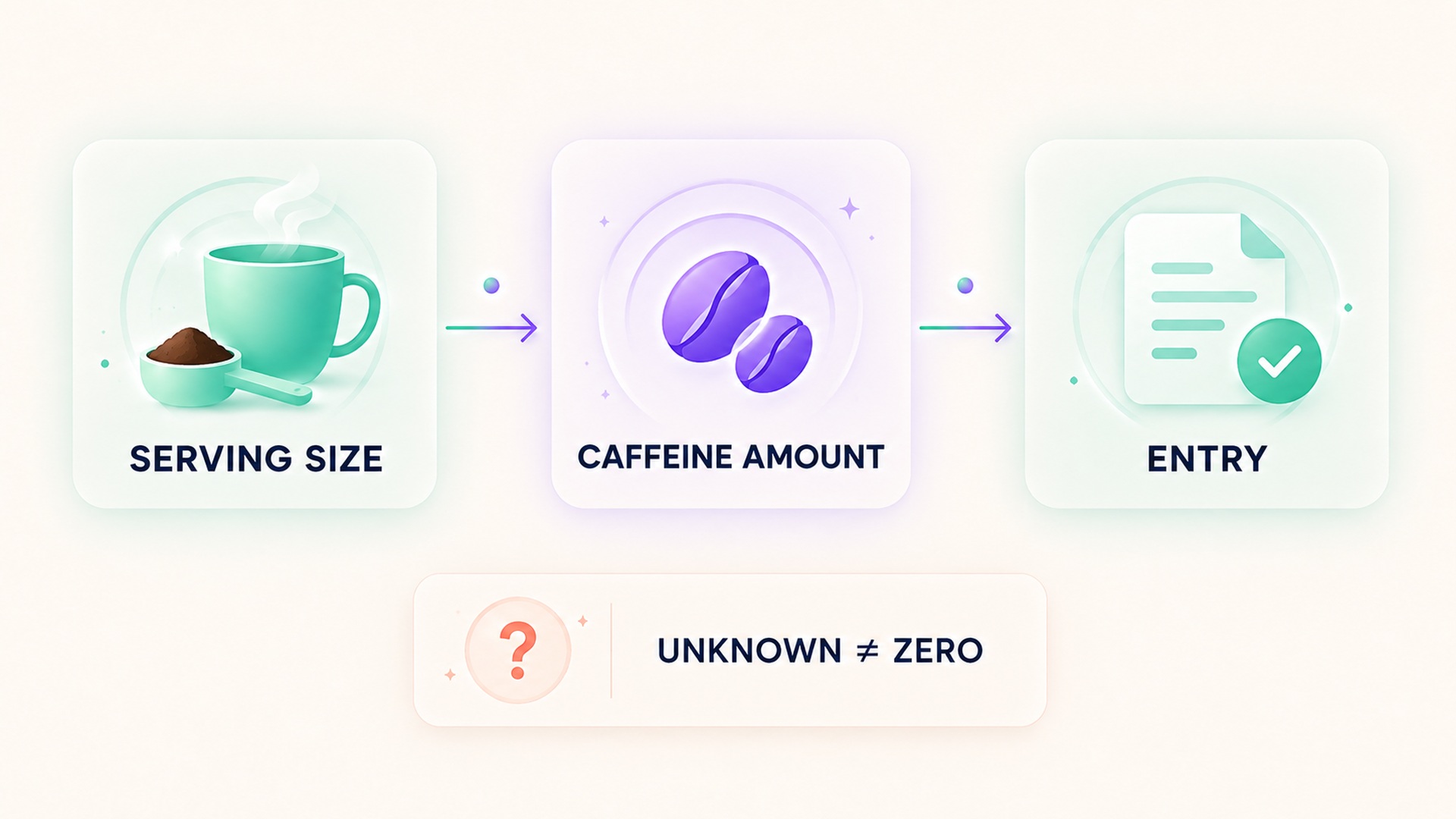
For a packaged drink or food, check the labeled serving size and whether caffeine is listed in milligrams. If the container holds several servings, multiply only when the amount consumed is known. If the person drank part of a container, record the portion rather than entering the full package. When the product does not state the amount, mark it as unknown or use a reliable estimate that clearly remains an estimate.
Caffeine may appear in products where someone does not expect it: chocolate, some snack foods, certain supplements, and over-the-counter medicines. Some ingredients, including plant extracts, can contribute caffeine even when the front label does not emphasize it. A clinical overview of caffeine in the diet notes that caffeine can be naturally present or added to foods, drinks, and medicines. Check the ingredient and supplement information rather than relying on the product’s marketing category.
Build a complete daily record
A practical log can include the item, amount consumed, caffeine milligrams per serving, number of servings, time, and source of the estimate. If the caffeine amount came from a package label, note that. If it came from a general reference table, identify it as an average. If the amount is unavailable, mark it unknown. Avoid giving an unknown entry an invented number simply to make the daily total look complete.
When the label lists milligrams per serving, the arithmetic is straightforward: multiply that amount by the number of servings actually consumed. Keep the original amount and serving size beside the calculated total so someone can check the math later. For a drink ordered without a nutrition label, record its size and preparation details if known; a category average is still only an approximation.
Timing may matter for sleep or symptoms, so enter the time alongside the amount rather than folding both into one score. If someone notices restlessness, a headache, or a change in sleep, the record can help them describe when it occurred. It cannot prove that caffeine caused the symptom. Stress, illness, sleep schedule, medication, hydration, and other substances may also contribute.
Before comparing days, choose a consistent day boundary and the same unit. A late-night item can be assigned to the calendar date when it was consumed or to a sleep period, but the method should stay consistent. If the journal is intended to help review sleep, keeping the exact time is more informative than moving every entry into a broad “morning” or “evening” category. This does not make the result causal; it makes the sequence easier to inspect.
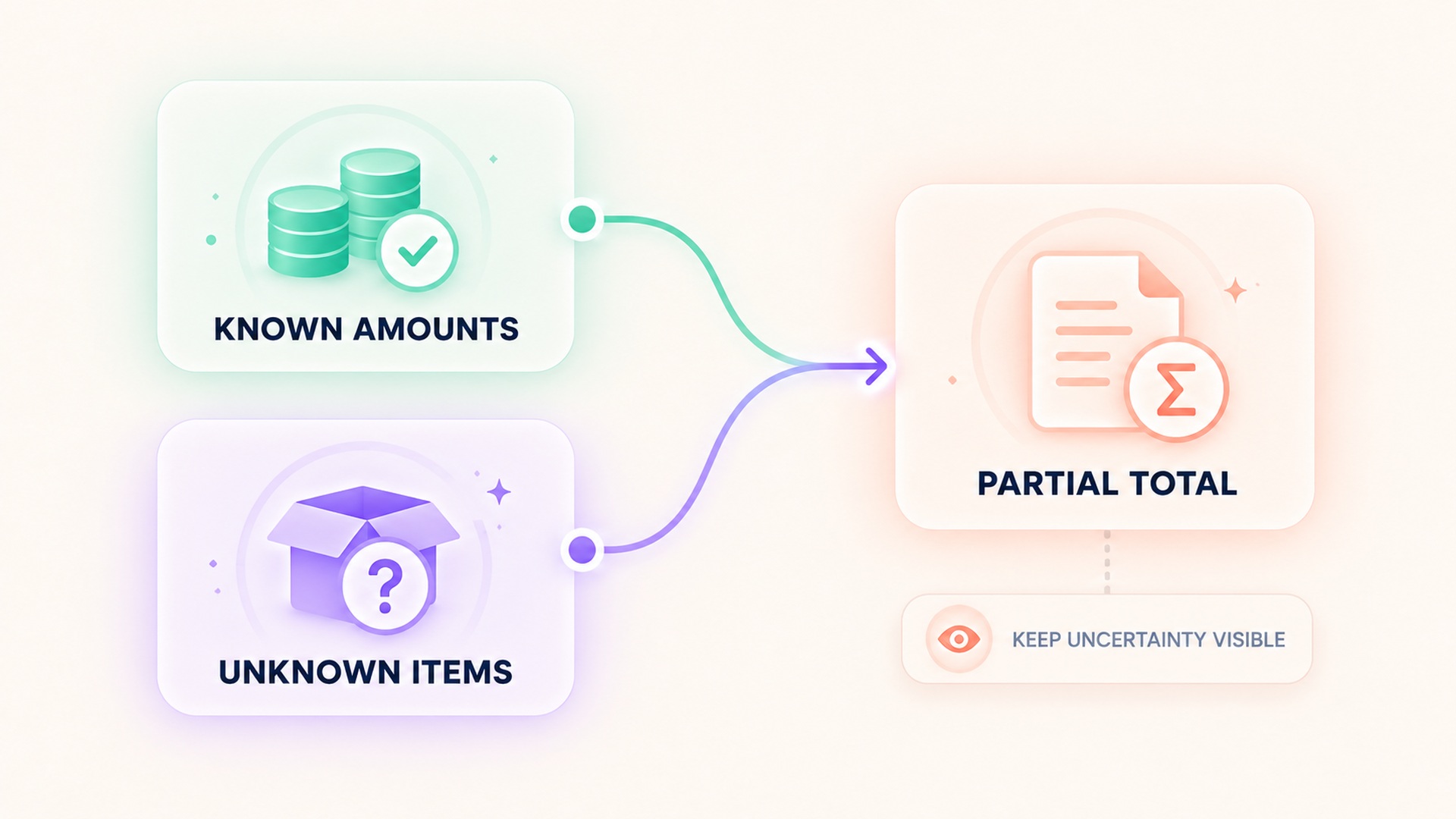
A “total” should mean the sum of known entries for the same local day, with unknown items called out. If one source is missing, the total is a partial count, not a complete exposure measure. This simple distinction prevents a tidy spreadsheet from implying more certainty than the source information supports.
For example, a person might record a measured drink in the morning, a packaged snack in the afternoon, and a supplement later in the day. Each line should retain its own time, serving, milligrams, and source. The running total can then be recalculated if a serving was entered incorrectly. If the snack amount is unavailable, mark it unknown and state that the day’s sum excludes it. This avoids the common mistake of adding a guessed value and presenting the result as a measured total.
It is also useful to distinguish “not listed” from “zero.” A product label that does not state caffeine may mean that the amount is unknown, not necessarily absent. A decaffeinated drink can contain a smaller amount rather than none. The diary should preserve what the label actually says and avoid turning a category name into a precise milligram value. If a source table gives an average, record the source and treat the number as approximate because recipes and preparation vary.
Supplements need a separate check
Supplements can list caffeine under different ingredient names or combine several caffeine-containing sources in one serving. Read both the Supplement Facts panel and other ingredient information, and check how many servings the person used. A label may describe a “serving” that is smaller than the whole scoop, packet, or container. The total amount taken can therefore differ from what someone assumes by looking only at the front of the package.
Do not estimate a concentrated powder or liquid by household volume. Highly concentrated caffeine can be dangerous, and small measurement errors can produce a large difference. A safety communication about concentrated caffeine warns that common kitchen measures may not accurately measure safe amounts. If a product’s amount or directions are unclear, do not guess; seek advice from a qualified professional or avoid using it until clarified.
Some supplements or medicines contain caffeine for a stated purpose, and combining them with drinks can raise the day’s total. Keep those entries in the log, but do not change prescribed medication based on a caffeine tally. A study of caffeine exposure across dietary sources illustrates why assessments may count foods, beverages, and supplements together. It is a population-level research method, not a personal diagnostic test.
Interpret totals with care
A daily total is a description of recorded intake. It is not a universal health threshold. Keep the record descriptive rather than labeling a day “good” or “bad”; that judgment is not supported by a sum alone. If a product or serving changes, note that date so later differences are not mistaken for a biological response. Guidance for a population can be a useful reference, but it does not account for every individual circumstance. The caffeine information provided by a public food-safety authority gives context for different age groups and circumstances; people should use the guidance that applies to their location and consult a clinician when individual factors matter.
Keep several days of comparable entries if the purpose is to understand a routine. One unusual day may not represent the person’s usual pattern. Note changes in product, serving size, work schedule, bedtime, or medication. If the person reduces caffeine and later sees a sleep or energy change, do not assume the change is caused by caffeine without considering other differences.
Caffeine withdrawal can occur after regular use is reduced and may be unpleasant. A consumer health reference on caffeine withdrawal and use notes that gradual reduction may be preferable for people used to daily intake. This is general information, not an individualized taper plan. Persistent or concerning symptoms merit medical advice.
A record can also help a person prepare for a conversation without requiring a precise answer to every entry. Keep photographs or package details only when the person chooses to retain them, and note the date because products may change. If caffeine is being tracked alongside symptoms, write down both the observation and the source instead of using a score to explain the symptom. That preserves useful context while leaving assessment of individual risk to a qualified professional.
FAQ
Should I count cups or milligrams?
Count milligrams when the amount is available, and keep the serving size and source beside the number. A cup count can hide different volumes and strengths. Mark amounts as estimates or unknown when the product information is incomplete.
Do supplements count toward a caffeine total?
Yes. Include caffeine from supplements and medicines, as well as foods and drinks. Read serving directions and ingredient information carefully. Do not guess the amount in a concentrated product or change prescribed medicine based on a log.
Can a caffeine log explain a sleep or energy change?
It can help document timing and intake, but it cannot prove a cause. Sleep and energy also respond to routine, health, medication, stress, and other factors. Use a log to organize a question for a clinician when needed.
*This article is for informational purposes only and is not a substitute for professional medical advice, diagnosis or treatment.*
Sources:
U.S. Food and Drug Administration·MedlinePlus·U.S. Food and Drug Administration·The Journal of Nutrition·Health Canada·National Institutes of Health Office of Dietary Supplements
Related articles

Sleep changes after reducing alcohol need more than a score comparison
Sleep may change after someone reduces alcohol, but a score comparison cannot explain the cause or the course. A useful review includes symptoms, timing, routine, device limits, and medical support when needed.
Alcohol tolerance does not establish that recovery is unaffected
Feeling less affected by alcohol does not show that the body or sleep is unaffected. Keep subjective tolerance, drinking records, wearable estimates, and clinical recovery as separate questions.

Count alcohol content rather than glasses in a recovery journal
A glass count can hide differences in serving size and alcohol strength. Record the beverage amount and its alcohol content so a journal preserves the inputs behind each estimate.
Recording beyond phone range requires sensor memory support
Live sensor broadcasting and local workout storage are different capabilities. Learn what to verify before leaving a phone behind and how to confirm that the saved session transferred afterward.

Repeated vibration can add steps without walking
Wrist step counters infer walking from motion patterns, so repeated vibration can sometimes add step-like movement to a total. Learn how to identify a suspicious time block without inventing a walk or discarding the rest of the day's data.

Instant pace can fluctuate while lap pace stays stable
Current pace and lap pace summarize different time windows, so one can jump while the other stays steady. Learn which field fits a live pacing decision and which is better for reviewing a sustained segment.

When a recorded route cuts corners, distance can be understated
A GPS route can connect recorded positions with a line that clips tight bends, leaving out part of the path. Learn why sampling, signal conditions, and route rendering can affect distance without implying a change in fitness or pace.

Why a floor counter can change when air pressure changes
Some wearable floor counters estimate elevation from air pressure and movement signals. Learn why weather, doorways, and calibration can affect the estimate, and how to review a surprising count.
Dry chest strap electrodes can distort the start of a workout
Some chest straps need specific electrode preparation to make reliable skin contact. Learn how dry or moving contact can affect an early trace and what to check before treating a startup spike as a heart-rate change.
Cold skin can weaken a wearable pulse signal
Cold exposure can reduce blood flow near the skin and make an optical wrist signal harder to read. Learn how to check a device-specific trace without mistaking missing data for a cardiovascular finding.